

Have you ever strolled by a stream, atop a cliff, or in a sea cave, and suddenly, a mysterious sound tickles your ear, somewhere between a whisper of the wind and a secret murmur? Don’t panic, it’s not the wind trying to play a trick on you. This famous “breathing sound” produced by certain natural sources is actually a fascinating acoustic spectacle, the result of a complex alchemy between vibrations, airflow, and resonance. As the water flows, the wind filters through, or pebbles sing, physical phenomena orchestrate a symphony that only the curious can hear.
In this article, we embark on an investigation into the heart of sonic nature, where breath rhymes with science. We’ll dissect these astonishing mechanisms that transform ordinary elements into veritable instrumentalists, sometimes capricious, often mysterious. From the gentle caress of a breeze playing with leaves to the resonant rumble of sea caves, every sound is a story just waiting to be heard. So get ready to unveil the secrets of natural breath, with a touch of humor and a whole lot of curiosity.
How do airflow and vibration create that breath-like sound?
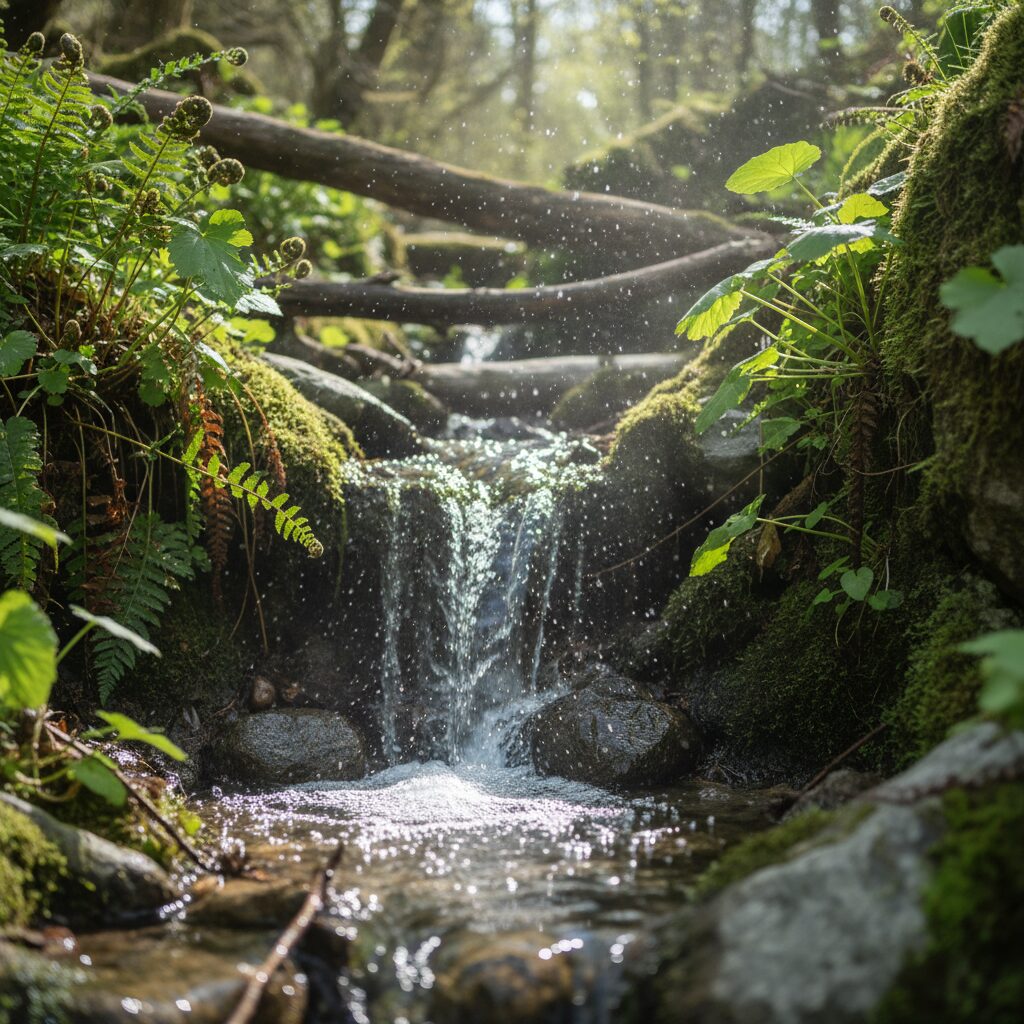
The breath-like sound heard in some natural sources isn’t a coincidence. It all starts with one key player: airflow. This moving current of air, which can be as soft as a caress or as furious as a miniature tornado, interacts with obstacles, cavities, or porous surfaces. The result? A sound mechanism that creates vibrations in the air, which travel to your ear, triggering that strange sensation of breath suspended in space. For example, imagine the wind gliding through hair-thin cracks in a rock. Air rushes in, is compressed, and then expands, creating a series of small, rapid movements. These oscillations cause the air molecules to vibrate, producing a low-frequency sound wave that resembles a constant whisper. This phenomenon, which specialists call “sound aerodynamics,” is also responsible for the whistling of the wind in trees or the rustling of leaves. In some water sources, such as small streams or waterfalls, air is often drawn into the moving water, generating bubbles and then vibrations in the liquid. These vibrations are then transmitted into the surrounding air, creating that gentle breeze that, when you get close, you might almost think an eco-conscious diva is performing a natural solo. Yes, no amplifier needed! The resonance between water, air, and rock acts as an invisible conductor. In fact, these same principles explain why some beaches have rocks that resonate like drums. Nature holds secret alliances between geometric shapes, cavities, and air passages that create life-size acoustic instruments. If you want to unravel this mystery, don’t hesitate to take a look at this captivating explanation of singing rocks.
Discover why some natural springs emit a sound similar to a breath by exploring the physical and environmental phenomena behind these natural murmurs. What types of natural springs produce this breathy sound, and why? Ditch your usual playlist: nature is a true DJ who handles sounds to perfection. Among the sonic extras it provides—including birdsong and the babbling of rivers—certain sources stand out with a continuous, ethereal sound, often described as a natural noise
resembling a breath. But what exactly are these natural artists? First,
Ces articles devraient vous plaire

Why does the air in some mountains smell of vanilla without any plants?
You’ve surely already climbed into the mountains, that realm of breathtaking landscapes, fresh air, and sometimes… that strange scent of vanilla that wafts through the air without you having seen a single pod or exotic…
freshwater springs
; For example, some natural fountains or streams where the water swirls and expels the air, creating a dynamic mixture of water and gas. You can even hear this sound near caves from which currents of hot or cold air escape, producing an unusual breath, enriched by the rich vibrations of the surrounding rock. It’s as if nature is playing with its most sensitive instrument: the rock cavity. Finally, don’t overlook the
winds that pass through vegetation. When air passes through leaves, branches, or even dry grass, the friction produces complex and discontinuous vibrations that recreate a kind of musical breath. The role of temperature and atmospheric pressure in these phenomena should also not be underestimated, as they modulate the air speed and therefore the frequency of the vibrations.
These sounds play an often underestimated role in our daily lives, not only for the auditory pleasure they provide, but also because they help to reduce the annoyance caused by incessant and repetitive urban noise. In short, nature never ceases to amaze you with its free concerts that will blow you away without even asking for a ticket. The acoustic phenomena responsible for these sounds: vibration, resonance, and aerodynamics What, at first listen, seems like a simple whisper is actually the result of a fascinating acoustic complexity. To understand why certain natural sources produce this sound precisely between whisper and vibration, we must examine three key phenomena: vibration, resonance, and aerodynamics. Vibration is the foundation: whether it’s a rustling leaf, a flowing stream, or a rock gently vibrating in an air current, these rapid movements create sound waves. Without vibration, there is no sound—that’s the rule. But to achieve that characteristic breath, these vibrations must not be too powerful or too strong; they must remain subtle, almost hypnotic.
The second ingredient is resonance. This phenomenon amplifies certain vibration frequencies depending on the shape, size, and composition of the medium. For example, the cavities of caves or rocky hollows will capture certain frequencies and prolong them. Sometimes, these natural forms act a bit like wind instruments, guiding the airflow and setting the space, not just the material, into vibration.
Finally, aerodynamics.
Ces articles devraient vous plaire

How does the rare phenomenon of natural black rain form?
Think you know what rain is? Think again! There’s a phenomenon so unusual, almost straight out of a post-apocalyptic movie, that even meteorologists frown upon it: natural black rain. Yes, you read that right, not…
Anechoic sounds occur when moving air is compressed and then released as it passes over or through a particular surface. These can be narrow cracks, holes, or natural gaps created by erosion or vegetation. This passage of air generates eddies and oscillations that produce the famous “breath” we try to identify.
These three phenomena combine to create a kind of natural melody, fluctuating and random, unlike the often repetitive and monotonous mechanical sounds of artificial noise. If you’re intrigued by these mechanisms, you might enjoy this deep dive into the fascinating details of how anechoic chambers work, where absolute silence also reveals the value of vibratory sounds. https://www.youtube.com/watch?v=XKtPJdBNspsWhy does nature have this tendency to produce sounds that resemble a breath? You might think that nature does this on purpose, like a hero in an adventure film creating a soundscape to thrill you (or make you groan when you’re seeking silence). Well, in a way, yes. Sounds similar to a whisper play a crucial role in ecosystems and are far from being mere acoustic flirtations.First, these sounds act as a soothing background noise, masking the more aggressive, and often human-made, noises that our environment can generate. For example, the rustling of the wind in leaves or the breathing of caves effectively masks engines, horns, and other urban noises. This is a natural form of acoustic masking, allowing sensitive animals and humans to better adapt to their sound environment.
Second reason: these sounds can also play a role in animal behavior. The gentle rustling of wind through vegetation can serve as a signal or even an alarm for some animals that communicate using low or subtle frequencies. Like certain intriguing fish that use rare sounds to survive and camouflage themselves in their environment—an example to discover in this article about the camouflaged stonefish.
Finally, the choice of this natural “sound” can also be a physical constraint. The airflow and its interactions with rock, water, or vegetation create these sounds rather than others, almost as if nature were forced to work with its shapes and materials. And frankly, the result is pretty cool, isn’t it? https://www.youtube.com/watch?v=szGGRCRK2FU
List of natural phenomena that produce a sound similar to a breath 🌬️🎶🍃 Wind circulating in rock cavities and caves 🌊 The movement of water in streams and waterfalls, generating bubbles and vibrations
🍂 The rustling of leaves and branches under the effect of airflow 🌬️ Cracks and crevices where air enters and escapes with a hissing sound⛰️ Echoes and resonances of sounds in mountains and cliffs 🦜 Some animal calls that resemble soft, vibrating breathsComparative table of natural sources and their sound mechanisms 🔍🌿
Ces articles devraient vous plaire

How can rock produce light when in contact with water?
Get ready for a luminous journey that’s a little off the beaten path! Have you ever walked past a rock that lights up strangely when it comes into contact with water? No? Not yet? No…
🎵 Sound Mechanism
🌬️ Type of Sound Product
🔊 Common Example Sea CavesCompressed airflow, resonance Deep, modulated soundMysterious breath during wave crashes
Waterfalls and Torrents Bubbles, water-air vibrationConstant murmuring wall
Whispering water sound
Ces articles devraient vous plaire

How can we explain the regular, muffled noise emanating from extinct volcanoes?
Have you ever wondered what that muffled sound that seems to emanate from certain extinct volcanoes is all about? No, it’s not a herd of elephants marching under the mountain while you sleep, nor is…
Friction, aerodynamics
- Light, rhythmic rustling
- Whistling wind in leaves
- Rock fissures
- Accelerated airflow, turbulence
- High-pitched whistling or continuous hissing
- Wind escaping from a crevasse
Cliffs and mountains
| Reverberation, echo | Modulated sound, resonating breath | Mountain sighing in the wind | Understanding these delicate mechanisms allows you to appreciate that nature, with its imperfections and whimsical shapes, is a true sound composer. The sound of breath is not just acoustic wallpaper, but a felt phenomenon, an invitation to attentive listening. |
|---|---|---|---|
| Why does the sound in some caves resemble a breath? | This comes from the airflow passing through irregular cavities, creating a specific resonance between the air and the rock. These vibrations give rise to a continuous, modulated sound, evoking a natural breath. | Can the sound of natural breath influence animal behavior? | Yes, some animals use these sounds as signals or acoustic cues. These natural sounds sometimes serve to mask more aggressive noises or to ensure discreet communication within their habitat. How can you distinguish a natural breath sound from a similar synthetic one? |
| A natural sound exhibits unpredictable and complex variations linked to environmental conditions, while a synthetic sound is often more regular and monotonous. Natural aerodynamics and resonance are difficult to perfectly reproduce. | Is vibration essential to the production of breath sound? | Absolutely. Without vibration of an object or material, no sound would be produced. In the case of natural breath, vibration is generated by the airflow interacting with its environment. | Can we consciously listen to these natural sounds to improve our well-being? |
| Yes, many find these sounds relaxing and soothing. They can reduce stress, mask urban noise, and create an atmosphere conducive to meditation or sleep. | |||