
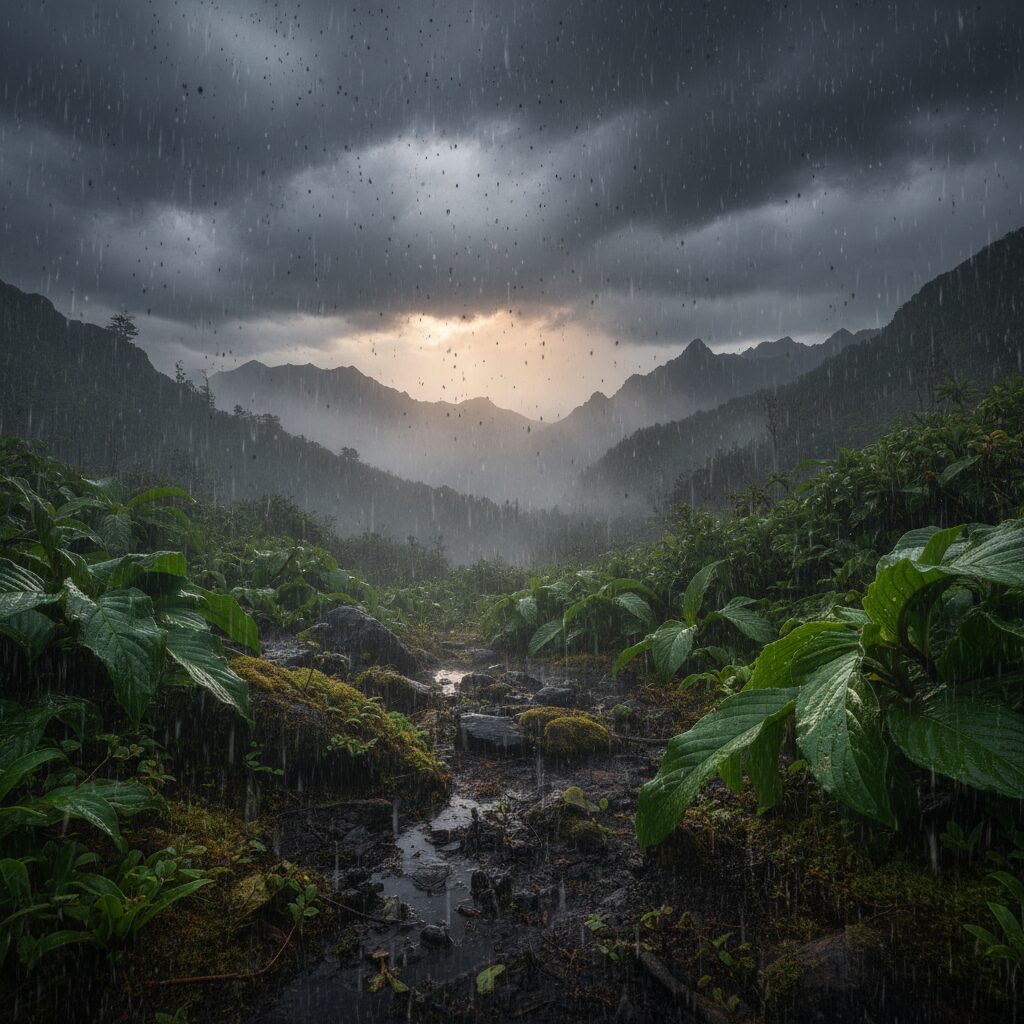
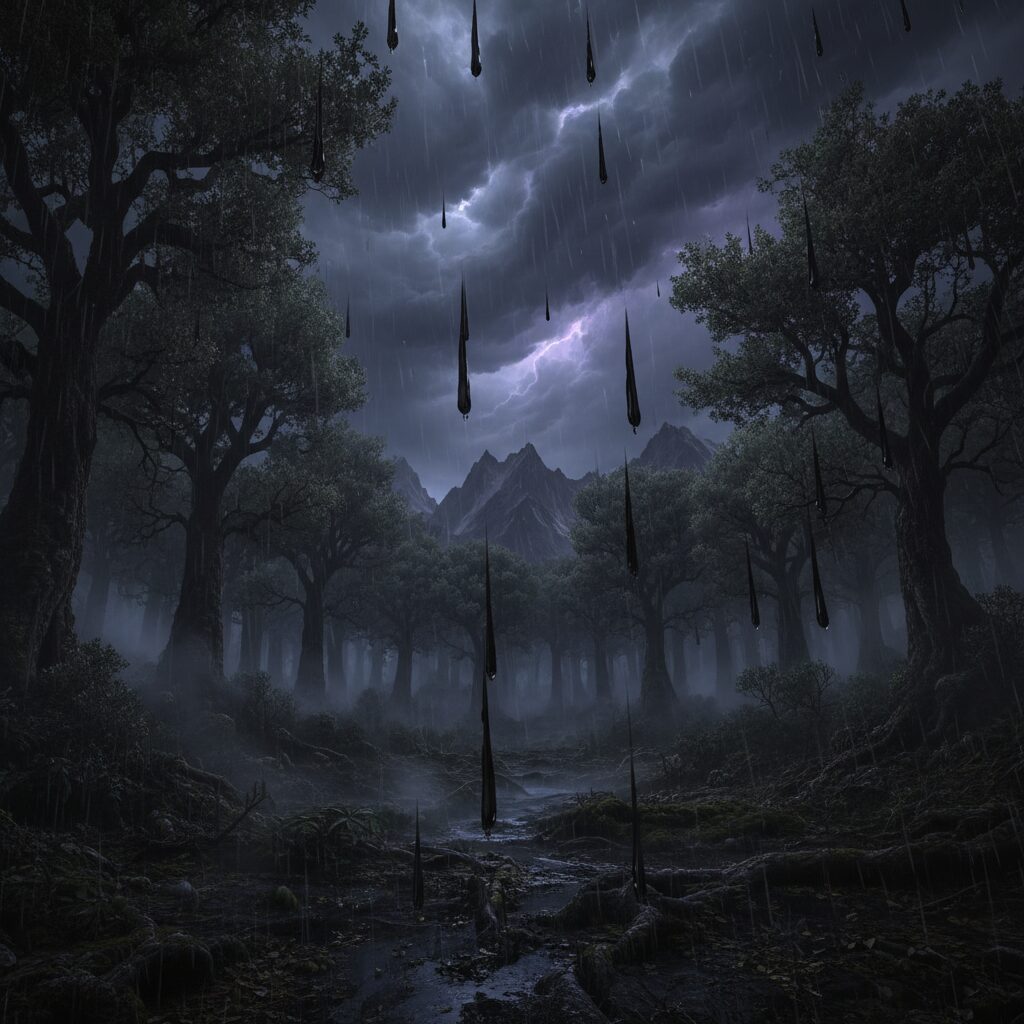
Think you know what rain is? Think again! There’s a phenomenon so unusual, almost straight out of a post-apocalyptic movie, that even meteorologists frown upon it: natural black rain.
Yes, you read that right, not just the slightly muddy rain after a thunderstorm, but rain that’s literally black. This rare phenomenon cleverly blends science, air pollution, and a dash of bizarre natural magic. So, how on earth does this black rain form? Is it just a ploy by polluting industries to ruin your day, or is there a mysterious and fascinating natural mechanism behind it? Get ready, this is going to change your view of the weather.
What is natural black rain and how is it baffling scientists?Let’s start at the beginning, because rain, at its core, is just water, right? Normally, rain is what happens when water vapor rises to the sky, cools into droplets, and then falls. Simple, effective. But black rain is a whole different story. It’s not something out of a zombie movie, but a very real phenomenon that occurs rarely and for very specific reasons. Natural black rain results from the presence of high concentrations of fine particles and natural aerosols in the atmosphere. These particles, often composed of carbonaceous organic matter like soot from forest fires or volcanic dust, accumulate in clouds. Then, the condensation of water vapor traps these particles, and when they fall, it’s rain… less clear, or even completely black.
Contrary to the infamous image of black rain caused by industrial or nuclear events (remember Hiroshima and Nagasaki), natural black rain is not synonymous with radioactivity or direct human pollution, even though air pollution often amplifies the phenomenon. For example, during massive forest fires, plumes of smoke laden with carbon and other particles mix in the atmosphere and create this phenomenon of unusual precipitation, resulting in water that falls both dirty and dark. But make no mistake: this isn’t just a minor aesthetic difference. The chemical composition of this rain can have a negative environmental impact, posing risks to soils and waterways, as the particles can be toxic or alter the natural pH. In short, whenever you see rain that’s a little too black, it’s a warning sign of a badly shaken atmosphere. Discover how the rare and natural phenomenon of black rain forms, an intriguing meteorological phenomenon that surprises with its causes and effects. The secret ingredients: natural parameters that trigger the formation of black rain
For natural black rain to form, a somewhat unusual mix of atmospheric ingredients is required. Understanding this alchemy is like solving a Sherlock Holmes-style weather mystery in wellies. First, a massive source of fine particles in the air is necessary. These particles generally come from:
🔥 Intense forest fires, which release a phenomenal amount of soot and other carbon compounds. 🌋 Volcanic eruptions, which expel fine ash and gases laden with chemical elements. 🌬️ Dust storms in desert areas, where winds tear up soil and send it into the atmosphere.
Ces articles devraient vous plaire
PSG: Safonov, a surprising offer that defies expectations
When PSG lands a Russian goalkeeper who wasn’t exactly expected in that position, it’s more of a shock than the Eiffel Tower on a windy day. Matvey Safonov, a name that slips through fans’ fingers…
Finally, specific weather conditions are necessary: an unstable air mass and high humidity to allow condensation and the formation of drops heavy enough to fall to the ground. In some cases, descending cold air can also promote the concentration of particles in clouds. This meticulous atmospheric recipe explains why black rain doesn’t occur with every thunderstorm and remains a rare, yet fascinating, meteorological event.
To better grasp this oddity, imagine a gigantic natural barrier that filters all these elements: mountains, for example, which force the air laden with particles to rise and cool rapidly—a winning combination for this unusual rain. List of conditions necessary for natural black rain
- 🌫️ Massive presence of fine particles in the atmosphere
- 🔥 Major natural sources such as forest fires or volcanic eruptions
- 🌦️ Unstable atmosphere with high humidity
🗻 Orography favoring accelerated condensation 💨 Air pollution that complicates the chemical composition of the raindrops What are the differences between natural black rain and other types of rain discussed in meteorology?
Not all types of rain wear the same costume, and in the grand spectacle of precipitation, black rain is clearly the one that arrives in a gothic costume. But how exactly does it differ from convective, orographic, or frontal rain?
Normal rain is pure water that traps very few particles on its journey and falls in clear drops. The classic, basic kind. Convective rain, for example, is generated by the strong updraft of warm air that quickly leads to the formation of clouds and thunderstorms. Nothing like dirty rain. Orographic rain, on the other hand, is linked to topography and the cooling of humid air as it passes over a mountain.
Natural black rain, however, is the product of a much more complex chemical composition due to fine particles and natural contaminants (like soot) that adhere to the water. This phenomenon is easy to imagine in the midst of a natural disaster: a massive wildfire releases its cloud of soot, and suddenly, the next rain transforms the scene into a downpour that descends in “horror movie” style.
- We can also talk about black rain as a kind of not-so-cool cousin of
- green rain during thunderstorms,
- another fascinating phenomenon where the abnormal color of the rain also sparks curiosity, but for different climatic reasons.
- It’s such a unique phenomenon that scientists and passionate science communicators have been eager to study it, because understanding the formation of natural black rain also helps to decipher some unexpected impacts of air pollution.
Ces articles devraient vous plaire

Unusual: A couple launches a raffle to try and sell their unsold apartment
In short: A British couple is struggling to sell their second home in Wales.The initial price of £365,000 is reduced by £40,000, but to no avail.They launch a raffle with tickets at £5.50 to boost…
What happens to black rain when it hits the ground? Impact and consequences on the environment
Black rain isn’t just a visual trick or a phenomenon to show off at parties. It has a real
environmental impact, often negative, that deserves our attention (even if we’d like the rain to surprise us, but in a good way). Here’s what happens when it hits the ground:
🌍 Impact ⚠️ Description 💡 Concrete example
Soil pollution Soot and other carbonaceous particles alter soil quality, potentially harming plants and microorganisms.After a forest fire, black rain temporarily renders soils infertile.
Water contamination: Fine particles end up in rivers and groundwater, affecting aquatic life.
Ces articles devraient vous plaire
Why does the air in some mountains smell of vanilla without any plants?
You’ve surely already climbed into the mountains, that realm of breathtaking landscapes, fresh air, and sometimes… that strange scent of vanilla that wafts through the air without you having seen a single pod or exotic…
Areas near fires where aquatic life declines.
pH alteration: Black rain can acidify or alkalize soils depending on its chemical composition. Agricultural soils affected by sudden pH changes.Effect on vegetation: Plants can suffer or sometimes adapt if the pollution is localized.
| Burned forests with slow recovery dependent on subsequent rainfall. | This is a phenomenon that should always be monitored, especially since it can exacerbate the effects of ambient pollution, particularly in peri-urban or industrialized areas. Natural black rain thus highlights the complex interactions between natural phenomena and pollutants, prompting us to reflect on the quality of our atmosphere and the mechanisms underlying certain unusual weather phenomena. | |
|---|---|---|
| https://www.youtube.com/watch?v=l-0OCzkY3cM | How to study and detect black rain? Instruments and vigilance for a rare phenomenon | When something is rare, unusual, and potentially harmful, you need weather geek equipment to monitor it. For natural black rain, the instruments aren’t magical but quite conventional, with just a touch of advanced technology. |
| The rain gauge remains the primary tool for measuring the amount of rainfall, but to analyze black rain, you must focus on its composition. Scientists collect samples and examine them under a microscope, then perform chemical analyses to identify the fine particles, trace metals, and other carbon compounds that color the rain. | Using atmospheric sensors, including LIDAR lasers and chemical composition probes, we can also detect layers of suspended particles and predict the formation of these unusual rains. Monitoring becomes particularly crucial during rare events such as massive fires or volcanic eruptions. | Thanks to current advances, we can even anticipate these cycles of air pollution and better understand how black rain forms. This helps, in particular, to protect vulnerable populations and improve local response. |
| These scientific efforts sometimes resonate, with humor, with other lighter anecdotes about the weather, such as the observation that some animals (did you know that the | red-eyed frog can change color | or that the singular phenomenon of the |
| giant hummingbird | still fascinates the curious in 2025). |
Is natural black rain dangerous to health? It can contain harmful fine particles, so prolonged exposure, especially for children and vulnerable individuals, is not recommended.
Ces articles devraient vous plaire
How can rock produce light when in contact with water?
Get ready for a luminous journey that’s a little off the beaten path! Have you ever walked past a rock that lights up strangely when it comes into contact with water? No? Not yet? No…
With the right atmospheric instruments and monitoring of fires or eruptions, it is possible to anticipate its arrival, but it remains a scientific challenge.
Is black rain always caused by industrial pollution?
No. Natural black rain is formed primarily from particles originating from natural fires or volcanic eruptions, although pollution sometimes amplifies the effect. How can we limit the environmental impact of black rain? Combating deforestation, controlling fires, and reducing industrial pollution are important strategies.
Could black rain become a more common phenomenon?
With the increase in forest fires linked to climate change, this rare phenomenon could unfortunately occur more often.