
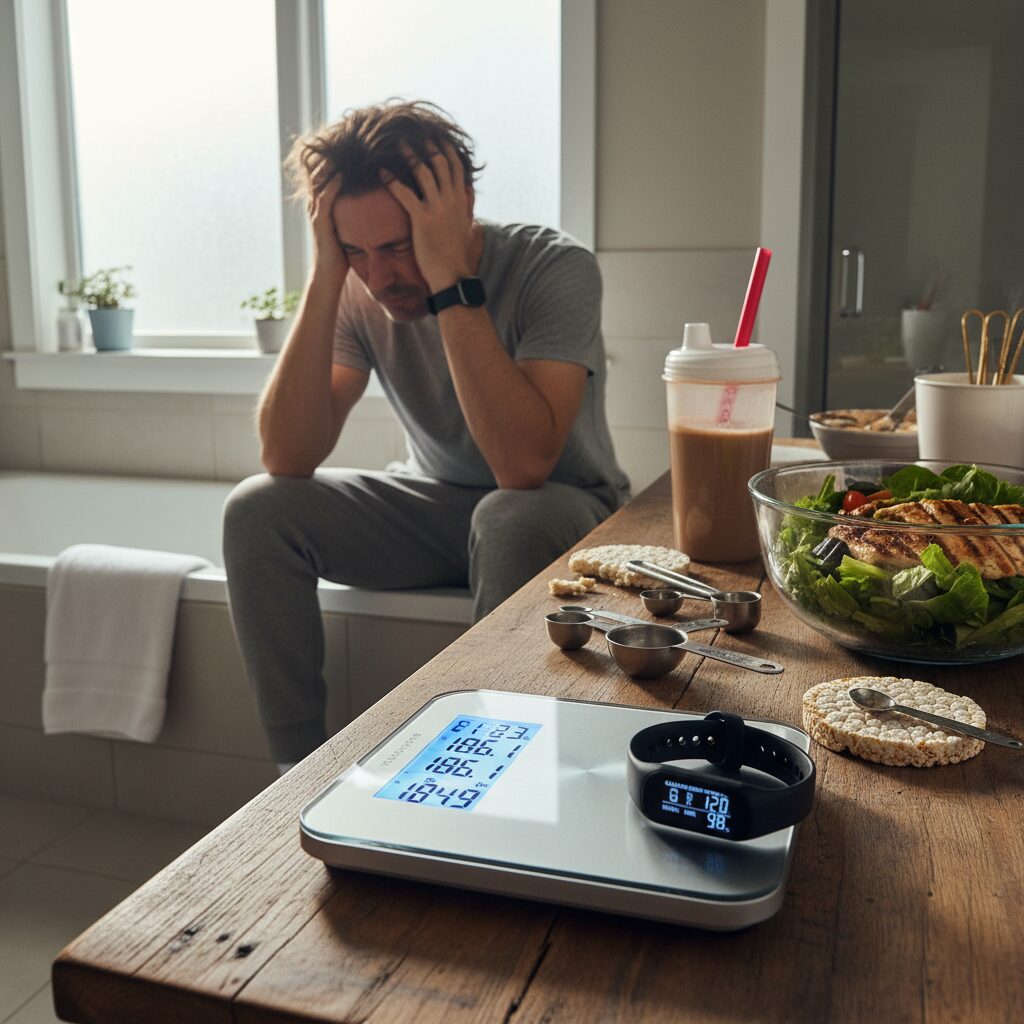
In the hyper-connected world of 2026, where even your watch seems to know your fitness level better than your mother, weight and scale trackers have become the darlings of weight-loss enthusiasts. They promise weight-loss tracking that would make even the best nutritionists green with envy. But here’s the thing: this technological obsession hides a ludicrous truth. Far from helping you stabilize your weight, these gadgets tend to make diets even more absurd than before. Between sometimes temperamental devices and an awkward appetite for data, what really happens when you frantically enter the displayed weight, as if your life depended on it? The awkward struggle between the scale and the calorie counter is no longer just a personal story, but a phenomenon affecting nearly 44% of French people who have already ventured into the jungle of dieting at some point in their lives. Unfortunately, most people end up in a yo-yo effect, that vicious cycle surrounding the numbers on a scale that often play hide-and-seek with reality. And all of this is delivered on a platter of metadata, only 70% accurate according to some studies, which is enough to make more than one person’s head spin. So, how can these supposedly miraculous tools sometimes sabotage what you’re trying to achieve: losing weight sustainably without becoming addicted to the displayed number?
Why Scale and Weight Trackers Trap Your Perception of Real Change
Weight trackers? A brilliant innovation on paper, but an inexhaustible source of stress and confusion in real life. The fact is that these devices give a partial, sometimes erroneous, and above all, obsessive picture of what “losing weight” really means. Their main problem: they focus all your attention on a single number, the weight on the scale, which doesn’t tell the whole story.
The first problem: weight naturally fluctuates throughout the day under the influence of thousands of micro-events in the body. For example, hydration, water retention, intestinal contents, or even when you ate your last portion of fries. What the tracker records is therefore a kind of blurry, hastily taken snapshot, often disconnected from your actual efforts. Imagine weighing yourself every morning after an evening of pizza and beer; you’ll see your mood yo-yo faster than your weight!
Furthermore, scale trackers often rely on bioelectrical sensors to estimate body composition: fat mass, muscle mass, hydration. One might think this is a panacea, but unfortunately, these at-home measurements are often at the mercy of external factors (skin moisture, foot position, ambient temperature) that vary from day to day. The result: your displayed body fat percentage can go haywire without you having done a single squat. This is how “science” becomes a source of anxiety.

Ces articles devraient vous plaire

connected backpacks that weigh more than their contents
In the fast-paced world of 2025, where wearable technology is finding its way into our pockets and onto our shoulders, smart backpacks have arrived with a bang. These connected devices, equipped with USB ports, built-in…
Discover how the obsession with scales and weight trackers can render diets ineffective and why it’s essential to adopt a more balanced approach for your well-being.
How Traditional Diets Amplify Dependence on Scales and Trackers
The ultra-sensitive radars that are scale trackers often react to a crazy shift implemented by popular diets, which are completely ineffective in the long run. In fact, these devices often become a mathematical extension of the pressure that dieting puts on our brains. The brain expects a magic number, external validation, while the reality of the body is infinitely more complex. For many diets, a calorie deficit is recommended, or even drastic restrictions (less than 1000 kcal/day). Of course, the scale may indicate rapid weight loss in this scenario. But the problem is that these diets cause muscle loss, a slowdown in metabolism, and increase psychological stress. As a result, after a few weeks, the infamous weight regain (yo-yo effect) occurs almost inevitably. Where the tracker creates an unrealistic illusion of control, the body, thanks to its well-oiled biological mechanisms, decides to rebel.
As the French National Authority for Health (HAS) explains, even a moderate weight loss of 3 to 5% helps reduce certain risks (cholesterol, blood sugar), but a gradual approach is essential. A strategy based solely on weight only reinforces the illusory image projected by the scale and its faithful tracker, but never addresses the emotional and behavioral nature of eating. Without this perspective, dieting becomes a game of cat and mouse, where weight is the only visible, but never truly caught, prey.
The problem is that fad diets, sometimes fueled by the interactive features of trackers (activity reminders, competition with friends, calories burned), can exacerbate weight obsession. This explosive mix can then lead to extreme, even pathological, vigilance: compulsive weighing, obsessive counting, and even complete abandonment because it’s too discouraging. In short, instead of being your GPS for transformation, your tracker becomes your digital tyrant.
| A chart to decipher the vicious cycle of dieting and tracking: | 🔍 Stage | |
|---|---|---|
| ⚖️ Observed Phenomenon | ⚠️ Absurd Consequence | 1. Diet Implementation |
| Severe restriction and intensive tracking with the tracker | Rapid weight loss, but decreased muscle mass | 2. Peak focus on numbers |
| Daily weigh-ins, anxiety related to fluctuations | Disrupted eating behavior, increased stress | 3. Slowed metabolism |
| Body adapts by burning fewer calories | Weight loss slows, frustration mounts | 4. Yo-yo effect |
Ces articles devraient vous plaire

How an electric citrus juicer flooded the entire kitchen with juice
Imagine a peaceful morning that turns into a domestic disaster: suddenly, an electric juicer decides to transform your kitchen into a juice pool without warning. No, this isn’t the latest experiment from a homemade cocktail…
Rapid regain of lost weight
Feeling of failure, abandonment of the diet
Do scale trackers really boost motivation or do they fuel demotivation?
The answer isn’t so simple, because these gadgets undeniably have positive effects but also significant drawbacks. Scale trackers are often marketed as motivational tools: they set goals, send reminders, and sometimes even allow for friendly competition with online friends.
This method works quite well for fostering healthy competition and combating sedentary lifestyles. For example, someone who manages to exceed their daily step goal or sees a decrease on the scale can experience genuine satisfaction, thus reinforcing their behavior. Some studies even show that this digital support can surpass the effectiveness of traditional medical advice.
- Moreover, this digital pressure exacerbates the negative effects of dieting, notably by amplifying weight obsession, a known factor in degrading quality of life and mental health. This dependence leads some to ignore other important signals such as genuine hunger, the pleasure of eating, or perceived physical activity. And when weight plateaus or increases slightly, it triggers immediate discouragement, sometimes a complete break, or even a relapse into overeating. https://www.youtube.com/watch?v=5B79ba7A83g List of emotional pitfalls associated with weight trackers:
- 😓 Daily weigh-in stress : a horizon of anxiety tinged with uncertainty, fluctuating with bodily fluids.
- 🔁 Amplified yo-yo effect : heightened obsession leading to a more abrupt weight regain.
- 📉 Rapid demotivation : frustration with the numbers, loss of self-confidence.
- 📵 Neglecting other progress : body shape, endurance, overall health forgotten.
Ces articles devraient vous plaire
Why are watches with digital hands confusing?
Imagine yourself in the middle of a meeting, absentmindedly glancing at your watch to check the time. But then, your watch displays digital hands. Yes, those bizarre hybrid things where the classic meets the future,…
😵 Anxiety-inducing dependence
: compulsive need for verification, at the expense of enjoyment.
How to use your tracker intelligently to avoid the absurdities of dieting?
Don’t throw your tracker out the window; it can still be your best ally for sustainable weight loss, provided you understand its limitations and adopt a healthier approach.
FirstFocus on realistic and progressive goals. Rather than trying to see the scale melt away day by day, aim for a monthly average or track the centimeters lost, which are more indicative of the real transformation than just weight. A tracker can help you record these measurements to better visualize your progress.
Thirdly, talk to healthcare professionals to establish personalized guidelines that will prevent you from becoming obsessed with your weight. Medical and psychological support helps regulate eating behavior and understand the mechanisms of motivation and discouragement.
Finally, remember that a balanced diet, managing your emotions, and paying attention to your natural hunger and satiety signals are far more beneficial than any gadget. Trackers don’t replace self-awareness; they can only guide you.
https://www.youtube.com/watch?v=NfSWJWqeoF4
Why does my weight fluctuate so much despite my efforts?
Body weight naturally varies depending on many factors, such as hydration, digestion, and even the time of day. It’s therefore normal to see daily variations, and this doesn’t always reflect the reality of your weight loss.
Are scale trackers reliable?
They offer a general estimate but can be influenced by various factors, such as temperature, skin moisture, or position on the scale. Therefore, they don’t provide an exact measurement and should be used as one indicator among others.
How can you avoid obsessing over your weight with a tracker?
Ces articles devraient vous plaire

vintage fridges that flash like an 80s disco
We’ve all seen that slightly kitschy fridge, that guardian of ice cream and leftover lasagna, sometimes flashing as if it wants to join a disco party. Yes, those vintage fridges with their retro look, decked…