
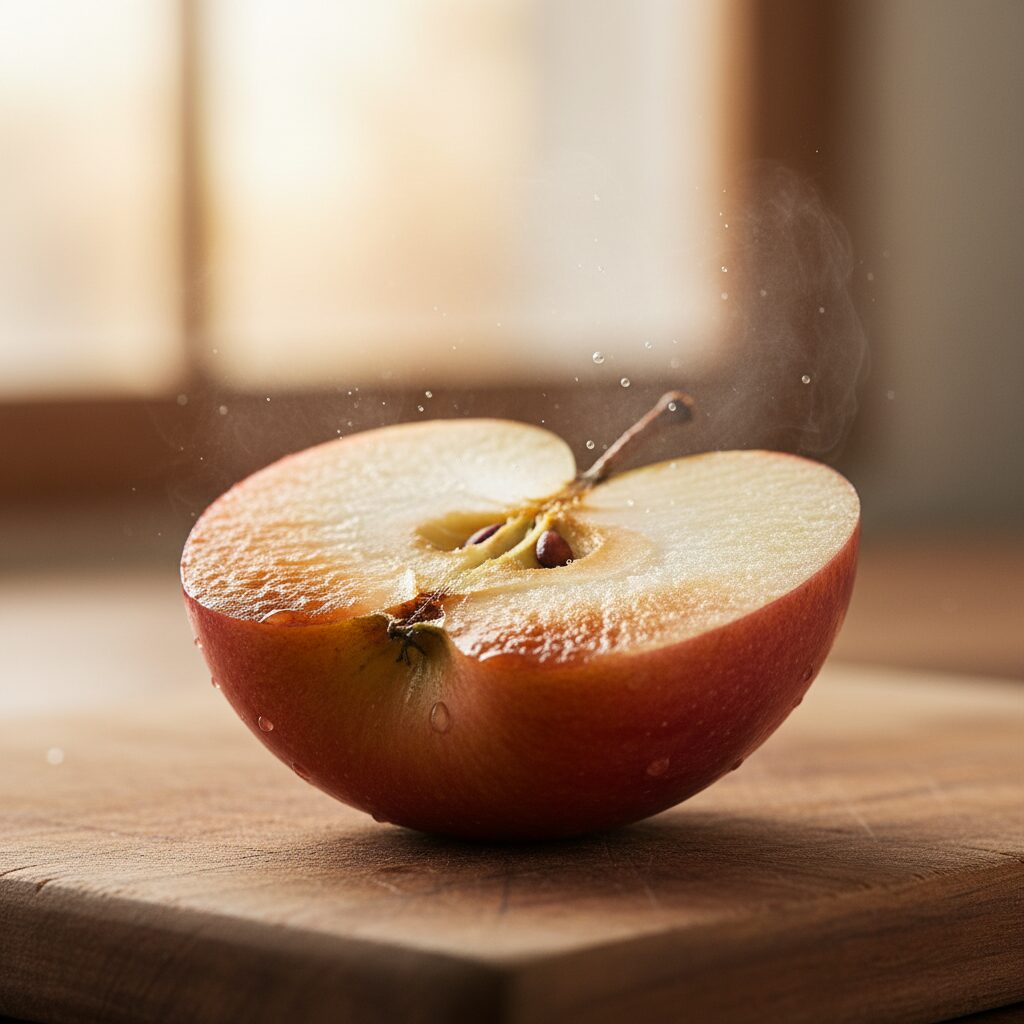
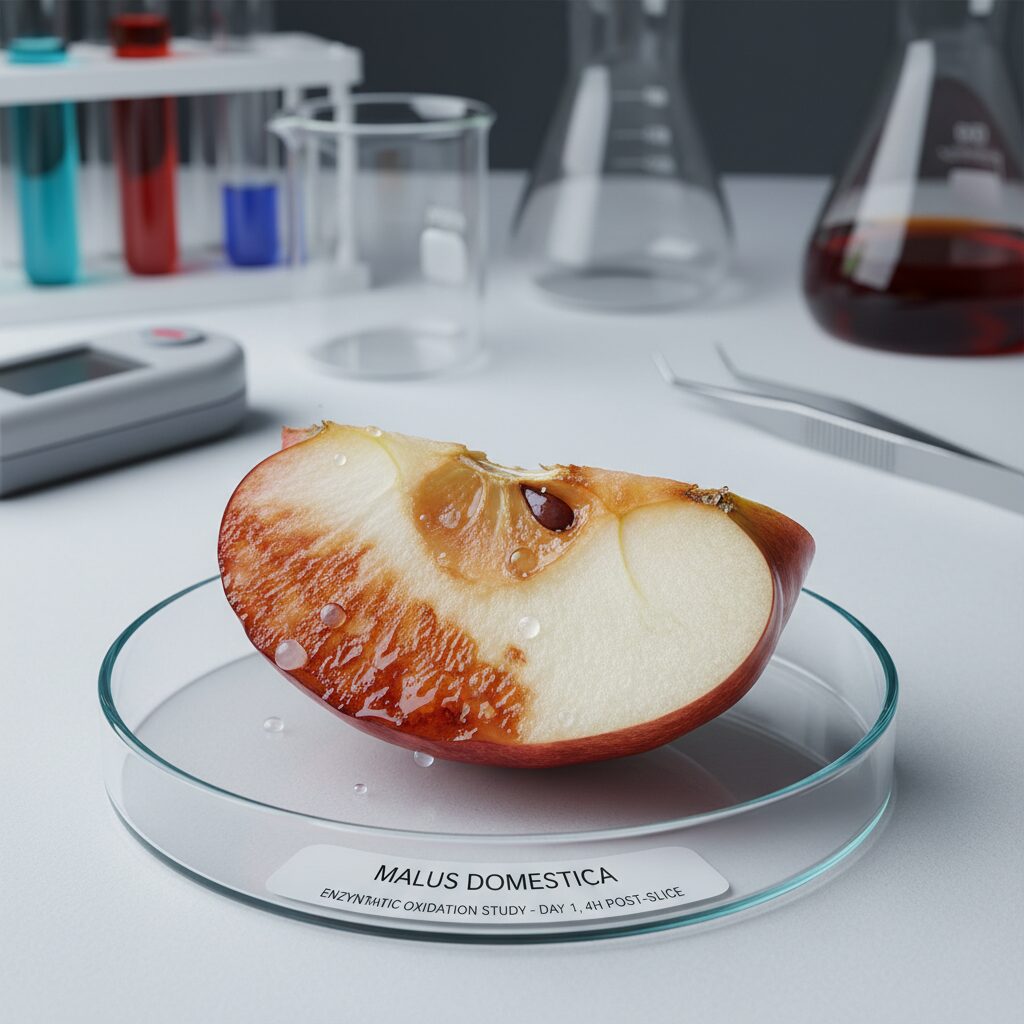
Admit it, it’s frustrating: you take a beautiful, fresh apple, carefully slice it, and suddenly it’s browning faster than expected—and on your apple, no less. No need for sunscreen; this browning is automatic, inevitable, and frankly bizarre for a fruit we’re promised is crisp and fresh. So, what exactly happens to this white flesh that turns a rather unappetizing brown? Is it some kind of conspiracy by the fruit to make you prefer applesauce, or a chemical reaction worthy of nature’s greatest mysteries? Let’s delve into the inner workings of this phenomenon that makes us wonder: why do apples turn brown once they’re cut? The fatal blow of the blade unleashes a veritable molecular chaos which, while not exactly festive, is a fascinating chemical ballet. It’s a bit like opening the door to invisible and somewhat overzealous secret agents: enzymes. These tiny biochemical machines, including the famous polyphenol oxidase, spring into action as soon as the fruit’s flesh comes into contact with oxygen. The result? Inevitable oxidation and browning that transforms your apple into a more earthy hue.
Why does cutting it activate polyphenol oxidase and its friends? 🕵️♂️
Imagine the apple as an ultra-well-protected cellular fortress. Each cell is a small bunker where polyphenols, these naturally colorless molecules, are neatly stored. But once you cut into it, the bastion collapses, the internal compartments almost explode, and suddenly, the enzymes—especially polyphenol oxidase (PPO for short)—find themselves facing polyphenols they’ve never encountered before.
These enzymes then behave like an overheated pizza chef, cooking the polyphenols into orthoquinones, more rebellious and capricious chemical compounds. If you’re like everyone else, you’re probably wondering what these strangely named raw materials are. Orthoquinones are intermediates that, under the influence of ambient oxygen, transform into melanin, that famous dark brown pigment – yes, the same one we’re talking about when we mention your lovely tan in the south 😉.
Why does this happen? It’s actually a chemical oxidation reaction, a kind of cellular “tanning” that “burns” the apple, causing it to change color. This chemical transformation has its reasons, especially for nature. You can imagine that an apple changing color at the first cut of a knife is paradoxical, but it’s primarily a defense strategy for the fruit against external threats like microbes. The browning deters unwanted guests!
Ces articles devraient vous plaire
Why are fingerprints unique to each individual?
You’ve probably seen a scene from a police procedural where the detective proudly pulls out a fingerprint from their fingertip and announces that they’ve got the suspect. But why on earth does each finger have…
Discover why apples brown after being cut, the chemical processes involved, and how to prevent oxidation to keep your fruit fresh longer.
The role of oxygen and air exposure: a dangerous duo? 🌬️ Browning doesn’t happen in a bubble, but right under your nose, directly with the oxygen in the air. As long as the skin is intact, the oxygen stays outside, undisturbed. But as soon as you cut the apple open, it’s as if you’re inviting oxygen to join the browning party. This oxygen-enzyme interaction is at the heart of the chemical reaction.
To make things clearer (and to avoid you picturing a horde of oxygen dancing all over your apple), the phenomenon is essentially caused by enzymatic oxidation. As soon as the enzymes—which we’ve already encountered, polyphenol oxidase—come into contact with oxygen, they kick-start their browning process. It’s like inviting a DJ who only plays dark and gloomy music to your party.
This is also why browning is faster when you leave the apple exposed to the air. The favorite placebo solution for those with a sweet tooth? Dipping the slice in lemon juice. Why? Because the acidity of the lemon acts as a brake on these enzymes, and the vitamin C it contains is an antioxidant that neutralizes the overly enthusiastic oxygen-enzyme duo.
Ces articles devraient vous plaire
How does flour transform dough into a delicious cake?
Ah, flour! That little white cloud that finds its way into almost every kitchen and works wonders. But how is it that this simple powder transforms, under the influence of baking and its exceptional partners…
Now you know why the age-old trick for apple pies and fruit salads is to drizzle the slices with a good citrus juice. A smarter move than munching on the apple as quickly as possible to avoid that annoying browning.
The science of browning compared to other fruits: apples, bananas, and more 🍌🍐
If you think your browning problem is unique to apples, think again. Bananas, pears, peaches, and even potatoes share this unfortunate brown fate. Now you also know that it stems from the same chemical reaction: enzymatic oxidation caused by polyphenol oxidase and exposure to air. So, this fatal combination is an exclusive club for fruits and vegetables that are sensitive to their own flesh.
The amazing thing is that oranges and lemons are the kings of defying the rules. They resist, remaining bright and vibrant! Why? Because their high acidity (low pH) repels the enzymes that love browning, and their richness in vitamin C acts as a super antioxidant shield. So you could say these citrus fruits are the firefighters of the fruit basket, ready to put an end to the browning fest.
| The table below shows how different fruits react differently after being cut, providing a clear visual overview: | Fruit 🍏 | Presence of PPO 🚀 | Browning Speed ⏳ | |
|---|---|---|---|---|
| Effect of Acidity 🍋 | Browning Resistance 🛡️ | Apple | High | Fast |
| Medium | Medium | Banana | High | Very Fast |
| Low | Slow | Orange | Slow | Very Slow |
| Very High | High | Potato | High | Fast |
| Low | Slow | Peach | Moderate | Moderate |
Ces articles devraient vous plaire

How do clouds manage to float in the sky?
Have you ever looked up and wondered, between sips of coffee, how those immense, fluffy cushions—aka clouds—manage to float as if by magic in our sky, never collapsing under their own weight? Spoiler alert: it’s…
Medium
Medium
How Fruit Age Influences Browning: A Dance with Time ⏰ It doesn’t take a genius to figure it out: the older an apple is, the more likely it is to brown quickly after being cut. Why? Because the fruit ripens, and this natural process alters its chemical composition, particularly its polyphenol and enzyme content, as well as the integrity of its cells. An aging apple has more fragile cells, so it releases its polyphenols and PPO more quickly.
It’s a bit like comparing an old building with cracked walls to a new one. The old apple is more vulnerable to oxidation. As a result, it turns brown a little faster under your despairing gaze. Conversely, a fresh apple, made to last, will avoid disappointed looks for longer. Chemistry isn’t kind to older apples, and the color change is tangible proof. In 2026, culinary scientists are innovating to develop preservation technologies like UV refrigerators.
Ces articles devraient vous plaire

How do stars manage to shine for so long?
Stars, those majestic celestial fireballs, have never ceased to amaze humankind for millennia. Yet, behind their seemingly eternal brilliance lies a fascinating scientific secret, worthy of the greatest science fiction novels – but without the…
- Can we have fun blocking the chemical reaction? Tips and practical methods 🍋
- Now that you know why apples brown (spoiler alert: it’s enzymatic oxidation and PPO at work), you’re ready to join the team of curious minds who fight this discoloration in style! How to slow down or prevent this fatal browning? Keep the zest:
- 🍋 Drizzle the slices with lemon juice; the acidity and vitamin C are the ultimate brakes on PPO.
- ❄️ Keeping the pieces chilled reduces the speed of the chemical reactions.
🧊 Plunging them into ice water also limits their exposure to oxygen.
🥤 Brush with natural antioxidants like green tea or ascorbic acid solution.
It’s also a great science hobby for young and old alike to try and slow down this reaction with homemade tricks, and a good way to impress at your next trivia night with this anecdote about polyphenol oxidase and the love-at-first-sight encounter between oxygen and a sliced apple!
What is polyphenol oxidase?
It’s an enzyme found in the cells of apples and other fruits that, in the presence of oxygen, causes the fruit flesh to brown.
Why does sprinkling a cut apple with lemon juice prevent browning?