
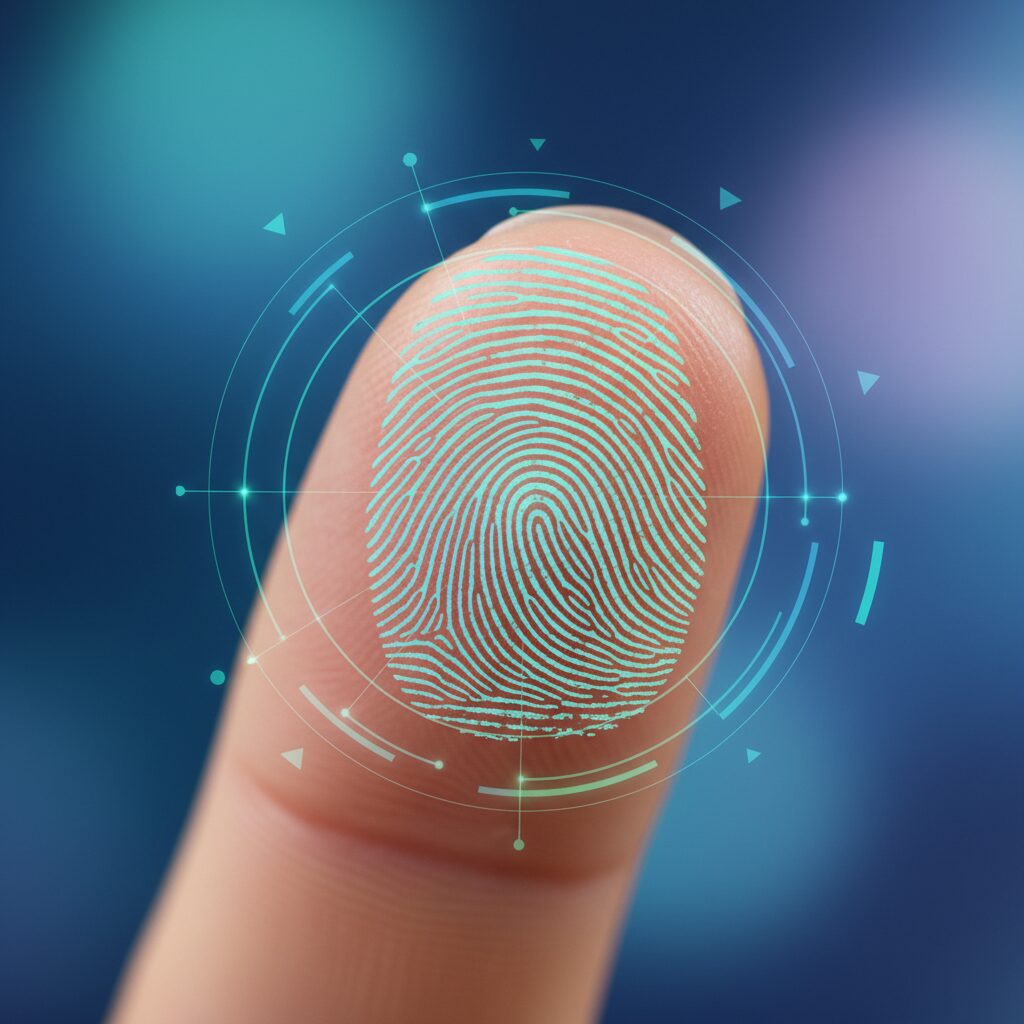
You’ve probably seen a scene from a police procedural where the detective proudly pulls out a fingerprint from their fingertip and announces that they’ve got the suspect. But why on earth does each finger have a pattern that, while admittedly strange, is also unique, like an invisible tattoo? Spoiler alert: fingerprints aren’t just natural doodles. They’re the result of a carefully measured cocktail of genetics, prenatal factors, and a dash of chance. In 2024, a study even challenged this belief by revealing that your fingers sometimes look a bit alike. So, what do those bumps and dips in the papilla really tell us? If you’re wondering why our fingerprints are unique despite a shared structure, buckle up: we’re diving into the surprising intricacies of our skin and cells, somewhere between serious science and slightly wacky curiosities!
Why Prenatal Development Creates Unique Fingerprints
From the developing embryo, around the 10th week of pregnancy, our little hands begin to display patterns that will later lead the police to say, “That’s definitely him, no mistake.” You might be thinking, “Yeah, but we all have the same genes, right?” Well, the explanation is much more interesting than that. Yes, genetics provides the foundation—a bit like musical notes—but the entire intrauterine environment acts as the conductor and creates this unique melody. The formation of papillary ridges is an example of the synchronization between the genetic code and the vagaries of life. Factors involved include:
- Amniotic fluid pressure (the premium Netflix filter for babies)
- Fetal movements—not bad for an unwitting pattern developer
- Regional variations in temperature and oxygenation
These microscopic tensions and movements in the developing skin mean that no two fingerprints will be exactly alike, even in identical twins. Basically, even if you know the entire genetic playlist, the prenatal live show is 100% unique, making each fingerprint as singular as a spray-painted tattoo at a carnival.
This subtle interplay between genetics and environmental factors proves that, when it comes to fingerprints, nature is as artistic as it is rigorous. It’s proof that DNA isn’t everything, and that even in a virtually controlled environment like the womb, a little chaos creeps in to create something truly unique.
Ces articles devraient vous plaire
How does gravity stop the rain from falling endlessly?
Imagine rain as an army of tiny water droplets launched into a dizzying ballet orchestrated by nature. They evaporate from the oceans, condense into clouds, and then, whoosh, tumble to the ground. But wait a…
The characteristics of the papillary ridges that ensure the exclusivity of a fingerprint
Let’s get down to business with the undisputed star of biometrics : the papillary ridges. Those famous ripples on your fingertips are like a secret identity card you carry everywhere, even to the bathroom. What makes a fingerprint unique are the different elements that make up these patterns:
- Arches: simple but effective, they resemble an empty swimming pool and are quite rare on fingers. Loops: the most common pattern, forming circles reminiscent of an artistic swirl. Whirlpools: the artists of the bunch, complex and rare.
- Bifurcations: where a ridge splits in two, like a fork in a mysterious path. Islands: small, isolated segments, like islands in the middle of an ocean of skin. Dots: tiny bumps that enrich the overall complexity.
- We’re not just talking about a silly, hastily drawn design! These patterns are combined in a complex and semi-random way. Even if two people have the same genetics (yes, we’re thinking of twins), it’s extremely unlikely that the precise combination of these elements will coincide. Imagine a music playlist where you mix these patterns in an infinite order; your skin is a genius DJ, constantly remixing a unique track since you were born. Here is a table summarizing the variety of characteristics found in each fingerprint:
- 🔎 Fingerprint Element 🎨 Description ✨ Recognition Function
- Arches Simple shape, slight undulations Low frequency, easy to distinguish
- Loops Circular or spiral pattern Most common pattern, used for identification
Whirlpools
Complex patterns of interlocking spirals
| High complexity, very specific | Bifurcations | Division of a ridge into several branches |
|---|---|---|
| Major distinguishing characteristic | Islands | Small isolated areas within the pattern |
| Allows for fine details of recognition | Dots | Mini bumps on the ridges |
| Subtle but useful for comparison | This meticulous knowledge is captured and analyzed by biometric technologists and forensic experts to differentiate between a modern-day Sherlock Holmes and an unlucky suspect. | |
| https://www.youtube.com/watch?v=w_sq7YFmDBs | How Biometrics and Security Rely on the Uniqueness of Fingerprints | In 2025, high-tech security has never been more sophisticated, and fingerprints remain the ultimate key to unlocking smartphones, safes, and even your mother’s secret lab (okay, that last one’s a bad example). |
| Biometrics | uses the uniqueness of your fingerprint pattern to validate your identity without any hassle. | |
| But why do we trust fingerprints so much? The answer lies in two factors: | Proven Uniqueness | With a theoretical probability of one in 64 billion that two fingerprints will be identical, it’s like looking for a needle in a haystack of identical needles… except no, the needle is unique. |
Ces articles devraient vous plaire
Why do apples turn brown once they are cut?
Admit it, it’s frustrating: you take a beautiful, fresh apple, carefully slice it, and suddenly it’s browning faster than expected—and on your apple, no less. No need for sunscreen; this browning is automatic, inevitable, and…
But, in a historic and slightly glamorous surprise, a study published in 2024 by researchers at Columbia University shook things up: they showed that some fingerprints from different fingers of the same person exhibited unexpected similarities. They used an artificial intelligence model, a deep neural network called a deep contrast network, to analyze more than 60,000 fingerprints. Result: This AI was able to recognize with approximately 77% accuracy whether two fingerprints belonged to the same person, even when they came from different fingers. A true revolution in the world of biometric recognition could one day improve police investigations by more easily linking clues left by multiple fingers at a crime scene.
- https://www.youtube.com/watch?v=OZSqdZW2Xp0 However, all this technology is not infallible. Sensors have their limitations, databases can be inaccurate, and of course, human nature loves to make mistakes. As for biometric security, it must constantly evolve to avoid being hacked by sci-fi enthusiasts.
- How can fingerprint analysis reveal more than just your identity? Spoiler alert #2: A fingerprint can reveal more than just your name. Scientists are now exploring the mysteries hidden in the micro-reliefs of the skin: certain characteristics of the papillary ridges can indeed betray information about your genetic health and even certain diseases. To avoid overthinking it, here are a few connections established by research: The fingerprints of people with Down syndrome often show more arches and wider spacing of the ridges. Cystic fibrosis manifests as larger and denser fingerprints. Certain disorders, such as diabetes or hypertension, also present subtle changes in the size and shape of the patterns. This type of analysis opens up still-nascent possibilities for identifying predispositions to diseases through something as simple as the skin on your fingertip. Imagine if your doctor’s cat used a fingerprint scanner to guess your health status! Okay, it’s not quite there yet, but we’re getting close.
These discoveries, while fascinating, also raise ethical questions, particularly regarding the use of biometric data and the protection of your privacy. If a fingerprint can reveal diseases, then you should be careful when unlocking your phone in front of everyone. If you’re curious about the paradoxes of nature, for a change of pace between readings about skin, you can also learn how
—another example that nature has more than one trick up its sleeve to ensure survival, whether through uniqueness or protection.
Ces articles devraient vous plaire
Why do shrimp change color when cooked?
Shrimp and shellfish in general have this magical ability to transform from a dreary gray to a vibrant pink as soon as they encounter a little heat. It’s the kind of thing that fascinates everyone,…
How fingerprints are revolutionizing modern identification and justice Fingerprints have long held a prominent place in justice and security. They are the holy grail for law enforcement, used to identify suspected perpetrators or exonerate the guilty—which is fitting, given that nothing is more reliable than the delicate patterns of fingertips. But with the advent of biometrics and technologies like artificial intelligence, traditional methods are being transformed. The fact that fingerprints from different fingers of the same person can be linked is a game-changer in investigations. This means that even if the print found doesn’t come from the same finger as the one recorded, it can now be matched with an impressive success rate, thanks to advances in computer-assisted digital analysis.
These advances allow investigators to:
- Put together pieces of crime scenes where multiple fingerprints come from different fingers;
- Reduce the risk of miscarriages of justice by improving the accuracy of matches;
- Expand databases to include intra-individual variations.
But caution is still advised. Experts remind us that despite its high reliability, nothing is ever 100% foolproof in biometric identification. A fingerprint should not become the sole incriminating evidence without further investigation.
In short, our fingerprints, this quirk of nature, are a bit like a loyal old friend: always there to prove who you are, even if sometimes they throw a few curveballs your way. Why are fingerprints unique to each individual? Fingerprints result from a combination of genetic and environmental factors during prenatal development, making each papillary ridge pattern unique, even in twins.
Ces articles devraient vous plaire
How does sound travel through walls and air?
Do you think sound stops abruptly at the door or simply bounces off the walls? Think again. Sound is a clever trickster, capable of gliding, vibrating, and even bewitching you to the point where you…
How does biometrics use fingerprints to secure access?
Biometrics analyzes the unique patterns of papillary ridges to authenticate a person with high precision, making access to devices and systems secure thanks to this data that is difficult to falsify.
Can fingerprints reveal medical information?
Yes, certain characteristics of fingerprints are linked to genetic and non-genetic diseases, offering interesting diagnostic potential in medical research.
- Does the recent 2024 study challenge the uniqueness of fingerprints?
- A study showed that the fingerprints of different fingers of the same person can exhibit similarities, offering new avenues for biometric identification, but overall uniqueness remains largely validated.
- Can a fingerprint be used to prove identity alone in court?
While fingerprints are a powerful tool, they should not be the sole evidence in criminal investigations to avoid errors, but rather be used in conjunction with other complementary evidence.