
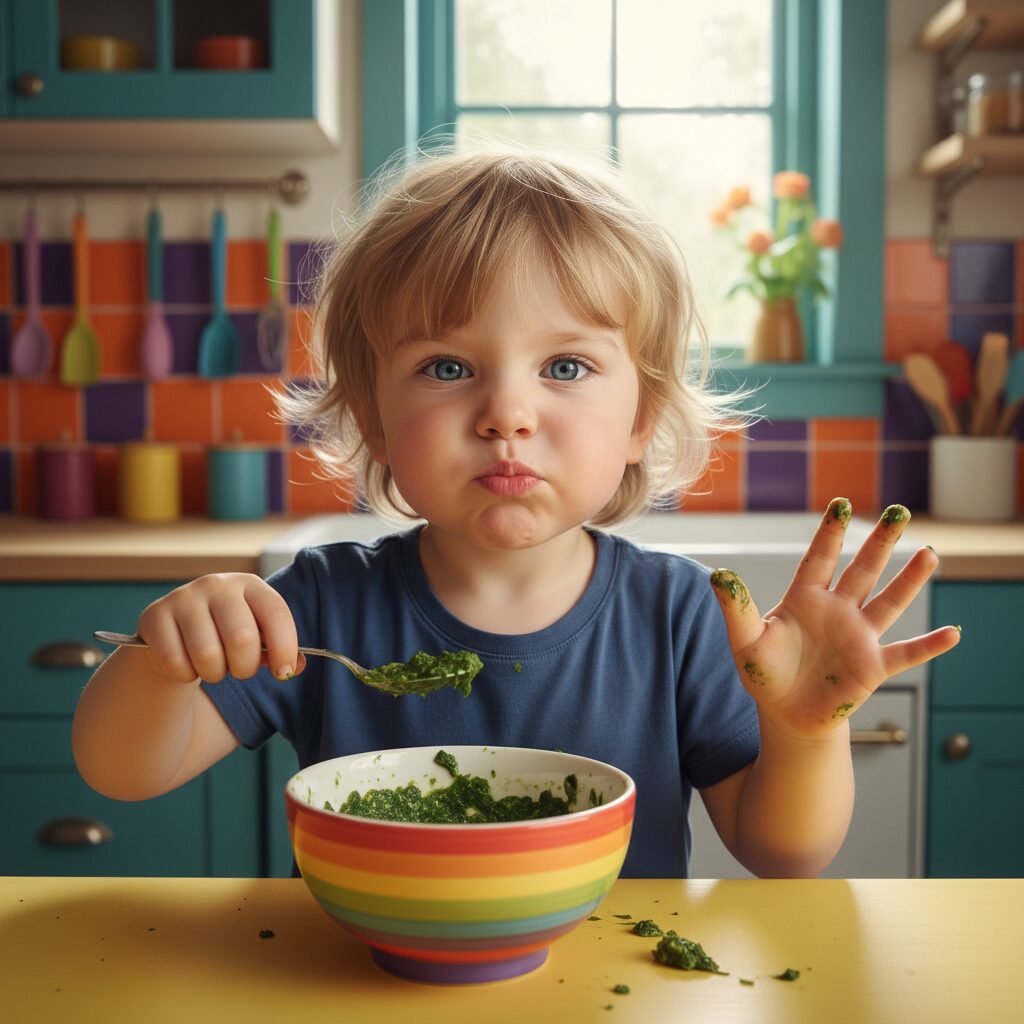
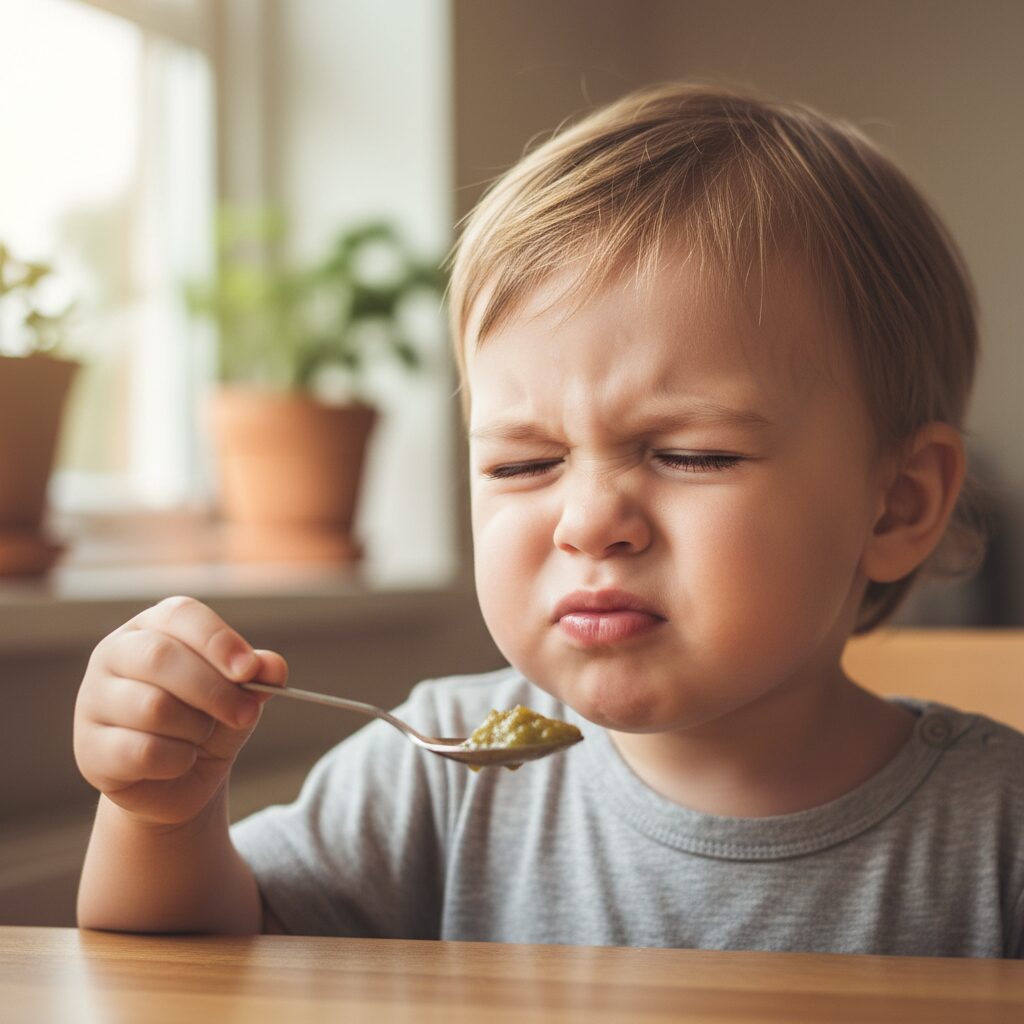
Do you remember when, as a child, you’d grimace whenever someone offered you a spoonful of that mysterious green and bitter thing whose exact ingredient no one would reveal? Yes, that infamous bitter taste that made you jump, frown, and sometimes even trigger a mini-crisis of taste. What if we told you that this visceral fear of bitterness isn’t just a childish whim, but a fully-fledged biological reaction, inherited directly from our ancestors with their sharp teeth and hypersensitive taste buds? Between sensory development, evolutionary heritage, and survival instincts, embark on a surprising journey into the jungle of childhood taste! The bitter taste, that strange signal that makes children cry like a prank by their grandmother, is actually a kind of internal alarm. It’s nothing like a simple, passing aversion. So why this instinctive rejection? Why does our brain scream “watch out, danger!” as soon as we taste something bitter from birth? The answer lies in a fascinating story of survival and adaptation, where our sensory system, still developing in infancy, warns us against potentially toxic substances. Decoding this unusual taste also means understanding how our body guides us to avoid the pitfalls of taste in a world where every bite can be an adventure.
Why was bitterness frightening in childhood: a biological reaction encoded in our genes?
The taste of bitterness didn’t originate from a simple childhood whim but is part of a complex and fascinating biological mechanism. From a very young age, our sensory system is programmed to detect what could potentially harm us. An evolutionary legacy that could be summed up in a single word:
survival. Nature leaves nothing to chance. Many poisonous plants, dangerous mushrooms, and indigestible substances have a distinctly bitter taste. Our brain, in a kind of prehistoric operating system, overinterprets these signals to protect us. Imagine a small prehistoric human gathering forage and biting into an unfamiliar leaf: a grimace, a spit-out, and boom, no poisoning. It is precisely this adaptive reaction that underlies our instinctive fear of bitter tastes during childhood.
But be careful, it’s not just a matter of simple taste texture. Our taste buds, located on the tongue, are highly sensitive to bitter tastes during childhood. This sensitivity sometimes diminishes with age, hence the famous transformation from “I don’t like it” to “oh, actually, coffee isn’t so bad.” Sensory development in children therefore plays a key role. The more numerous and receptive the taste buds, the stronger the reaction. And that’s normal: at this stage, taste is a battery of tests—an internal laboratory for sorting what’s edible from what isn’t.
Children are therefore quite sophisticated bio-electronic detectors, even if they don’t always win the palate lottery with bitter tastes. But don’t worry, it’s not necessarily inevitable. As in any good story, there are exceptions to the rule, and some little ones are true taste explorers despite their initial reaction. This bitter taste, although dreaded, is therefore part of a well-designed biological survival plan. That’s all there is to it! The role of food and the innate aversion to bitter tastes in young children So how can we explain that some bitter foods, like dark chocolate or certain vegetables, become acceptable, even appreciated, in adulthood, when they were considered taboo at age 5? The answer lies in the gradual development of taste, but also in
Ces articles devraient vous plaire
Why white sauces hide mysterious taste secrets
Think white sauce is just milk or cream left in your pan? Think again! Dive into this invisible, creamy world where French cuisine unveils its most mysterious flavor secrets. This perfect blend of smooth textures…
diet
andsensory learning. For babies, the first encounter with food is a pivotal event. Sweet foods are greeted with enthusiasm (thanks to breast milk, which is naturally sweet), while bitter tastes, often very pronounced, trigger an immediate repulsion. This is a kind of natural gastronomic safeguard that limits risk-taking—and prevents them from tasting a toxic plant or an unsuitable preparation.
But gradually, with a progressive introduction to colored purees and compotes, the child’s palate is trained. This phenomenon of sensory habituation is crucial: the more a child is exposed to a taste, the more familiar it becomes. Thus, the fear of bitter tastes diminishes, and curiosity takes over. The instinctive repulsion gives way to a more thorough exploration, often accompanied by slightly less aggressive grimaces.
This is also where taste education comes in. Encouraging a child to taste, without forcing but without excluding them, allows them to expand their culinary horizons. This is a concept not to be overlooked, especially since some bitter foods have definite health benefits (good green vegetables, nuts, etc.). The fear of bitter taste is therefore a natural but malleable reaction, which can transform into a true sensory and gustatory adventure if given the chance. Discover why bitter taste frightened us all during childhood and how our perception of taste develops with age.
Survival and evolutionary heritage: bitter taste versus food traps It can’t be said enough: behind this apparent aversion lies a survival strategy as old as time. Our ancestors survived in a sometimes hostile environment, where a mistake in taste could be costly. Bitterness, therefore, acts as a sentinel, triggering an internal alarm at the slightest hint of a suspicious flavor. It can be compared to a metal detector, but for our palate. Toxic substances, such as certain alkaloids or the chemical compounds of poisonous plants, often display a characteristic bitter profile. This characteristic has been ingrained in our taste system to protect us unconsciously—a bit like a closely guarded secret in our nerve cells.
Ces articles devraient vous plaire

why some people love hot soup in summer, and not just in winter
When the thermometer climbs above 30°C, your first instinct is probably to reach for something ice-cold, right? And yet, for some enthusiasts of unusual flavors and eating habits, hot soup isn’t just reserved for a…
To better grasp this concept, just think of certain cultures where very bitter tea or intense spices are consumed from a very young age. Here, it’s a social and culinary construct that modifies innate perception. This intersection of evolutionary heritage and cultural learning sometimes yields surprising results. Want an unusual example? Remember the famous Battle of Los Angeles in 1942,
a story where collective fears prevailed. Well, the bitter taste in your mouth during childhood functions in a similar way: a slightly paranoid alarm that has saved hundreds of generations.
The mysteries of sensory development: how the fear of bitter tastes evolves with age
When we look closely at the development of taste buds, we observe a veritable molecular ballet within the mouth of a child. Infants possess a large number of taste receptors, especially for bitter tastes, which explains this hyper-reactivity. But patience is key; not everything remains static. Over the years, the density of taste buds and the sensitivity of these receptors often decrease, allowing for a more nuanced appreciation of flavors. This transformation is a necessary step to adapt to varied diets, including bitter foods once they have been avoided like the plague. This process is not linear and varies according to the individual, cultural context, and even the sensory experiences encountered in childhood. Some children retain a marked sensitivity into adulthood, while others become adventurous tasters from early childhood. This evolution of taste also demonstrates the strong links between our physiological state and our sensory perception. The fear of bitter tastes experienced in childhood fades, giving way to more varied preferences, often associated with positive memories of discovery and the pleasure of eating.
Ces articles devraient vous plaire

How viscous foods awaken our dormant senses
Have you ever wondered why certain foods, those strange and gooey things, have this almost magical ability to jolt our senses awake like a shot of adrenaline in a world of dormant taste buds? No?…
In this light, research shows that repeated and controlled exposure to bitter flavors favorably influences the development of a balanced adult palate. In other words, it’s a process of patience where the palate eventually toughens up, or should we say,
becomes more adventurous!
Can we tame the fear of bitter tastes? Practical approaches and tips for those with sensitive palates
If you’re reading this, you probably have a memory, either personal or from friends/family, of a child flatly refusing a bitter vegetable or herbal tea. Good news: this natural battle against bitterness can be eased with a few clever tricks. The key is a
gradual and playful approach. Rather than fighting an instinctive rejection, it’s better to present bitterness from different angles. For example, mix bitter vegetables with milder or sweeter ingredients, or offer mini-taste challenges with small victories as rewards. You also need to play with texture, temperature, and food combinations. Sometimes, a simple pinch of salt (yes, that delicious sweet-and-salty contrast so passionately studied by researchers) can help balance excessive bitterness, helping to overcome the fear of bitter tastes. You can try this home remedy approved by seasoned gourmets.
Ces articles devraient vous plaire

How our taste buds adapt to the most unlikely flavors
Have you ever wondered how your palate finally accepted that black coffee without sugar that you hated as a teenager? Or how you can now enjoy that spicy dish that used to make you cry?…
Another interesting approach: incorporate mealtime rituals that value
tasteful curiosity
rather than obligation. Even the most die-hard bitter foodies can be won over by a game, a story about a vegetable, or a sensory tasting with a variety of flavors. And if bitter tastes still appear too often, should you consult a doctor? Yes, especially if this bitterness is persistent and doesn’t simply correspond to a phase of taste development. Excessive bitterness can sometimes be a sign of disorders such as dysgeusia. In this case, refer to scientific recommendations
to better understand how to tame surprising tastes
and restore a healthy balance. 🦷 Common Cause 🤢 Symptomatic 🛠️ Natural Solution
🏥 When to Consult a Dentist Poor Oral Hygiene Red gums, whitish coating on the tongue
| Thorough brushing, flossing, water flosser | If persists for more than 10 days | Medication Side Effects | Dry mouth, metallic taste |
|---|---|---|---|
| Hydration, sugar-free chewing gum | Depending on discomfort experienced | Gastroesophageal reflux | Acid burps, heartburn |
| Elevate the head of the bed, eat light meals | Frequent and persistent | Dehydration | Dry lips, thirst |
| Lemon water, fresh fruit | No | Liver or kidney disease | Fatigue, yellowish complexion |
| — | Requires medical evaluation | 😵💫 Remember: the fear of bitter tastes is a natural reaction ingrained in our genes. | |
| 🌱 Taste training from childhood can transform this fear into a tasty adventure. | 🛡️ The bitter taste is a bio-protective alert system. |
- 🥦 Sweet and salty combinations can soften bitterness.
- 👶 Every child has their own pace in accepting flavors.
- Why do children have an instinctive fear of bitter tastes?
Because bitter tastes once signaled toxic substances, our bodies are programmed to trigger a repellent reaction to ensure survival.
Does the fear of bitter tastes always disappear with age?
Often yes, because the sensitivity of taste buds decreases and habituation to bitter flavors increases, but some adults remain hypersensitive.
How can you help a child enjoy bitter tastes?
By offering gradual, playful exposure, paired with milder foods to balance the bitterness, without forcing it, and by valuing the discovery.
Can a bitter taste reveal a health problem?
Yes, a persistent bitter taste can be linked to disorders such as dysgeusia, acid reflux, or liver problems, requiring medical consultation.
Why are some bitter foods ultimately enjoyed in adulthood? Because the maturation of the taste system, experience, and food culture alter perception and can transform repulsion into gustatory pleasure.