
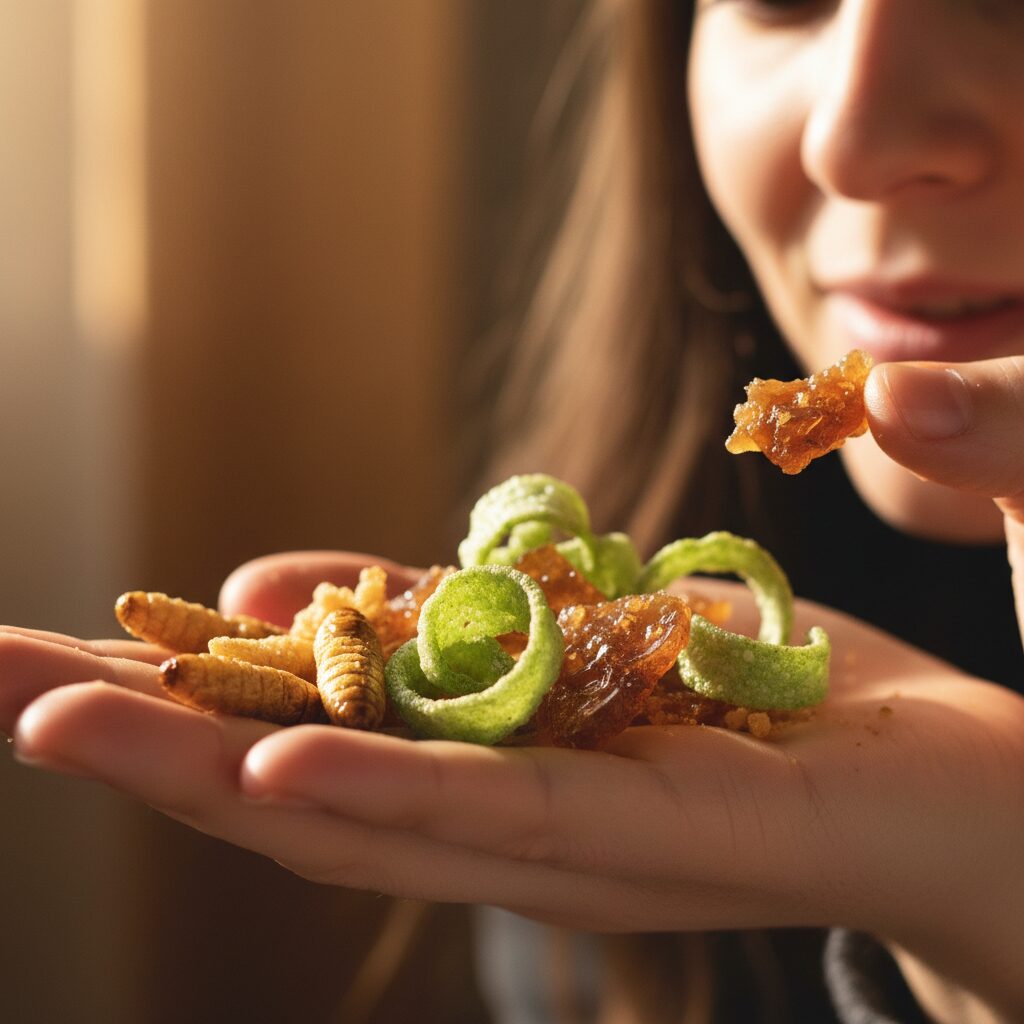
You know that guilty little moment when you grab a bag of chips, a piece of carrot, or maybe even that mysterious biscuit that makes a strange crunch? No, it’s not some exotic reflex reserved for lovers of bizarre noises; it’s a genuine sensory addiction that makes many heads—and jaws—spin. Between the funny yet incredibly powerful pleasure of pulling little crunchy faces and the sweet satisfaction we feel when something simply crunches, there’s a whole world of science to discover. You could even say that behind this simple gesture lies a little festival of our brain, which loves to transform food into a sound and tactile spectacle.
That’s where crunchy snacking becomes more than just a dietary habit: it’s a true ritual that fulfills complex needs. And yes, we’re not (just) mindless gobblers! This slightly WTF question is actually a gateway to understanding our eating habits, our deepest cravings, and perhaps even our slight deviation from traditional eating patterns. Whether you’re the type to savor explosive popcorn or are obsessed with ultra-crunchy raw vegetables, discover why our brains have such a hard time resisting that strange crunch—and how they play with our emotions, sometimes without us even realizing it.
Why crunching is more than just a sound: understanding sensory satisfaction
If you thought the crunch was just a funny sound, think again. In fact, that little cracking sound triggers a chemical reaction in your brain, similar to a mini-party. The idea is that when you hear this sound, your brain receives a dose of dopamine, the famous pleasure molecule, which makes your desire to keep snacking explode. It’s like a miniature firework display right next to your jaw, a real auditory and tactile spectacle that goes click-clack in your head.
But the satisfaction doesn’t stop at the simple sound. Texture plays a key role: the contact of your teeth with a crunchy food causes intense nerve stimulation that goes beyond sight and taste. The result? Your sensory pleasure is amplified tenfold, and that’s precisely what triggers that famous irresistible urge to keep snacking. In fact, crunchy foods are often more appealing than soft or mushy textures because they offer a delightful contrast for both the senses of touch and hearing. For example, people are generally more addicted to the crunch of raw vegetables like carrots than to the melt-in-your-mouth texture of a soft cake. Why? Because the vegetable’s fibers provide the perfect resistance to trigger that satisfying crunch, which is almost hypnotizing to the brain. To learn more about this strange addiction to the crunch of raw vegetables, you can take a look at this fascinating article on
why the crunch of raw vegetables creates a strange addiction
Ces articles devraient vous plaire
How our taste buds adapt to the most unlikely flavors
Have you ever wondered how your palate finally accepted that black coffee without sugar that you hated as a teenager? Or how you can now enjoy that spicy dish that used to make you cry?…
.
But be careful not to reduce it all to simple gustatory and auditory pleasure: this behavior is part of a much broader eating dynamic. The crunchy texture acts as a tactile satiety signal, a way for our brain to say, “Okay, that’s enough, this sensory experience fully satisfies me.” It’s a bit like popcorn at the movies, which never stops exploding with auditory pleasure with every bite—but we’ll come back to that later.
Discover why we enjoy snacking on crunchy foods, an intriguing behavior linked to texture, sound, and the unique sensory pleasure.
- Stress, the major trigger for crunchy snacking
- We can deny it all we want, but your urge to snack on crunchy things is often linked to a complex mix of stress and tumbling emotions. Did you know that many of us use snacking as a kind of stress reliever? Not just any snack, mind you: the kind you get from crunchy biscuits, crispy chips, or dried fruit that crackles between your teeth.
- What happens is that the crunch acts as a tactile and auditory stress reliever. The noise triggers the production of endorphins, the feel-good hormones, which compensate to some extent for ambient stress—whether at work, at home, or while scrolling through social media. This form of “crunch therapy” is a gentle but effective form of self-medication… until the package is empty, of course. Different types of snackers have been identified by studies, particularly in France, and upon closer examination, several groups emerge:
- 🍿 The aperitif enthusiasts, whose joy is directly proportional to the sound of the package opening.
⏰ The busy ones who replace meals with a quick but satisfying crunch. 🧁 Those who snack purely for pleasure and relaxation, a way to forget their stress for a while.
Ces articles devraient vous plaire
Why were we all afraid of bitter tastes when we were children?
Do you remember when, as a child, you’d grimace whenever someone offered you a spoonful of that mysterious green and bitter thing whose exact ingredient no one would reveal? Yes, that infamous bitter taste that…
☕️ Regulars at their coffee breaks at work, who fuel themselves as much by crunch as by caffeine.
🏠 Solitary snackers, often at home, who find intimate comfort in that sound.
| When you understand this, it’s less surprising to see how the crunching sound becomes a comfortable crutch, a double-edged sword, of course: a food habit that can slip into food addiction if it’s not controlled. But don’t panic, there are plenty of techniques to regain control without feeling guilty! The website | explains very well why we look at the fridge even when we’re not hungry | , a reflex that adds a layer of complexity to our eating habits. | Crunchy foods: a journey into the world of addictive textures |
|---|---|---|---|
| So what are these crunchy stars that drive us crazy? As we’ve seen, not all foods are created equal when it comes to crunching: some roll out the red carpet for your sensory receptors with a crisp, dry crunch, while others rely on density or the burst of invisible bubbles. Here’s a little chart to get you started on the main crunchy textures and their addictive effect: | 🍽️ Food | 🔊 Type of crunch | ⚡ Effect on the brain |
| 👑 Examples | Popcorn | Dry burst | Triggers a dopamine rush, super pleasurable |
| Popcorn that bursts in your mouth | Chips | Light and salty crunch | Significant tactile and auditory stimulation, boosts sensory pleasure |
| Classic for appetizers and stressful breaks | Raw vegetables | Clean crunch | Provides a healthy break while giving a feeling of satiety |
| Carrots, celery | Vegetable sticks | Resistant crunch | Relieves stress through prolonged texture |
Healthy snack to unwind without guilt
Ces articles devraient vous plaire
How the taste of certain vegetables shocks our unfamiliar taste buds
Think eating vegetables should be as simple as biting into a juicy apple? Think again! Some vegetables seem straight out of a culinary horror movie, literally making our taste buds jump—those little sentinels on our…
Chewing gum
Repetitive crunch
Altered taste perception, stimulates chewing
- Chewing gum
- This little tour of textures reveals that each crunch has its own effect, but they all point to the same truth: texture and sound are inseparable in the construction of our gustatory pleasure.
- How to tame those crunchy snack cravings
- Now that you know that the famous craving that makes you compulsively grab things that crunch strangely is a real eating phenomenon, you’re probably wondering how to calm this passion before your pack is empty? Don’t panic, there are simple and effective tips to regain control of your eating behavior without frustration.
- Here are six scientifically validated tips to break free from the spiral of compulsive snacking:
- 💧 Drink water at the first sign of hunger: sometimes your craving is just disguised dehydration.
⏰ Eat at regular times to avoid hunger pangs and cravings that lead you to snack on just anything.
🥑 Choose filling foods rich in fiber, protein, and healthy fats that prolong satiety.
🍏 Plan a healthy snack to avoid succumbing to ultra-processed foods.
🦷 Brush your teeth after meals: the fresh taste reduces the urge to eat again immediately.
🧠 Listen to your emotions so you don’t confuse hunger with stress or boredom.
These simple habits help transform your eating into a moment of mindful pleasure, rather than something you endure. However, nothing prevents you from indulging in a crunchy snack from time to time; after all, crunchiness stimulates our secret food addiction,and it’s hard to say no to that!
Why do we love crunchy snacks so much?
Ces articles devraient vous plaire
why some people love hot soup in summer, and not just in winter
When the thermometer climbs above 30°C, your first instinct is probably to reach for something ice-cold, right? And yet, for some enthusiasts of unusual flavors and eating habits, hot soup isn’t just reserved for a…