
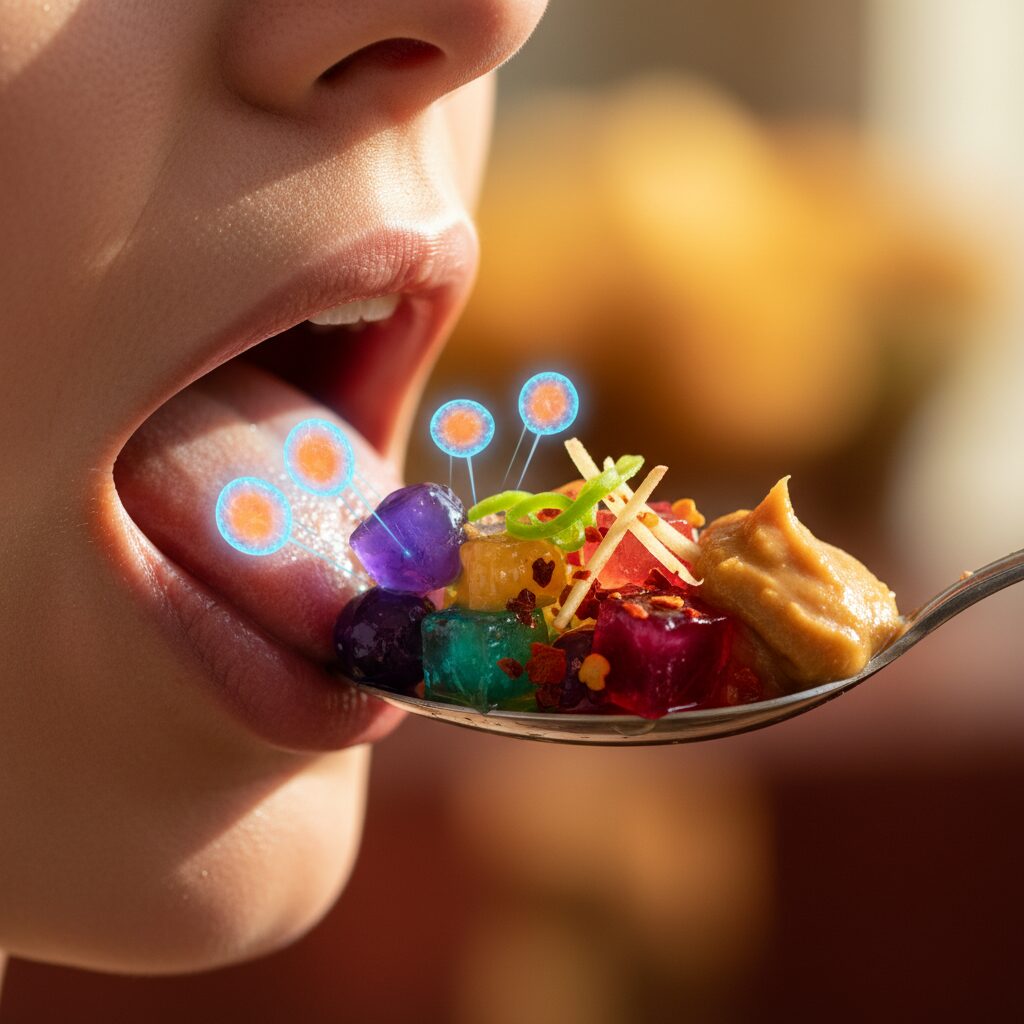
Have you ever wondered how your palate finally accepted that black coffee without sugar that you hated as a teenager? Or how you can now enjoy that spicy dish that used to make you cry? The answer is that our taste buds are true artists of taste plasticity. They adapt, acclimate, and evolve to transform unlikely tastes into everyday pleasures. This phenomenon isn’t just a whim of your brain, tormented by the idea of eating bitter asparagus or blue cheese that smells like stale slippers: it’s a complex mechanism, both biological and cultural, that makes every meal a sensory adventure. Beneath this cloak of ordinary organicity lies a true metamorphosis, orchestrated by taste sensitivity and the learning of flavor. Let’s dive together into this fascinating world where the body plays the role of both a jaded spectator and an enthusiastic dancer in front of the gustatory spectacle.
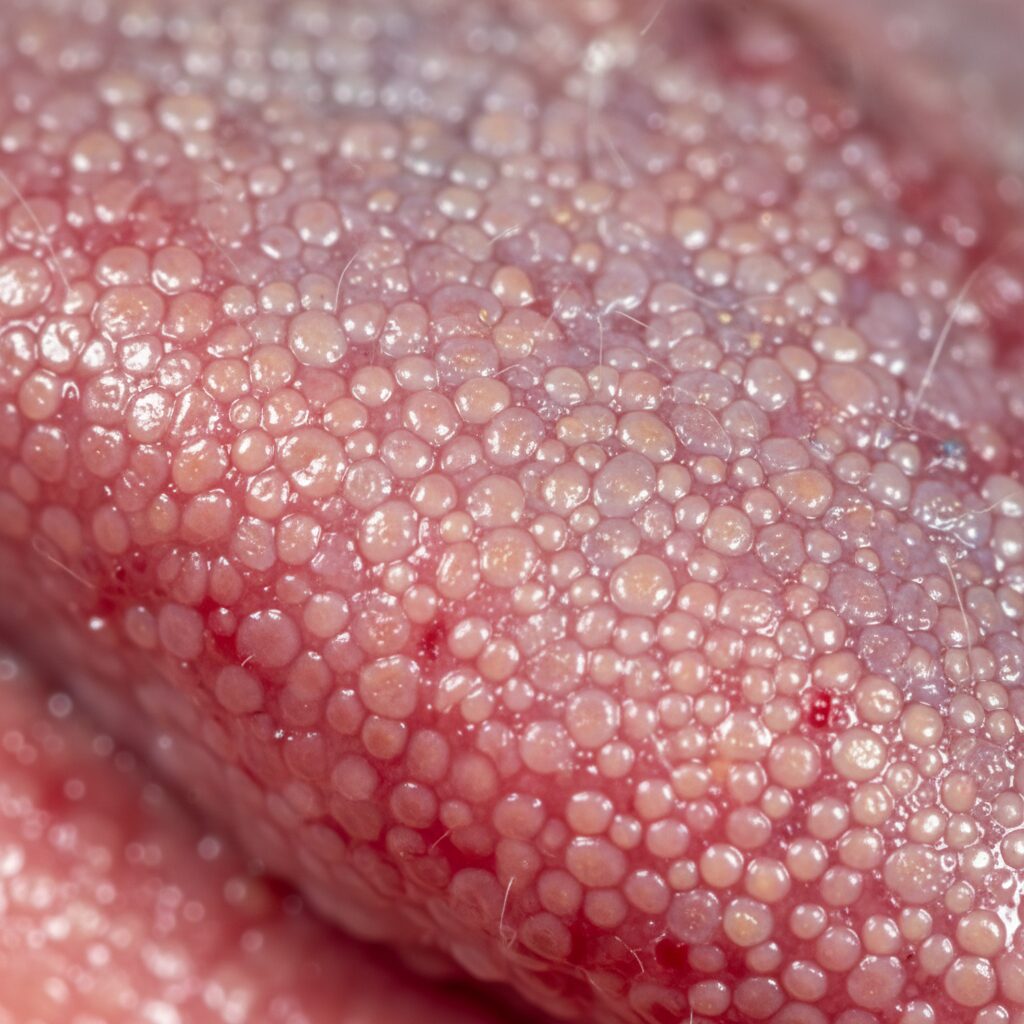
What mechanisms allow our taste buds to adapt to unusual flavors? First, it’s important to understand that theplasticity of tasteis a kind of biological superpower. Our taste buds, those little bumps on your tongue, aren’t static like a dusty old painting. They’re dynamic, capable of changing depending on what we expose them to. When we talk about
taste bud adaptation, we’re referring to a phenomenon where sensitivity to a flavor gradually decreases, allowing us to accept tastes that initially seemed unpleasant or too intense.
For example,
taste acclimatization Bitterness, very common in green vegetables like broccoli or kale, follows this pattern. The first time someone tastes a bitter food, the experience is often off-putting, but with repeated exposure, the unpleasant sensation diminishes. This ability to adapt to different foods is therefore essential for diversifying your diet, and even for surviving adolescence without systematically hating what tastes good (although…). The scientist John Prescott sums up this idea well: “Taste perception is not a straight line; it is a winding journey where each stop alters the final destination.” Basically, this means that your palate is malleable, that it can learn to like unlikely flavors with enough exposure.
Moreover, this plasticity also involves changes at the brain level. The brain, this great conductor, constantly reinterprets the signals sent by the taste buds, thus influencing what you truly feel when you perceive a flavor. This process explains why you can have a positive emotional memory of a dish, even if it initially tasted awful. And that’s how your sensory experience becomes a story that enriches your taste perception. However, it’s not all sunshine and rainbows. Some flavors, like bitterness, have historically been associated with toxic substances, which explains why our taste buds are particularly sensitive to these tastes. To understand why we avoid certain foods, especially those that move around on our plate (a practice still deeply ingrained in some people), feel free to take a look at this very informative article on why we avoid foods that move around on our plate.
Ces articles devraient vous plaire
Why do we like to snack on things that make a strange crunching sound?
You know that guilty little moment when you grab a bag of chips, a piece of carrot, or maybe even that mysterious biscuit that makes a strange crunch? No, it’s not some exotic reflex reserved…
How does our brain influence the learning of taste for exotic or unusual flavors?
The brain therefore plays a key role in food habituation.Imagine that your taste buds detect an ultra-spicy flavor, like Andean chili pepper, a taste that in your food culture would be classified as “dangerous.” Your brain will interpret this information, associate it with an experience, good or bad, and decide whether you should continue or run away. This mechanism is particularly important in a world where cuisine is becoming globalized and where improbable flavors arrive in your mouth via Asian street food or a fishmonger at an exotic market. It’s thanks to this dynamic that you can end up appreciating wasabi, kimchi, or even very moldy cheeses (maybe you should even try to understand why we were all afraid of bitter tastes as children inthis great article full of information
it’s fascinating). What’s cool is that there’s a real interaction between taste memory, culture, and curiosity. The brain encourages a voluntary learning of taste that works like a muscle: the more you practice, the more you want to try new things. Some researchers even talk about “taste sensitivity,” which encompasses not only the reception of signals by the tongue, but also your brain’s ability to decode and enrich these sensations with memories of smells and emotions. The amalgamation of all this sensory data produces a unique cocktail, which explains why some people eat durian without batting an eye while others would flee from this smell, as charming as an abandoned chicken coop.Here’s a quick list of factors that influence your taste development:
🌶️
Repeated exposure
- to a flavor, even a confusing one 🧠 Emotional memory
- linked to a dish or ingredient 🌍 Food culture
- specific to the place and social group 😋 Curiosity and the context
- in which you taste 🍽️ Textures and accompaniments
- influencing perception Taste bud tolerance to bitterness and acidity: why do we end up liking the unlikely?
Ces articles devraient vous plaire

How street food reveals deliciously strange oddities
Imagine yourself wandering through a bustling Asian market or a colorful Latin American street corner, drawn by the enticing aromas of food that tickle your nostrils, but also by those bizarre dishes that raise an…
Bitterness
is probably the most polarizing flavor your taste buds have to face. It’s also the least appreciated by children, a fact perfectly justified by evolutionary protection: bitterness often signals the presence of natural toxins. No wonder you avoid bright green vegetables while preferring sugary candies. And then one day, your taste buds evolve. Bitter broccoli becomes not only edible, but delicious! Moreover, acidity also plays its intriguing role in this gustatory alchemy. You know that little tingle from lemon or vinegar that awakens your palate? It’s not just a temporary jolt: it’s your taste buds’ way of saying, “Hey, open yourself up to new experiences.” Over time, repeating these sensations helps modulate the intensity with which you perceive these flavors, which considerably expands your taste palette.
This process is so fascinating that it can even be visualized as a comparative table between a new taste and its perception at different stages of taste bud adaptation:
Exposure Phase 🧪Initial Perception 😖 Perception After Acclimatization 😌
| Concrete Example 🍽️ | 1. First Bite | Taste too strong, often rejected | Not applicable |
|---|---|---|---|
| Black coffee without sugar | 2. Regular Habituation | Decreased sensitivity, tolerance | Taste becomes acceptable, even pleasant |
| Bitter beers, green vegetables | 3. Conscious appreciation | Sometimes a tingling of the taste buds 😅 | Fullness of gustatory pleasure |
| Strong cheeses, spicy dishes | To delve deeper into bitterness and what it means, consider rereading why bitter tastes are frightening during childhood in this super detailed article | that sheds new light on the subject | . It’s a must-read to impress your friends at parties. |
What culinary experiences reveal our taste buds’ ability to adapt to strange flavors? There are many ways to demonstrate theplasticity of taste
Ces articles devraient vous plaire

Why were we all afraid of bitter tastes when we were children?
Do you remember when, as a child, you’d grimace whenever someone offered you a spoonful of that mysterious green and bitter thing whose exact ingredient no one would reveal? Yes, that infamous bitter taste that…
with concrete examples. For instance, Asian populations regularly consume fermented foods like kimchi or natto, dishes that, to an unaccustomed palate, might seem downright disgusting. Yet, the inhabitants show a clear tolerance and love for these flavors thanks to early and repeated exposure.
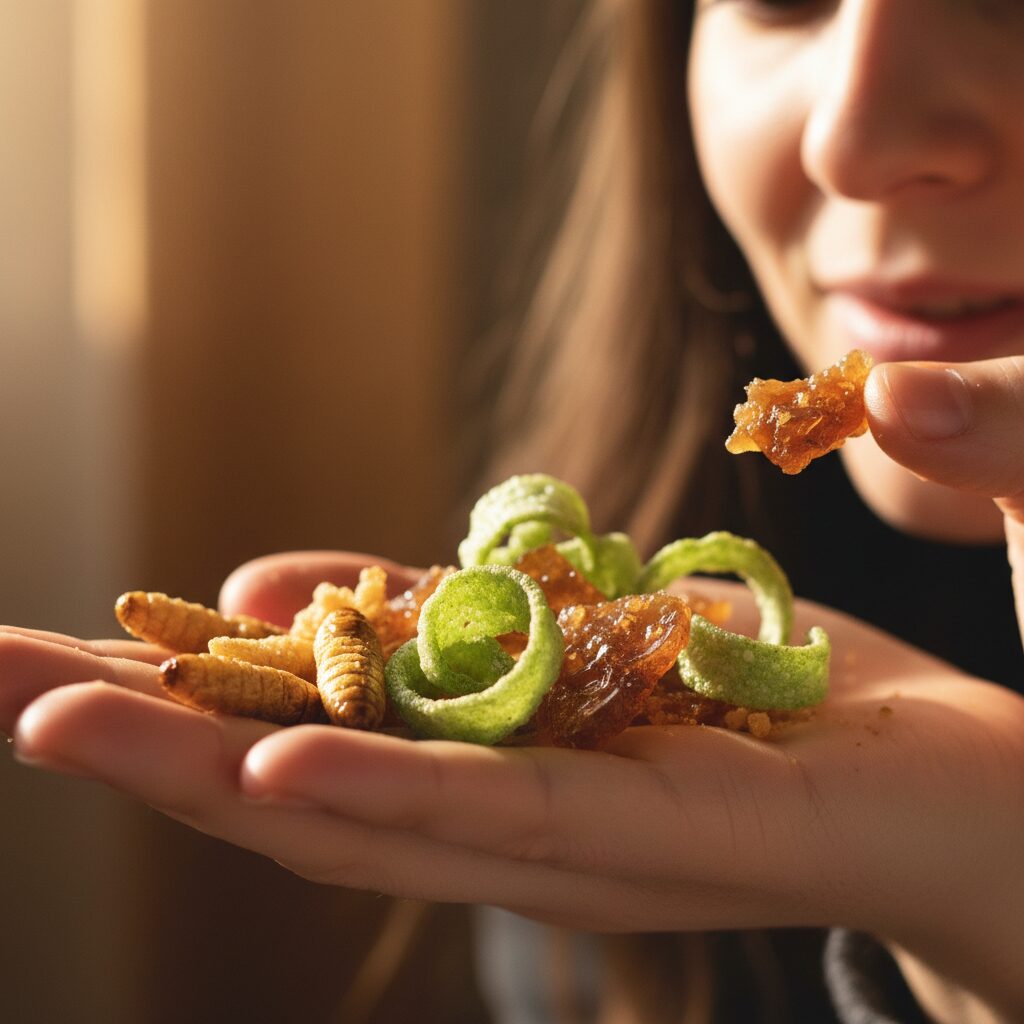
In the same vein, consider those who love blue cheeses or strong-smelling seafood—a veritable explosion of aromas that might initially make you want to run away, but which the palate ultimately finds exquisite. Some modern cuisines even push the boundaries with molecular gastronomy or dishes made from edible insects. These unusual flavors are all challenges for your taste buds, which you can overcome by embracing curiosity. This approach stimulates your brain, which will register each experience and enrich your culinary learning.
To spice things up, here’s a selection of practices that promote
taste acclimatization: 🧄 Regularly try new spices and ingredients
- 🥒 Eat slightly bitter vegetables several times to “tame” the bitterness
- 🍜 Explore a variety of exotic cuisines (Thai, Ethiopian, Korean, etc.)
- 🧪 Have fun with molecular gastronomy recipes, mixing textures
- 🐜 Dare to try edible insects to step out of your comfort zone
- Want to understand why eating a strange, moving food gives you the chills? We’ve already explored this topic in this other article
that will help you think outside the box. Do our taste buds have limits when it comes to adapting to different flavors?
Ces articles devraient vous plaire
How the taste of certain vegetables shocks our unfamiliar taste buds
Think eating vegetables should be as simple as biting into a juicy apple? Think again! Some vegetables seem straight out of a culinary horror movie, literally making our taste buds jump—those little sentinels on our…
Despite this incredible capacity for learning, some tastes can remain unbearable, even after numerous attempts. Each individual has their own taste sensitivity, influenced by genetics, environment, and psychological context. In 2026, science confirmed that some of us remain “supertasters,” meaning we are hypersensitive to certain tastes, particularly bitterness, making our flavor palette highly selective.
But rest assured, the fact that some flavors remain difficult to tolerate isn’t a flaw, but a natural defense mechanism or simply a deeply ingrained preference. Sometimes, the key is to approach tasting with humor and a light touch, because the brain loves to guess and re-evaluate past experiences to create a new appreciation. Never underestimate the impact of the social context either: eating with curious friends in a relaxed atmosphere can certainly help tame even the most adventurous tastes. Here’s a little diagram to remind you that
- taste bud adaptation is also a matter of balance: 😣
- Initial rejection of a strong or unfamiliar flavor 🔄
- Repeated exploration which reduces sensitivity ❤️
- Gradual appreciation and gustatory development 🛑
- Individual limits imposed by genetics or past experiences 🎉
Cultural and social influence
facilitating acceptance
Ultimately, our taste buds are true adventurers, provided we give them enough opportunities to express themselves.
How do taste buds adapt to bitter tastes?
Taste buds reduce their sensitivity to bitterness through repeated exposure, thus decreasing initial rejection and developing a gradual appreciation.
Why do some people never tolerate certain tastes?
Taste sensitivity is partly genetic; some individuals, called supertasters, have a lower tolerance threshold for certain flavors, particularly bitterness.
Does the brain really influence taste?
Yes, the brain interprets and modifies taste perception based on memory, emotions, and context, playing a crucial role in learning about taste.
How does varying textures help us appreciate a dish?
Different textures create a complete sensory experience, enriching taste perception and facilitating the acceptance of new or strong flavors.