
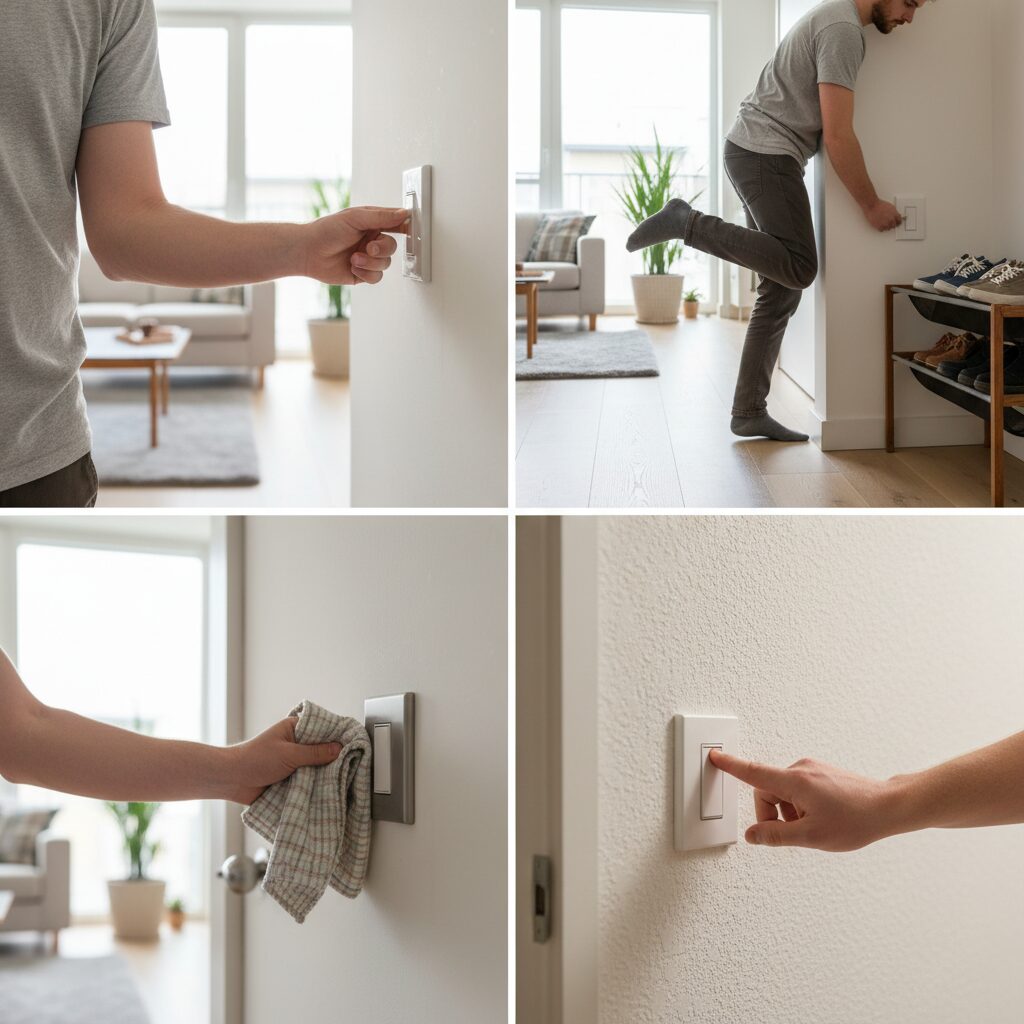
Who would have thought that this small button, often invisible but always present in our homes – the light switch – could be the site of some rather surprising oddities and habits? While technology and home automation are increasingly present in our daily lives, light switches remain, at first glance, those basic objects we operate without thinking. Yet, they conceal surprising behaviors and uses that can influence not only our lighting but also our safety, our energy savings, and even the overall atmosphere of our homes. Ready for an electrifying journey into the secret habits of household light switches? 🔌💡 Why certain habits with light switches can put your home in danger ⚠️
Most of the time, we think that using a light switch is simple: we press it, the light turns on or off. But surprise, behind this simplicity, bad habits can seriously compromise your electrical safety. Did you know that
8 out of 10 electrical installations over fifteen years old no longer meet current standards? And that these outdated practices can directly lead to fire or electrocution risks in your home? 😱 A common habit is to endlessly repeat the famous “on-off-on-off” when the light switch refuses to respond. This little ritual can prematurely wear out switch mechanisms, generate sparks, or even cause localized overheating. Not to mention electrical panels with loose connections or aging switches that can become the domestic equivalent of a time bomb 🌋. The scariest part? These risks are often invisible to the naked eye! Another unsuspected culprit: the accumulation of misused power strips. Plugging hubs, lamps, and other gadgets into the same outlet via a power strip invites electrical overload. This stress is something neither the switch nor the electrical panel appreciates. The result: increased risks of fire and intermittent connections. More than just a habit, it’s an electrical practice to avoid like the plague.
To prevent this, it’s advisable to have your electrical system regularly inspected by a professional. They will be able to identify faulty outlets and switches, check the tightness of connections in the electrical panel, and replace any broken components. Don’t play electrical wizard when it comes to your safety!
Protecting your home also means knowing these habits to avoid to prevent your switch from becoming an explosive device.
Discover the surprising and unexpected habits related to the use of switches in our homes, and how they influence our daily lives. How Technology and Home Automation Are Revolutionizing Our Habits Around Light Switches 🏠⚙️
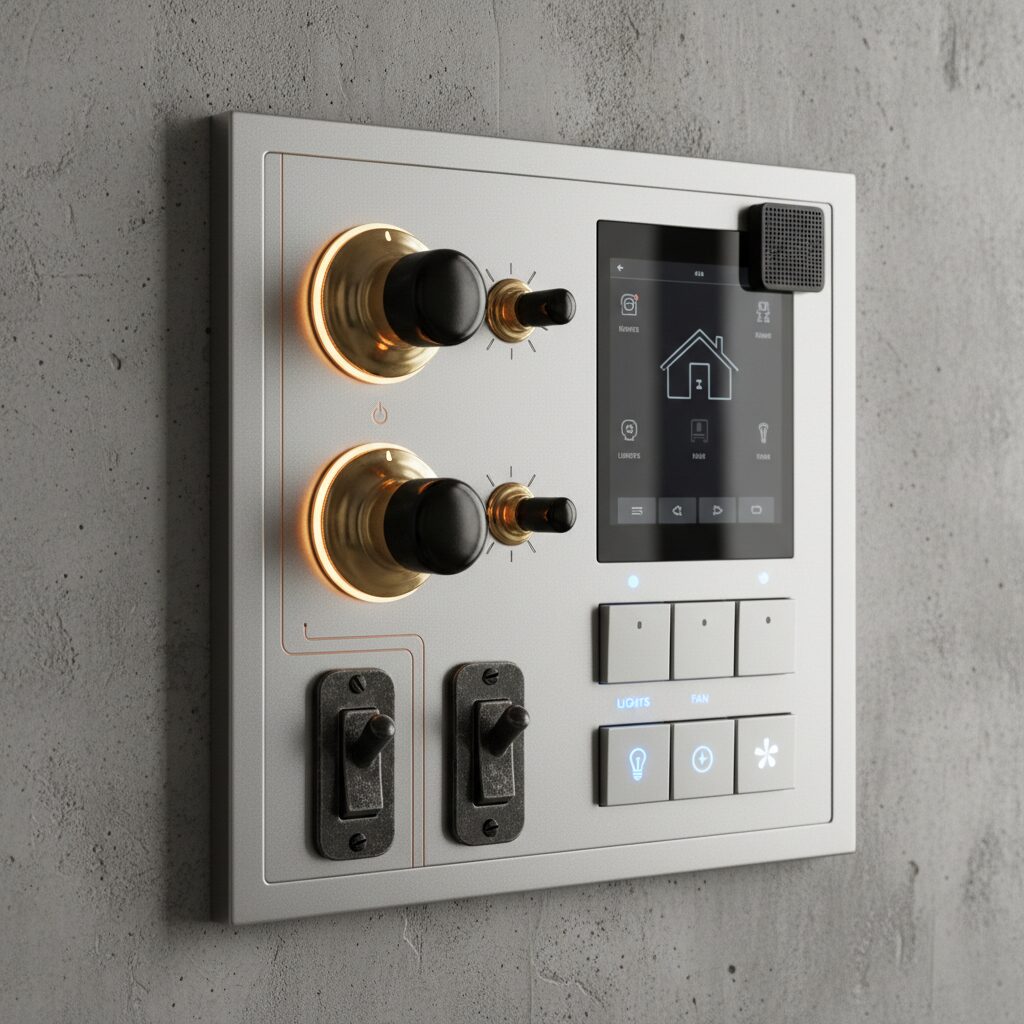
In 2026, the home automation revolution isn’t limited to voice assistants or robot vacuums. It’s even reaching the humble light switch, the unsung hero of indoor lighting. Home automation and technological innovations are gradually transforming our interactions with light switches.
Ces articles devraient vous plaire

Ordinary object or unsung hero? The incredible story of the lighter
Think the lighter, that little gadget we pull out of our pockets to light a cigarette, a campfire, or even sometimes conduct less-than-safe pyrokinetic experiments, is just a simple, everyday object? Think again! Behind this…
But what habits are changing? Well, new technologies are clearly encouraging smarter behavior to save energy.
No more lights left on by mistake, thanks to smart switches equipped with motion detectors or programmable according to your schedule. And you thought it was just about saving a few cents on your electricity bill? Think again: the environmental impact of this small, connected gesture is significant.
Furthermore, some ultra-connected homes utilize personalized lighting scenarios, adjusting the ambiance based on the time of day, the outside light, or even your mood (yes, that mischievous house that knows when you want to relax). These innovations, far from being superficial, are actually changing our relationship with home lighting—transforming the light switch from a passive object into a true interactive interface. Who would have thought that the simple act of pressing a button could become an experience worthy of a science fiction film?
https://www.youtube.com/watch?v=Psh_ATkBXUw Strange Habits: Why do some people prefer to turn light switches on or off in a specific order? 🤔 While turning on lights is a reflex, light switches can sometimes become a source of intrigue and even superstition. In some families or cultures, curious behaviors are observed around light switches: turning on the lights in a specific order or turning off some rooms before others, as if an age-old ritual were taking place behind the door.
Ces articles devraient vous plaire

How the mouse pad invaded our offices without us even realizing it
Have you ever wondered how this small piece of fabric, foam, or sometimes even plastic, often underestimated, became an essential part of your desk? No? Don’t worry, you’re not alone. Yet, the mouse pad has…
From a scientific perspective, these behaviors are fascinating because they illustrate a mix of superstition and cognitive reasoning. In any case, the switch becomes a kind of totem, a ritualized object used to better manage one’s relationship with domestic electrical risks.
This idea of ritual also relies on a form of insurance: by strictly controlling the order and method of switching on and off switches, one attempts to control a potential source of danger invisible to the naked eye. Not a bad idea when you consider that 64% of older electrical installations have faulty grounding and that
electrical current doesn’t forgive carelessness.
A good excuse to be a little more careful with your light switches, right?
Ces articles devraient vous plaire

Funny and educational: do chairs have a history?
We sit on them every day without giving it a second thought, and yet, a chair isn’t just a piece of wood with a backrest. It’s an object steeped in history, culture, design… and even…
When it comes time to choose a light switch for your home, it’s not just about design or style! Safety and innovation should be the primary criteria. Beware of installing vintage or damaged switches that can reveal their true nature when you least expect it: a guaranteed fire or electrocution. 😬
Here are a few golden rules to incorporate into your electrical habits:
- ⚡ Choose switches that comply with current standards (NF C 15-100 in France), because they incorporate technologies that limit the risks of sparks and overheating.
- 🧰 Calle a qualified professional
- for any installation or renovation to avoid disastrous DIY modifications. 🔍
- Regularly check the tightness of the electrical panel connections to prevent any loose connections. An annual visit to an electrician is always a good idea.
- 🛑 Never force a plug into a socket or switchas this damages the components and creates dangerous mechanical hazards.
♻️ Replace outdated switches that are more than 15 years old
Ces articles devraient vous plaire

The hidden role of a pocket watch and its legendary secrets
Ah, the pocket watch! This little engineering marvel, tucked away in a waistcoat or jacket pocket, is much more than simply telling the time like a smartphone overflowing with useless apps. No, this mechanical gem…
, especially if your installation doesn’t comply with current standards. Safety first!
Some modern technologies also facilitate maintenance, such as switches with status feedback or connected systems that can detect malfunctions early. In short, innovation can work in your favor to secure your electrical installation.
This proactive management is all the more important given that home electricity is at the heart of the risks in 2026, particularly with the increase in energy-intensive electrical equipment – like electric cars charging in your garage 🏎️.
| Maintaining your installation means saving your home and your comfort. | Why do certain behaviors around light switches promote energy savings and better lighting management? 💸🌿 Did you think a light switch was just an ordinary appliance? Think again: it’s also one of the primary ways to optimize electricity consumption in your home and contribute to a more energy-efficient and responsible house. | Some surprising yet effective habits make a difference. For example, regularly using switches with built-in timers encourages you to remember to turn off the lights when you leave a room. Similarly, touch-sensitive or remote-controlled switches help reduce energy consumption by preventing you from turning on all the lights when only one is needed. Home automation innovations now offer complex scenarios where lighting adjusts automatically based on natural light, the presence of people, and even off-peak hours. This promotes better energy management and significantly reduces your bill and carbon footprint. A simple action, a tangible impact. | |
|---|---|---|---|
| Here’s a little comparison chart 📝 to show you the concrete impact of adopting these new lighting habits: | Habit 💡 | Impact on consumption ⚡ | Environmental benefit 🌿 |
| Comfort | Use touch switch with dimming | Reduction of up to 20% | Reduced emissions related to electricity production |
| Personalized ambiance | Smart switch with motion detection | Fewer lights left on | Less energy waste |
Convenient automation Turn off lights when leaving a room
Direct savings Reduces energy demandIncreased awareness
Small habits, sometimes strange at first glance, but which truly contribute to a more sustainable lifestyle.
In 2026, it’s much more trendy to be sensible than to compete in the number of light bulbs left on in the house.
Want to discover other vintage gadgets from homes of yesteryear that used to thrill your brain? Take a look at this article about
vintage fridges that flash like an 80s disco
to keep the curiosity going a little longer!
Why do some switches make a strange noise?
The noise is often due to a worn internal mechanism, creating sparks. This is a sign that they need to be replaced soon to avoid the risk of fire.
Do smart switches use more electricity?