
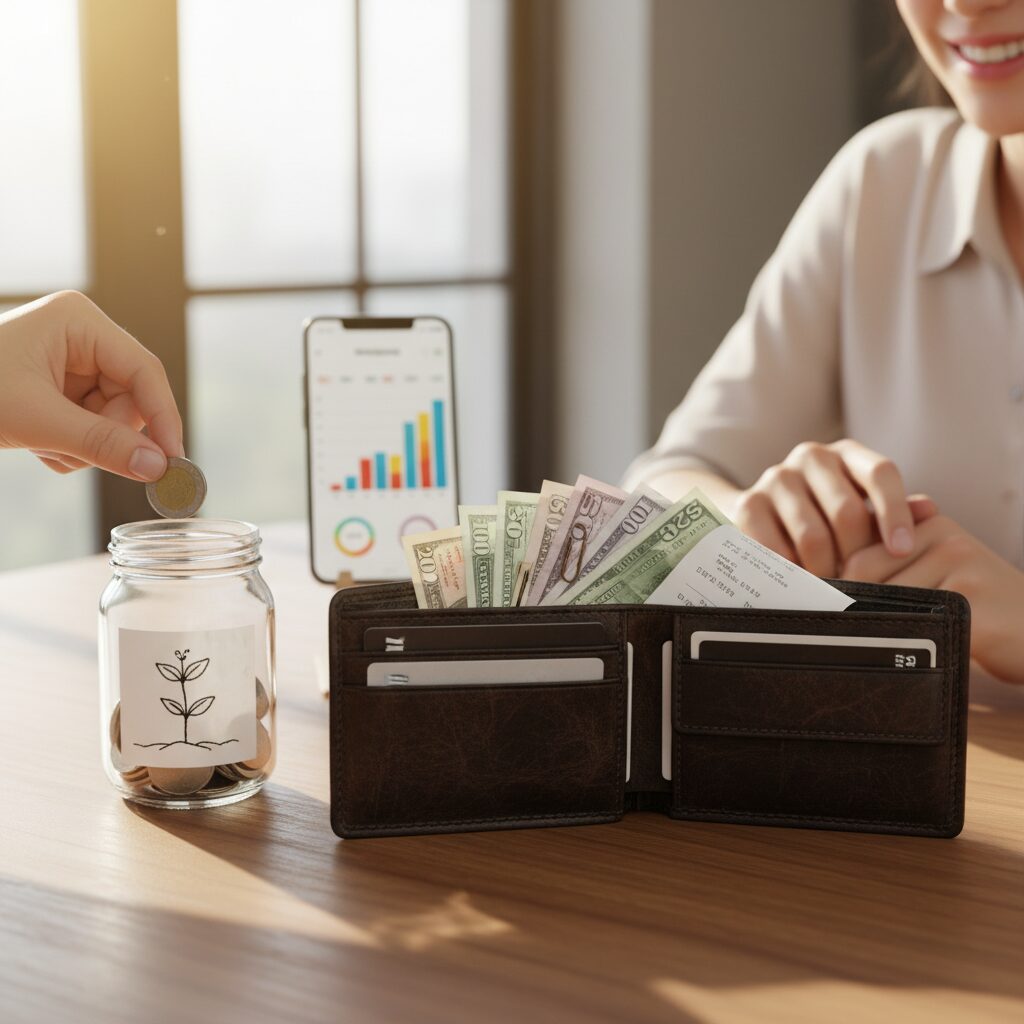
Have you ever noticed how your wallet seems to have a life of its own, with its strange little habits that influence your finances without you even realizing it? From always keeping a light-colored coin at the bottom, to the clumsy attempt to never exceed a certain number of bills, or even that bizarre ritual of arranging your money in a strict order (new bills in front, old ones in back – because, why not!), there’s a whole surprising world surrounding this simple object. These behaviors, far from being insignificant, actually reflect financial management habits that indirectly impact your daily budget and your savings. So, before you throw your wallet out the window at the next unexpected bill, let’s delve into the fascinating world of little wallet habits, where every gesture, however bizarre, reveals a little more about how you’ll manage your spending money in 2025.
Why keeping a coin in your wallet changes your financial management
Stop everything: this unhealthy obsession with keeping a coin, often a 1-cent coin (yes, that penny!), isn’t just an old cheapskate habit, but a genuine financial habit rooted in our collective unconscious. Keeping a coin in your wallet is often considered a lucky charm, supposed to attract wealth and prosperity—a persistent superstition that lingers even in the age of contactless cards. Yes, even in 2025, many people refuse to leave the house without their lucky metal companion tucked away in their wallet.But beyond the folklore, this practice actually influences your relationship with money. According to cognitive science studies, knowing you have something to “save” or to carefully preserve activates a small psychological reward, a tangible reminder that saving is possible, even a small amount. It’s a discreet but effective mini-money management trick that helps control spending.
It also encourages you to make small savings more easily. When you notice that forgotten coin, you’re more inclined not to spend any money on unnecessary extras, because that shiny little pebble at the bottom evokes a small nest egg to protect. In short, it’s a safeguard against the temptation of impulsive purchases. This aligns with common advice for effective budgeting, where discipline involves constant attention, even to the smallest details. For example, the logic of keeping a “nest egg” allows you to incorporate the golden rule of financial management: don’t spend what you don’t have, a mantra that this simple metal object helps you apply unconsciously. Be careful, however, not to get carried away and become a compulsive collector of unusual coins, at the risk of unnecessarily burdening your wallet and increasing your financial stress. It’s also interesting to note that in some cultures,
a coin in your wallet symbolizes good luck and protects against poverty.
A little tradition that proves that even finance can be fun, a little magical, while remaining serious in its daily consequences. Discover incredible little habits to better manage your wallet and save money every day.
The secret ritual of organizing your bills: why you do it without realizing it. If you’re the type to line up your bills like a Swiss bank, sorting new ones from old and putting small bills behind large ones, you’re not alone in developing thisincredible little habit around your wallet.

Ces articles devraient vous plaire

The hidden role of a pocket watch and its legendary secrets
Ah, the pocket watch! This little engineering marvel, tucked away in a waistcoat or jacket pocket, is much more than simply telling the time like a smartphone overflowing with useless apps. No, this mechanical gem…
This seemingly trivial arrangement hides a real financial organization strategy rooted in your psychology.
It’s called “visual budgeting.” By sorting your bills, you create a concrete reference point that makes managing money tangible—it prevents you from going through the day with the feeling of a mysterious, barely controllable wallet. This technique is even recommended by some financial management experts to keep an eye on your daily expenses without necessarily keeping a notebook.Imagine you keep the small bills at the back and the large ones at the front: you’ll instinctively use the small ones first, which helps your money last. Not bad for preserving a minimum of savings without stressing yourself with a sudden budget.
Another cool benefit: arranging your bills in descending order helps you avoid a phenomenon called “psychological lag.” Sometimes, when you have a lot of loose bills, you end up spending without thinking because “it’s just paper.” Order reintroduces a sense of real value, making you aware of the amount of money you have on you. This method encourages you to practice effective budgeting effortlessly because you instantly visualize your available funds. No need for a complicated app; your mental map is enough. Plus, it reduces the risk of controlled spending spiraling out of control when you lose track of how much money you actually have left.
A little tip to take the technique even further:
Combine this order with a mini-plan of your daily expenses. For example, €10 for lunch, €5 for coffee, and that’s it. You’ll see, it’s simple, you’ll seem to be managing a real safe. Provided you don’t give in to temptation at the bus stop, staring up at the chocolate shop window…
https://www.youtube.com/watch?v=jClH-UH4X3A The real secrets of thrifty people: these little financial habits that pay off If you want to shine at your next “useless but true curiosities” party, here’s a tip to slip in: people who manage their money intelligently don’t just keep a budget in an Excel spreadsheet (which often ends up in the “too difficult” folder). They exude deep financial habits, often invisible but crucial.
Here’s a short list of habits that could transform your wallet and free you from struggling at the end of the month:
Ces articles devraient vous plaire

Funny and educational: do chairs have a history?
We sit on them every day without giving it a second thought, and yet, a chair isn’t just a piece of wood with a backrest. It’s an object steeped in history, culture, design… and even…
💸
Save on every raise rather than increasing your spending. This classic strategy allows you to grow your savings effortlessly.
🏡
- Maintain a sustainable lifestyleinstead of frantically chasing after the latest trends or fashionable gadgets, much like avoiding unnecessary
- curved-screen phones. 📊 Practice a simple form of budgeting like the famous 50/20/30 rule: 50% for necessities, 20% for savings, 30% for extras—simple and effective.
- 💳Never put a penny on a credit card unless you can pay it off
- on time, otherwise, hello debt trap. ⏳
- Learn patienceand save up for your big purchases instead of giving in to immediate gratification. It works better than buying your Christmas sweaters on sale at the last minute, as mentioned inthis festive column. Beyond these simple principles, the real secret of the best managers is to
not consider financial management as a battle, but as a fun and accessible habitIt’s a kind of mini-discipline, both fun and essential, that your wallet will thank you for every day.
Ces articles devraient vous plaire

Ordinary object or unsung hero? The incredible story of the lighter
Think the lighter, that little gadget we pull out of our pockets to light a cigarette, a campfire, or even sometimes conduct less-than-safe pyrokinetic experiments, is just a simple, everyday object? Think again! Behind this…
Avoiding the pitfalls of an overflowing wallet: tips to lighten its load We’ve all experienced that dreaded moment: your wallet is full of holes, crammed with receipts, forgotten old loyalty cards, and coins jingling everywhere… More dead weight than a financial ally! And yet, this recurring mess is a real enemy of controlled spending and serene financial organization. So how do you lighten this chaos and transform your wallet into a true tool for daily savings? ✅ Do a thorough cleaning regularly, even emptying your wallet completely, sorting through it, and keeping only the essentials: bank card, a few bills, important coins, and throwing away unnecessary receipts. ✅
Opt for a minimalist format,
like a slim leather wallet that forces you to carry only the essentials and avoids embarrassing clutter.
✅ Prioritize contactless or smartphone paymentswhen possible, to reduce the amount of cash and paper you accumulate. Besides, it’s not so different from sometimes doing a tech audit:
like this transparent toaster, a completely crazy idea! ✅ Check your subscriptions: you know, those small automatic monthly payments that we quickly forget about and that nibble away at our accounts. A quarterly check often frees up several tens of euros, which will be much more useful elsewhere.
These simple steps are almost magical for lightening your budget, revitalizing your wallet, and above all, making you feel more in control. It’s not just economical; it’s almost therapeutic to simplify your relationship with money in this way. Tips 👍 Benefits 💰 Feelings 😀
Regular wallet cleaning
| Gain space, reduce impulsive spending | Serenity, control | Opt for minimalism |
|---|---|---|
| Less stress, better organization | Calm, satisfaction | Control your subscriptions |
| Long-term savings | Pride, responsibility | How small wallet habits influence your daily finances |
| Think about it: it’s not just the size of your wallet that determines whether you save money, but rather the small decisions you make every day. These habits, often invisible at first glance, have a huge impact on your overall financial management. Good financial organization starts first and foremost with paying attention to those details that seem barely worth considering. For example, secretly spending behind your partner’s back is a direct path to conflict and unnecessary financial stress, according to the observations of economic psychologists. It’s amazing how a well-managed wallet can be a social mediator! | By the way, do you want the best strategy to prevent money leakage? Start by implementing the “wait a week” rule before making an impulse purchase. If that item you’ve been dreaming of is still there after that time, and your budget allows it, bingo, you can go for it. Otherwise, you’ve just saved your wallet from financial disaster. If you don’t believe us, take a look at our tips on |
Ces articles devraient vous plaire

Everyday objects: the joyful history of the tissue box
We see tissue boxes everywhere: at the office, on the living room table, sometimes even on the bedside table when a nasty cold strikes unexpectedly. This simple object, so commonplace that we rarely pay it…
efficient consumption
to understand that it often just takes a little patience…
Finally, remember that keeping an eye on your funds also means checking for hidden investment fees—and let’s hope we avoid the catastrophic version of auto-management where someone else decides for you, without consulting you. Your brain, your money, your destiny!
https://www.youtube.com/watch?v=BD6AMKdz8-k Why does keeping a coin in your wallet help you save money? Keeping a coin acts as a psychological reminder of potential savings, reinforcing financial discipline and preventing impulsive small purchases.
How can you organize your bills to better manage your money?
What are some bad financial habits to avoid?
Impulsive purchases, keeping spending secrets from your partner, and misusing credit cards are the main pitfalls to avoid for healthy money management.
What is the secret of successful savers?
They combine patience, discipline, and a sustainable lifestyle, without giving in to the temptation of excessive spending linked to income increases.
How can you lighten your wallet to better manage your budget? By regularly decluttering, opting for a minimalist format, and managing your subscriptions, you gain better control of your finances.