
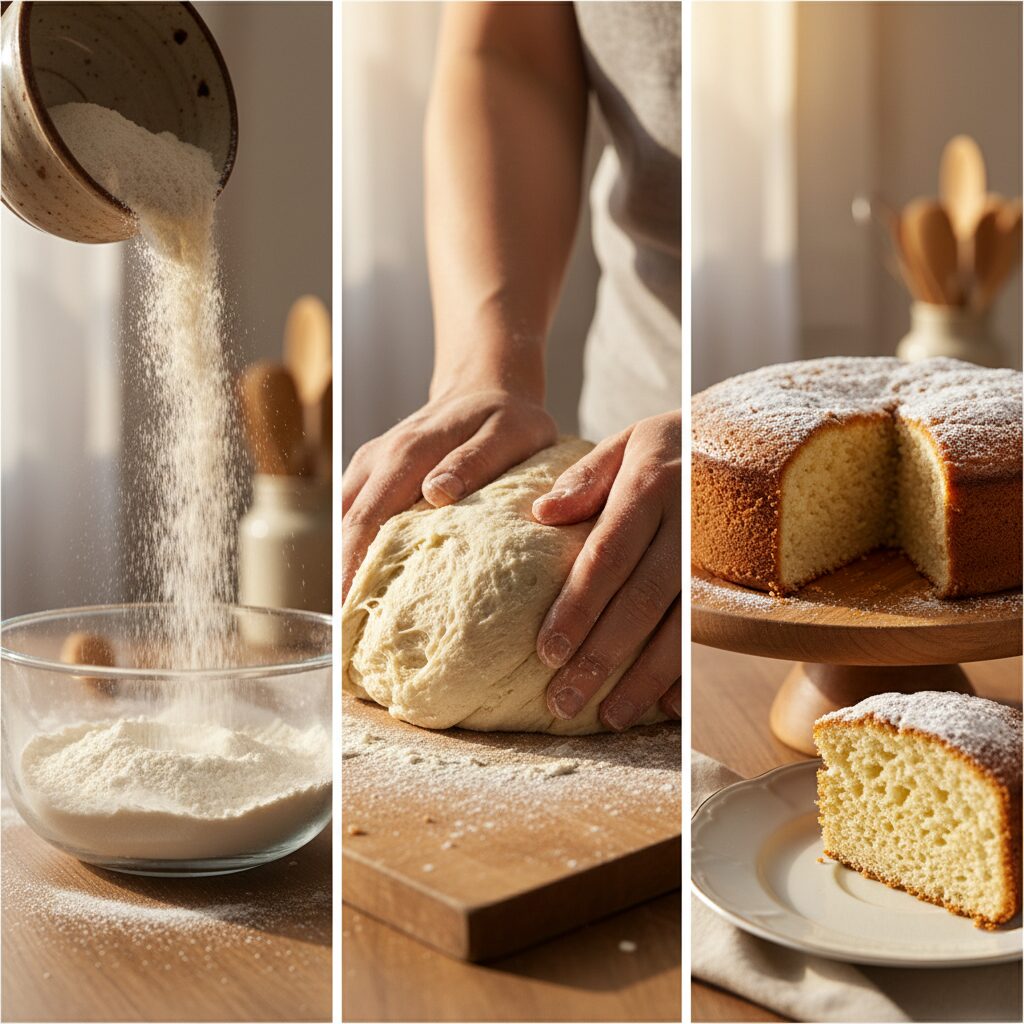
Ah, flour! That little white cloud that finds its way into almost every kitchen and works wonders. But how is it that this simple powder transforms, under the influence of baking and its exceptional partners like eggs, sugar, and baking powder, into a fluffy cake that melts in your mouth? If you’ve ever cursed your cake because it looked more like a brick than a cloud-like delight, this article is for you. Here, we’ll dive headfirst into the fascinating world of ingredients, unusual chemical reactions, the role of gluten, and the secrets behind transforming this sticky dough into a dessert worthy of top pastry chefs. So, forget those recipes borrowed from Grandma without explanation and get ready to understand why flour is the unsung rockstar of your homemade baking.
Why is flour the magic base that gives structure to your cake batter? Flour isn’t just a powder to throw in a bowl. In truth, it’s the secret architect of all your baking successes. At its core, flour is composed mainly of carbohydrates, but especially of a double star: starch and gluten. This latter, a protein mixture, is what will determine whether your cake will be as light as a cloud or as dense as a brick. Without gluten, no structure will hold up, unless you use highly specialized alternatives (we’ll talk about that later).
The formation of gluten begins as soon as flour comes into contact with a liquid such as water, milk, or eggs. By kneading, you develop this strangely fascinating elastic network. It’s a bit like an invisible net that traps all the air bubbles. But wait, this grid doesn’t just hold things up! It also traps the millions of tiny gas bubbles produced by the yeast or the air incorporated when beating the batter. These bubbles, once captured in this mesh, allow the batter to rise during baking. That’s the mechanism that transforms your mixture into a perfectly risen cake. If you’ve ever tried low-gluten flour (like T45), you’ve probably noticed that the cake is often lighter and fluffier because the grid is less dense. Conversely, an excess of gluten (in strong flour, for example) will result in a denser, more resistant texture.
But flour isn’t just gluten. Starch is responsible for melting the batter, absorbing water, and giving that ultimate melt-in-your-mouth texture when the cake comes out of the oven. So, ready to master your flour selection for maximum success? It’s a choice based as much on science as on your discerning palate. If you want to delve into the fascinating subject of flours, dive into our comprehensive guide on why toast gets crispy, it will shed light on texture and baking!
Ces articles devraient vous plaire
Why do shrimp change color when cooked?
Shrimp and shellfish in general have this magical ability to transform from a dreary gray to a vibrant pink as soon as they encounter a little heat. It’s the kind of thing that fascinates everyone,…
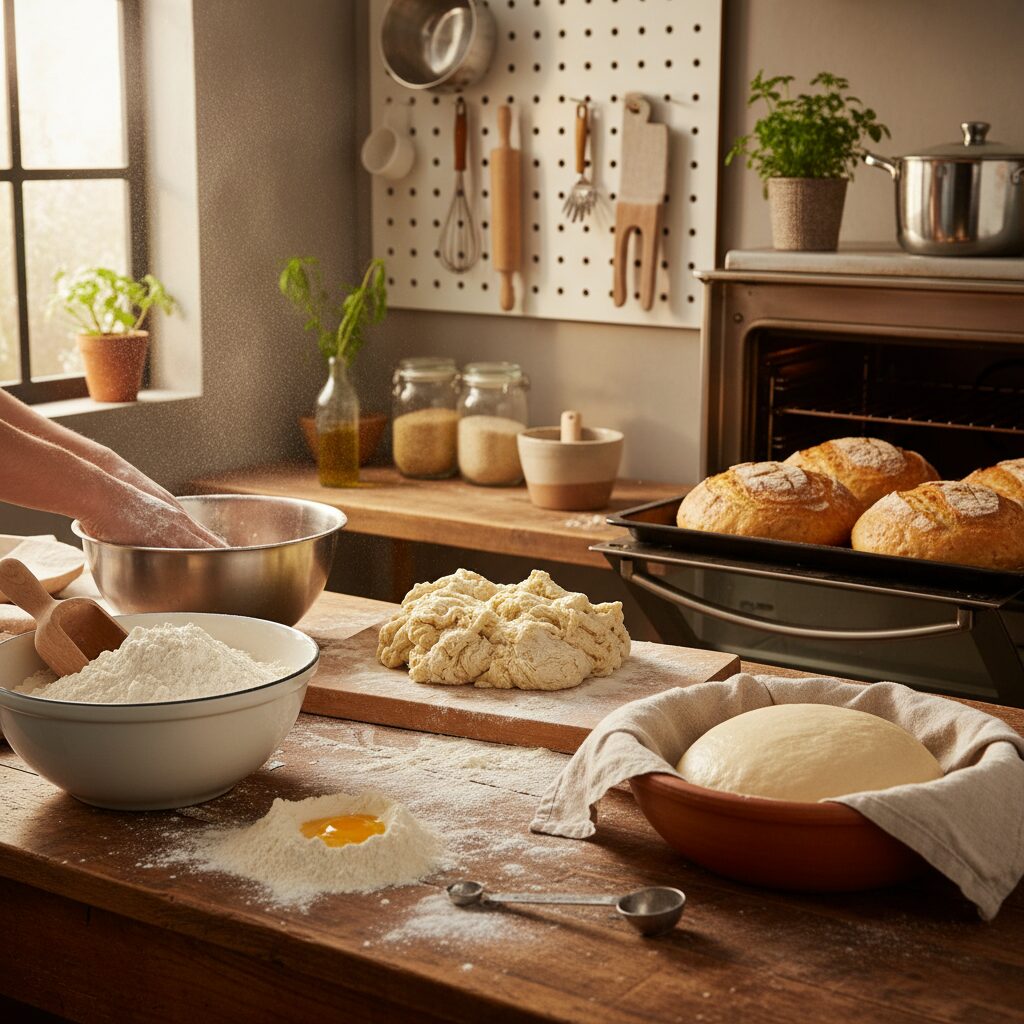
Discover how flour plays a vital role in transforming batter into a soft and delicious cake, providing the perfect structure and texture.
What happens in the batter? The secret chemistry that makes cakes rise In the chemical pot that is your cake batter, several reactions collide to create a spongy miracle. As soon as the flour meets the liquid, the magic of gluten begins, but the real star of the show is often yeast orbaking soda
which inject CO2 into the dough. See those little bubbles that make your dough rise? That’s carbon dioxide generated by the yeast, which methodically feeds on the carbohydrates in the flour—a real feast for these microfungi.
Yeast is a rockstar of microbes, transforming these carbohydrates into gas and alcohol through fermentation. These carbon dioxide bubbles are then trapped by the gluten network (remember the invisible net?) which prevents them from escaping and gently inflates the dough like a balloon. But be careful, it’s not a free-for-all of bubbles; baking also regulates everything: the heat coagulates the gluten proteins, sets the structure, and stops the rising at just the right moment. Without baking, the cake would have neither shape nor structure. Not to mention that the flour also participates in the Maillard reactions on the surface, which give your cake that lovely golden color and irresistible flavor. Why do cakes always smell so good? For that,
here’s an article that smells as good as freshly baked bread.
- But the real question is: do all flours play this chemistry game equally well? The answer is no. For example, gluten-free flours often require tricks to replace this natural elastic network, because without it, your dough becomes closer to a “generic” and fragile cake batter. You can add natural gums or whipped egg whites, but it takes patience and practice. List: Three key ingredients in transforming dough into cake
- ✨ Flour : provides structure thanks to gluten, a source of starch for texture.
- 🧬 Yeast or raising agents : generate carbon dioxide to make the dough rise.
Ces articles devraient vous plaire

How do clouds manage to float in the sky?
Have you ever looked up and wondered, between sips of coffee, how those immense, fluffy cushions—aka clouds—manage to float as if by magic in our sky, never collapsing under their own weight? Spoiler alert: it’s…
: coagulates proteins, transforming liquid batter into a solid, golden cake.
How does the type of flour you choose affect the texture and taste of the cake?
| Choosing flour is a bit like choosing the engine for your car. It all depends on what you really want in the end. T45 flour is often the go-to for cakes because it’s very fine, with a moderate gluten content that creates a perfect balance between lightness and structure. That’s why your sponge cakes and madeleines have that airy texture that makes them irresistible. On the other hand, if you use T55 flour, which is a little less refined, you’ll notice a slightly denser batter, but it’s more filling. It’s perfect for recipes where you want a cake with a bit more chew. There are also whole wheat or semi-whole wheat flours, which retain the bran of the grain, thus offering more fiber and flavor. The downside? A slightly less light cake, often more rustic, and above all, with a stronger nutritional punch. For example, in nut or chocolate cakes, whole-wheat flours add an interesting depth of flavor. | So, adapting your flour to your recipe and the desired result is clearly a crucial first step for any aspiring chef. Here’s a handy little comparison chart (with a Wonder-Junkies twist, so it’s bound to be useful) that will let you play the apprentice baker: | 🌾 Flour Type | 💪 Gluten Content | 🍰 Cake Texture |
|---|---|---|---|---|
| 👅 Flavor | 👍 Recommended Use | T45 Flour | Low | Light and airy |
| Mild, neutral | Thin cakes, light pastries | T55 Flour | Moderate | Moist, slightly denser |
| Classic | Breads, cakes, tarts | Whole Wheat Flour | Variable | Dense, rustic |
| Pronounced, nutty | Whole wheat breads, rustic cakes | Rye Flour | Low | Dense, moist |
Strong earthy flavor
Ces articles devraient vous plaire

Why are fingerprints unique to each individual?
You’ve probably seen a scene from a police procedural where the detective proudly pulls out a fingerprint from their fingertip and announces that they’ve got the suspect. But why on earth does each finger have…
When you think about it, flour isn’t just a binder; it’s primarily a recipe book of chemical and gustatory properties that influences everything from texture to taste.
Why does flour need strict regulations to ensure the quality of a cake?
At first glance, flour seems like just another ingredient, but behind the scenes, a whole host of regulatory controls ensure that this small, powdery packet remains impeccable. Every flour sold in France (and more broadly in Europe) must meet strict standards regarding ash content, gluten, the presence of additives, and even its origin. These rules guarantee that your recipe won’t be ruined by a halfway-baked flour. Ash content, does that ring a bell? It’s the amount of minerals in the flour that influences its color, but especially its degree of refinement. T45 flours, for example, have little ash; they are very white, fine, and suitable for ultra-light cakes. Whole-grain flours have more ash, therefore more bran and minerals, perfect for a rustic or even energizing cake.
Ces articles devraient vous plaire
Why do apples turn brown once they are cut?
Admit it, it’s frustrating: you take a beautiful, fresh apple, carefully slice it, and suddenly it’s browning faster than expected—and on your apple, no less. No need for sunscreen; this browning is automatic, inevitable, and…
Finally, you’d better choose your flour like an expert if you want to avoid a baking disaster. Flour that’s too fresh or improperly stored will lose its qualities, while well-preserved flour will retain its proteins and starches for months. If you’d like to delve deeper into the benefits of quality flour for your health and your recipes, you can always check out a surprising article about
amazing cocktails made from leftover ingredients Yes, flour can be a great partner for creativity! What are some tips for using flour like a pro and making a perfect cake every time?
Now you know the whys and wherefores. But how exactly do you avoid the baking disaster we’ve all experienced? The answer lies in a few simple tricks to keep up your sleeve. For example, always sift the flour before mixing it. This prevents lumps and aerates the flour, which improves the lightness of the batter. Nobody wants a cake with a texture full of “little pebbles.” Next, always adjust the amount of water or liquid, as different flours have different absorption capacities—whole wheat flour will require more moisture than white flour.
Then, be patient with your batter: let it rest for 15 to 30 minutes. This time allows the flour to absorb the water, the gluten to develop slowly, and prepares the batter for better baking. Let’s talk about baking: an oven that’s too hot will burn your crust without letting the cake rise. Too cold, and it risks remaining soggy and doughy.
Finally, embrace your curiosity and try different flours for unique textures. There’s nothing like experimentation to transform a monotonous recipe into a captivating culinary show. You can try gluten-free flours, but remember that they often require a delicate balance.
Why sift the flour before making a cake? Sifting the flour aerates the powder and prevents lumps, resulting in a lighter and more homogeneous batter, essential for a moist cake.
What role does gluten play in the transformation of the batter? Gluten forms an elastic network that traps the gas bubbles produced by the yeast, allowing the batter to rise and the cake to maintain its structure.
What’s the difference between T45 and T55 flour for cakes?
T45 is finer and produces light, airy cakes, while T55 is slightly more filling and gives a denser texture.
How does baking affect the texture of a cake?
Baking coagulates proteins and evaporates water, setting the structure of the batter and developing the golden crust thanks to Maillard reactions.