

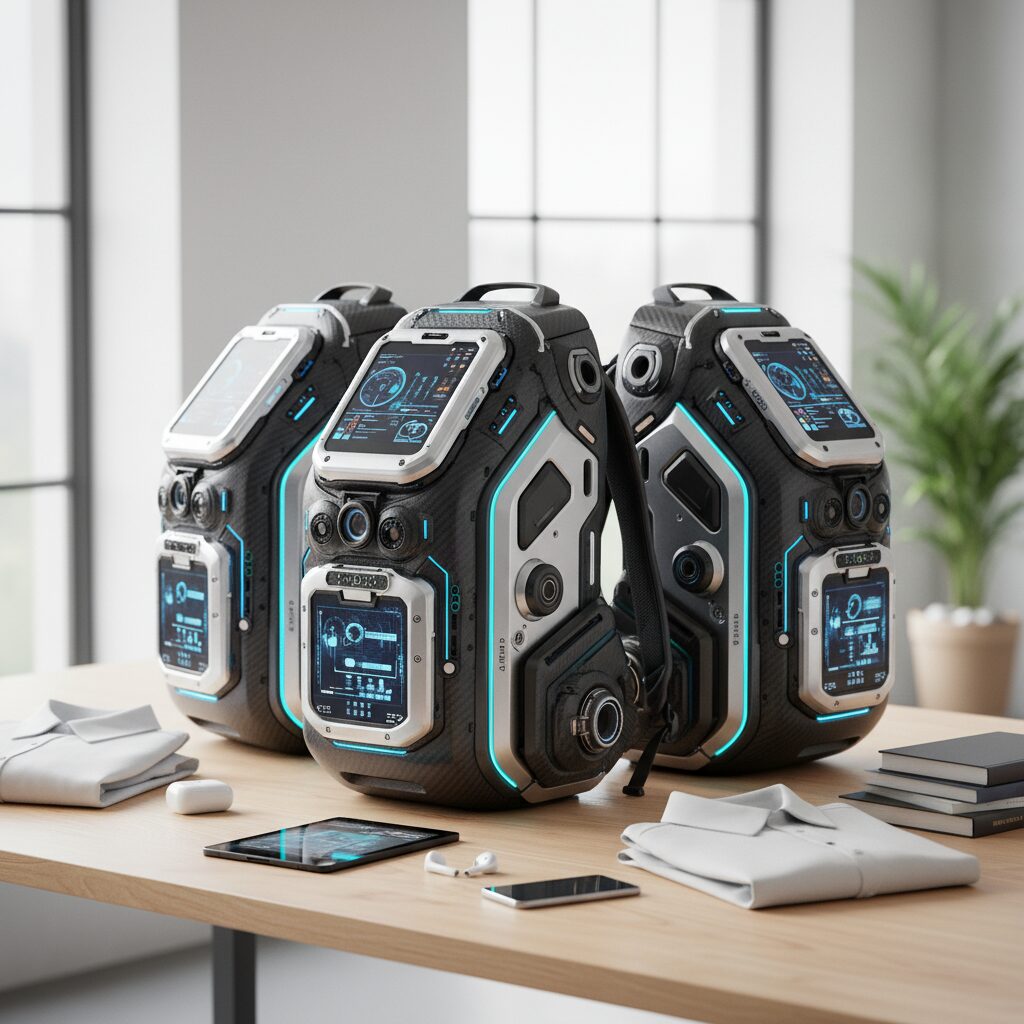
In the fast-paced world of 2025, where wearable technology is finding its way into our pockets and onto our shoulders, smart backpacks have arrived with a bang. These connected devices, equipped with USB ports, built-in batteries, and anti-theft features, promise an easier and more functional life. But here’s the catch: these electronic backpacks, meant to lighten our digital burdens, sometimes end up weighing more than their contents. Ironic, isn’t it? Between innovative bags and questionable backpack ergonomics, one wonders if this fusion of high-tech style and tangible utility doesn’t have a bit of a “gadget-packed backpack that’s as heavy as a donkey” feel to it. So, why do these smart bags weigh so much? How do they manage to carry more technology than personal belongings? And above all, what are the impacts on our daily lives and our backs? Let’s unpack this phenomenon of the smart backpack that weighs more than its contents, a technological paradox worthy of the most bizarre connected devices.
Why do connected backpacks weigh more than their contents? Understanding the backpack weight paradox If you thought your backpack, crammed with cables, chargers, and devices, was heavy only because of its clutter, think again! The connected backpack carries its share of the weight. The primary reason? The integrated wearable technology: thick external batteries, USB ports, electronic components, reinforced materials for better protection. All of this adds weight, and quite a bit. A modern electronic backpack can easily add several hundred grams, or even a kilogram, just with its onboard gadgets. Paradoxically, these innovations, meant to lighten the load of your daily baggage, sometimes end up becoming a burden in themselves. The presence of powerful batteries, often lithium-ion, literally explodes the Backpack weight Why? Because they need to offer enough battery life for multiple recharges, otherwise they’re useless. Their large capacity and robust casing make them heavy. We’re talking about batteries capable of charging a 15-inch laptop and a smartphone several times, ensuring you stay connected even during a city marathon or a trip. As a result, these batteries take up roughly as much space and weight as the rest of your belongings, hence the feeling that your bag is a bit heavier than usual, even though you haven’t actually packed much.
Furthermore, the reinforced materials used in the design also play a crucial role. A smart backpack must withstand the elements, shocks, and impacts, especially if it carries expensive electronic equipment. From waterproof ballistic nylon and reinforced zippers to durable Oxford fabrics, all of this adds weight, and not exactly in the “feather-light” category. These design choices, while necessary for security and durability, increase the overall weight of the bag.
Finally, some models also incorporate particularly robust anti-theft systems and sometimes even miniature solar panels for eco-friendly charging. Every little gadget, however practical, adds to the total weight. For those who have already tried a smart bag designed to serve as both a portable computer and a digital safe, the conclusion is clear: the scales always tip more heavily toward the heavy side. Discover how smart backpacks can sometimes be heavier than their contents, and explore solutions to lighten your high-tech daily life. The hidden benefits of a heavy backpack: why sacrifice lightness for technology? However, before crying foul about the heavy and unnecessary backpack, it’s important to understand why this extra weight can be beneficial. The connected backpack isn’t just a collection of bulky items; it’s a concentrated dose of essential usefulness in our gadget-filled era. Imagine never having to worry about finding a power outlet or struggling with a wireless charger again. That’s the kind of peace of mind these bags provide, even if it means sacrificing a little comfort and some back muscle strain.
First, let’s talk about battery life: the integrated batteries allow you to stay connected all day, with the satisfaction of being able to recharge your smartphone, tablet, headphones, or even a laptop without wandering around cafes looking for a forgotten outlet. This continuous charging capacity, even if it adds weight, provides a rare independence, especially for professionals, students, or travelers who can’t afford to be disconnected.
Ces articles devraient vous plaire
Why do scale and weight trackers make diets absurd?
In the hyper-connected world of 2026, where even your watch seems to know your fitness level better than your mother, weight and scale trackers have become the darlings of weight-loss enthusiasts. They promise weight-loss tracking…
Then there’s security. These modern bags often include anti-theft features specifically designed for city dwellers and globetrotters. Ultra-resistant zippers, hidden pockets, and even sometimes GPS tracking—all these measures aim to protect your belongings and allow you to travel with peace of mind. In this sense, the bag’s weight is a sign of robustness and protection, going far beyond mere aesthetics.
Finally, in terms of backpack ergonomics, designers have put a lot of work into it. Padded shoulder straps, a ventilated back panel, curves designed to distribute the load—everything is calibrated to minimize the feeling of heaviness. Yes, the bag is heavy, but it’s better to have it on your shoulders than to be stuck with a dead battery in the middle of a subway ride! These innovations in the field of… bag innovation
These findings show that weight no longer has to be a deterrent if it’s justified by proper use. List of practical advantages despite the weight
🔋
Independent charging of multiple devices without searching for an outlet 🛡️
Enhanced anti-theft protection
- against pickpockets and theft 🧠 Ergonomics designed to reduce shoulder and back fatigue
- 🌧️ Waterproof and durable materials that can withstand anything
- 🎒 Optimized organization with multiple pockets for cables and accessories
- https://www.youtube.com/watch?v=4VvlhFPfv8w How to choose a smart backpack that doesn’t turn you into a bodybuilder? So, if you want to avoid looking like the Hulk every time you put your bag on, you’ll have to balance functionality and lightness. The first criterion remains the quality of the external battery: a
- high-capacity battery is convenient, but be careful about the weight/battery life trade-off. For urban nomads, a moderate battery is often sufficient, while tech-savvy adventurers will opt for something heavy and robust. Materials also matter. Choosing a bag made of ballistic nylon or durable polyester can result in a bag that is both lightweight and sturdy. Avoid thick synthetic leather, unless style takes precedence over performance, as it can unnecessarily add weight. The organization system also plays a role: a good smart backpack will have separate compartments for the battery, cables, and devices, avoiding the clutter that adds weight and makes it cumbersome to use.
Ces articles devraient vous plaire

Automatic hand dryers that soak more than they dry
In the bustling world of public restrooms, the automatic hand dryer reigns supreme, touted as the modern, eco-friendly, and ultra-hygienic solution for perfecting handwashing. Yet, behind this blast of air meant to save us time…
Also include the “smart” features that are actually useful to you: USB port, anti-theft lock, geolocation, etc. In short, don’t get carried away with gadgets you’ll never use.
Comparison Chart for Choosing the Right Smart Backpack Criteria 🎯
Lightweight Options 🪶 Robust Options 💪 Recommended Use 📌
External Battery 4000-6000 mAh, Lightweight10000-20000 mAh, Heavyweight
Daily Use / Short Trips
| Materials | Ballistic Nylon / Thin Polyester | Thick Polyester / Reinforced Oxford Cloth | Long Trips / Harsh Conditions |
|---|---|---|---|
| Capacity | 15-20 Liters | 25-35 Liters | Work / Urban Commuting vs. Adventure / Travel |
| Security | Simple Zippers | Anti-Theft Zippers / Padlock | Safe Zones vs. High-Risk Zones |
| Ergonomics | Padded Shoulder Straps / Ventilated Back Panel | Extra-Comfort Padded Shoulder Straps + Chest Strap | Extended Use / Wear Daily |
| https://www.youtube.com/watch?v=ziFR_LEUH40 | When the smart backpack enters the realm of connected home devices: between hype and reality | The line between technological gadgets and everyday equipment is blurring with these connected backpacks. On the one hand, they are presented as the kings of wearable technology, the champions of smart transportation, and the panacea for an ultra-connected world. On the other hand, they often suffer from what some call the “tech overload” syndrome: a functional overload that adds up to extra weight on the shoulders. | The same dilemma arises with other connected home devices, such as smartwatches and voice assistants. They promise to change lives but sometimes require a complex set of adjustments and a mini-obsession with battery life. In this sense, the smart backpack positions itself as an essential but double-edged accessory: an indispensable tool that connects you to the world, but one that might also drag you down. It’s a bit of a metaphor for our modern world, where we literally carry technology on our backs. |
| Despite this, the market continues to evolve. Backpack innovation is progressing, with lighter models, more advanced integrated services, and better integration into our daily lives. Until the ultra-lightweight magic battery arrives, users will have to deal with this added weight, hoping that tomorrow will rhyme with lightness and optimized features. | ⚡ Smart Backpack: Essential Gadget or Burden? |
Ces articles devraient vous plaire

vintage fridges that flash like an 80s disco
We’ve all seen that slightly kitschy fridge, that guardian of ice cream and leftover lasagna, sometimes flashing as if it wants to join a disco party. Yes, those vintage fridges with their retro look, decked…
🔌 The Weight of Technology: When Batteries Mean Shoulder Pain
🎯 Finding the Balance Between Features and Portability 🤖 Connected Devices and Modern Life: A Story of Weight to CarryFrequently Asked Questions about Smart Backpacks That Weigh More Than Their Contents
Why are smart backpacks often heavier?
They incorporate batteries, USB ports, reinforced materials, and anti-theft devices, which add significant weight to the bag.
- How can you reduce the weight of your smart backpack? Choosing a suitable power bank, prioritizing lightweight materials, and carefully organizing your belongings can lighten the load.
- Are Smart Backpacks Comfortable Despite Their Weight?
- Manufacturers are increasingly focusing on ergonomics, with padded shoulder straps and ventilated back panels, but weight remains a factor to consider.
- Is it possible to find a lightweight smart backpack in 2025?
Ces articles devraient vous plaire

How did electric spiked shoes trip everyone up?
Ah, electric cleats… that technological marvel that promised to revolutionize our mobility on all terrains. Imagine yourself running briskly across a wet lawn, your soles packed with electrical innovations, ensuring perfect grip. Except… bam, you…
Yes, some models prioritize lightness while offering essential features, but often at the expense of long battery life.
What features should you prioritize when choosing a smart backpack?
Focus on the essentials: sufficient battery life, anti-theft protection, good internal organization, and carrying comfort.