
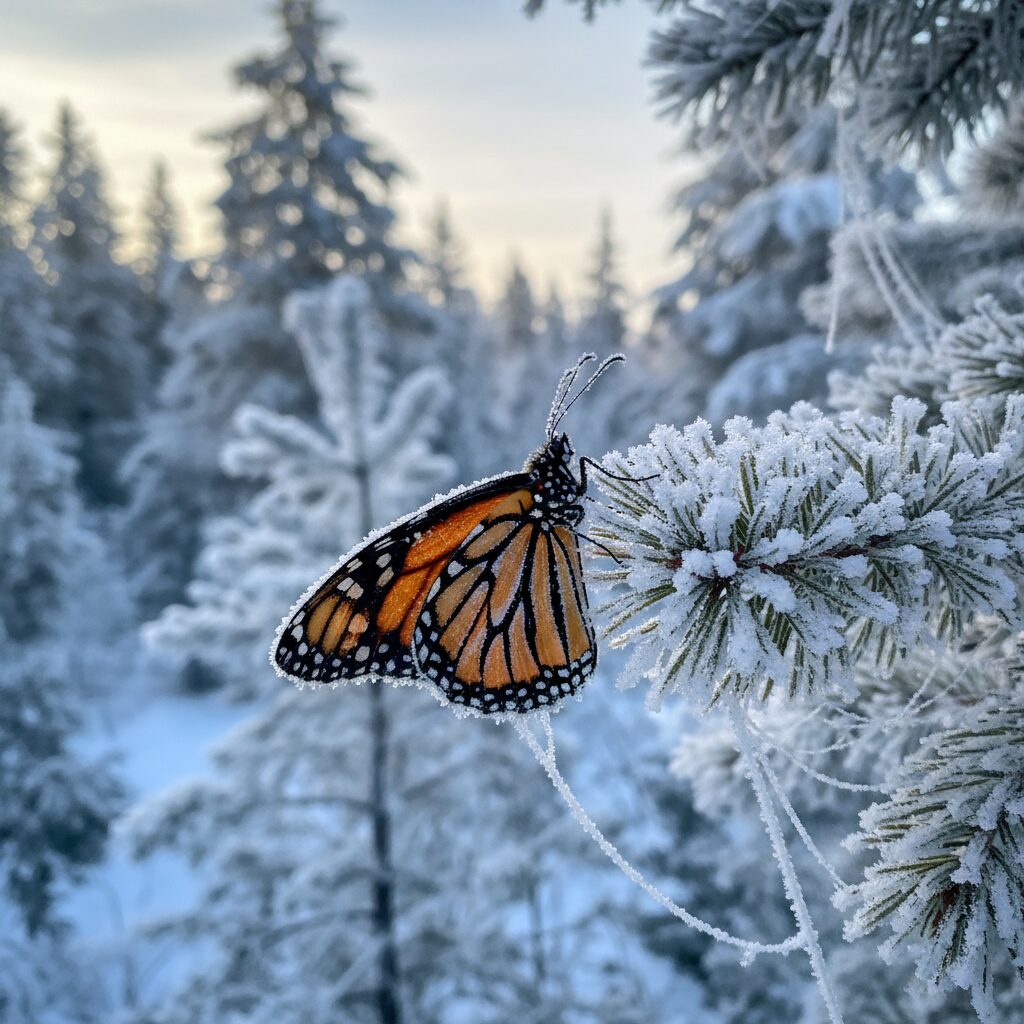
Did you think butterflies were just colorful, fluttering ornaments for sunny days, incapable of braving the slightest chill? Think again! Some of these delicate lepidoptera are showing real grit when faced with plummeting temperatures. Between biting cold and scorching summers, they haven’t simply adopted the attitude of fragile divas, but have developed survival strategies straight from the science of biology. In 2025, as climate extremes multiply, their incredible ability to withstand sometimes brutal climatic conditions deserves closer attention. These insects, key elements of our ecosystems, deploy unexpected solutions to persist: from static hibernation to veritable natural cold-weather protection, not to mention strategic choices of microhabitats. In short, just because they have paper wings doesn’t mean they can’t play the role of the resilient.
We’re taking you on an off-the-beaten-path exploration, where apparent fragility clashes with sheer tenacity. Whether it’s surviving cold snaps, taking a well-deserved snack break when everything freezes, or making a daring escape to warmer climes, butterflies have more than one trick up their sleeve. Moreover, their surprising adaptation to changing environments highlights just how these insects are true living witnesses to the impact of climate change and the delicate balance of nature. So hold on tight, because these stories will make you see this humble, colorful insect as something far more badass.
How do butterflies cope with extreme temperatures thanks to hibernation and natural antifreeze?
Butterflies are famous for being cold-blooded insects. In other words, their internal temperature depends entirely on that of the external environment. When a warm blanket and hot chocolate aren’t on the agenda, they have to find other ways to avoid becoming a frozen treat for predators. This is where butterflies deploy survival strategies that are as astonishing as they are sophisticated. To begin with, hibernation is a basic but remarkably effective technique. When winter arrives with its chilly temperatures, many species choose to transform into chrysalides or caterpillars, remaining perfectly still, often in natural shelters like tree hollows or under piles of dry leaves. This almost comatose sleep allows them to conserve energy.
That said, not everyone is lucky enough to have a perfect natural refuge: some butterflies prefer to play it safe by producing what are called cryoprotectants, also known as natural antifreeze, in their bodies. These biochemical compounds—glycerol in particular—prevent the formation of ice crystals, which are otherwise the silent killers of living cells. As a result, the butterfly avoids fatal freezing and can survive in temperatures well below zero. This small natural miracle humorously reminds us that even insects have found their own version of high-tech thermoregulation.
Just to give you an idea, some studies show that the production of this kind of “antifreeze” can lower their critical cold resistance threshold by several degrees—a real game changer. And when you think about their tiny particles that defy the laws of freezing, you can’t help but be fascinated by this ingenious cocktail of biology and evolution. In a world where the climate is constantly playing Russian roulette with temperatures, this ability is an unexpected lifeline for these insects, chosen by Mother Nature.
Ces articles devraient vous plaire
Discover the phenomenon of synchronized firefly migration in Southeast Asia
Among the shimmering mysteries that nature offers us, the synchronized migration of fireflies in Southeast Asia stands out as a spectacle that is both poetic and scientific. Every year, as night falls on the rivers…
Furthermore, the selection of microhabitats for laying eggs or hiding shouldn’t be taken lightly. Some species prefer shady and more humid areas: where the temperature is lower but stable, offering a kind of micro-refuge with a temperature controlled by nature itself. Others play the full sun card to accelerate their development. When we say that choosing your spot is already a form of survival, we’re not just exaggerating!
Discover how some amazing butterflies can withstand extreme temperatures and survive in hostile environments.
Why is butterfly migration a secret weapon against climate extremes? While hibernation and antifreeze are perfect for those who know how to stay put, migration is essential for other butterflies. Try to imagine: thousands of small, fragile wings embarking on a road trip of thousands of kilometers, sometimes more epic than some human journeys! The Monarch butterfly is the star of this category, capable of crossing Mexico to escape the intense frost of its northern habitat.This migration isn’t just a seasonal fluke; it’s an adaptive mechanism honed by millions of years of evolution. By migrating, these insects completely avoid the harshness of freezing temperatures, while ensuring their survival and reproduction in places where food is still plentiful. Their journey, as mythical as it is arduous, is a true ecological odyssey, a vibrant testament to the astonishing ability of insects to adapt to the challenges of climate. Hundreds of generations, each linking the previous one by flight, make up this saga, as fascinating as it is fragile.
Ces articles devraient vous plaire
Learn how the mimosa plant reacts to touch by closing instantly.
When we talk about plants that move, we often think of snails searching for a fresh leaf or creeping vines. But imagine touching a plant and it closing up as if to send you a…
Furthermore, this migration perfectly illustrates how insects are not merely passive but dynamic players in the ecosystem. Their movement also aids pollination over thousands of kilometers, benefiting the entire environment. To learn more about these fabulous natural mechanisms, you can take a look at this detailed exploration of
why butterflies have such colorful and varied patterns
, which also sheds light on their incredible diversity in relation to their survival.
| https://www.youtube.com/watch?v=xr-XgClpTkk | What microhabitats protect butterflies from extreme weather events? | |
|---|---|---|
| It’s no secret: climate change has made heat waves, droughts, and other extreme weather events more frequent and more intense. So, how are these beautiful creatures coping with this new era of weather chaos? The answer lies largely in their choice of daily habitat, that famous microclimate where nature plays hide-and-seek with the elements. | Recent research, particularly on the white fern (Pieris napi), shows that larval survival depends heavily on the microhabitat chosen at the time of egg-laying. The key lies in a strategic choice between sunny and shady areas. For example, this species prefers shady areas with lower temperatures and higher humidity, offering refuge from the first heat waves and food shortages associated with summer drought. | |
| But be warned, this refuge isn’t perfect. There’s always a price to pay: the host plants necessary for the caterpillars’ food are sometimes less abundant in these shady areas, which can threaten long-term survival. This ecological compromise highlights the fragility of natural balances. If extremes continue to increase, even these natural refuges could soon become insufficient to ensure the survival of butterfly populations. As researcher Maria Vives-Ingla aptly summarizes, “microclimatic shelters offer temporary protection, but do not guarantee long-term resilience against the most unpredictable extreme weather events.” | 🌡️ Microhabitat |
🌿 Characteristics 🦋 Impact on survivalShaded areas
Ces articles devraient vous plaire
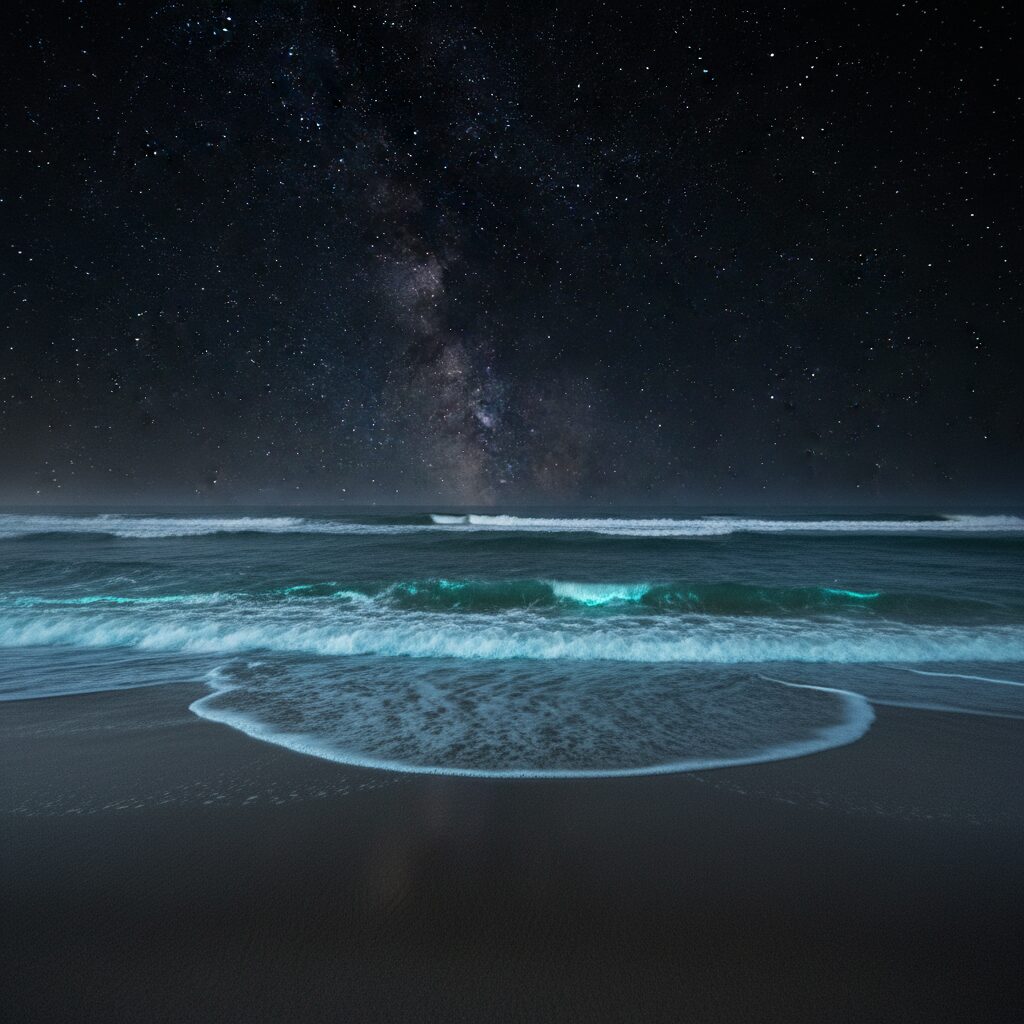
explore the fascinating phenomenon of bioluminescent waves on the beaches
Imagine this natural spectacle where the sea transforms into a living painting, illuminated with a vibrant blue each time the waves caress the shore. The beaches, usually welcoming with their peaceful appearance, metamorphose at night…
Cooler, more humid, stable
Reduced heat-related mortality, but host plant scarcity
Sunny areas
Warmer, abundant plant
Rapid development but risk of heat stress This research definitively highlights the importance of preserving a diversity of habitats for these insects, which, like the praying mantis, can sometimes possess surprising abilities, as you can discover in this fascinating article aboutthe praying mantis that can turn its head like us.
Ces articles devraient vous plaire

Explore the secrets of the spectacled snake, a creature of the Indonesian jungle
While the Indonesian jungle is already an incredible playground for any budding adventurer, it boasts an unexpected reptilian star: the spectacled snake. This mysterious creature, often seen displaying its famous ornamental “headband,” does more than…
How do butterflies contribute to the ecosystem despite climate change?
You can’t talk about butterflies without mentioning their role in pollination, this essential ecosystem service. These little flying creatures are true link-makers between flowers, transporting pollen from plant to plant. Their presence allows plants to reproduce, thus promoting biodiversity and the health of ecosystems. It’s a job they take very seriously, even when the weather is unpredictable!
Their morphology is perfectly adapted for this task: a long proboscis to reach nectar in the deepest flowers, or hairy legs to efficiently capture pollen. This pollinator-flower relationship has developed through a process of coevolution, where each part refines its genetic tools to better collaborate. In 2025, this collaboration remains more vital than ever, as they support the reproduction of numerous plants upon which other animals, and even human agriculture, depend.
- But here’s the rub: when the climate is wildly unpredictable, the survival of butterflies is severely threatened, which can affect the entire ecosystem. Severe or unpredictable weather events can disrupt the timing of caterpillar emergence and the availability of host plants, a phenomenon known as phenological shift. This slight misalignment can lead to disastrous timing, or even ecological disaster, with reduced pollination and a general decline in biodiversity.
- That’s why their preservation isn’t just about aesthetics or romance, but a major ecological imperative. Through their tiny wings, an entire living network thrives. It almost makes you want to create a living garden, doesn’t it? By the way, you can learn more about the skeleton butterfly, a fascinating star of the insect world, by following this link.
- Meet the Skeleton Butterfly
https://www.youtube.com/watch?v=gczhcTZH97k
What are the major threats from extreme weather events to butterfly populations in 2025?
It is clear that by 2025, butterflies will be under increasing pressure from extreme weather events. Heat waves exceeding 40°C combined with prolonged droughts are exploding in frequency. These conditions have been modeled and studied by scientific teams using environmental sensors and sophisticated mathematical models, proving that these events can precipitate a massive decline in populations, despite their local refuges.
The combination of extreme temperatures and droughts impacts not only adult butterflies, but also a crucial stage: that of the larvae. Small larvae are particularly vulnerable to the combined effects of heat and food scarcity. It’s as if they have incredible resistance to cold, but paradoxically, a very low tolerance threshold for heat. These extreme events therefore induce a significant mortality rate, potentially leading to local extinction. The concept of ecological balance is thus called into question by these episodes, weakening the entire ecosystem.
The phenomenon is also linked to the loss of synchronization between egg-laying and plant availability. If the butterfly lays its eggs when host plants are scarce or withered, the survival chances of the next generation plummet. This phenological mismatch threatens to transform the remarkable resilience of these insects into a short-term ecological disaster. Increased vigilance regarding these dynamics is more crucial than ever.
🔥 Extreme heat waves exceeding 40°C
💧 Prolonged droughts reducing food availability
🌡️ Loss of synchronization between butterflies and host plants