
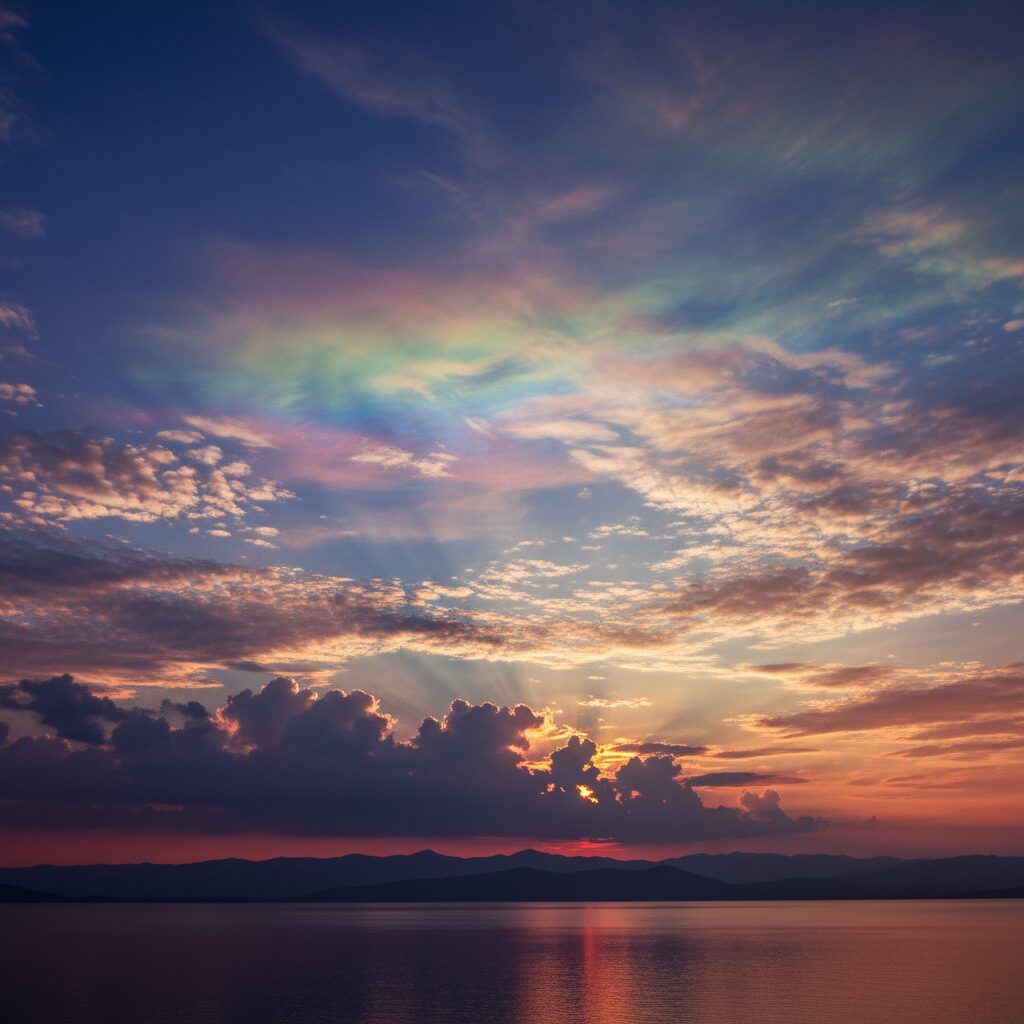
Ah, clouds! Those fluffy cushions that reign in the sky, sometimes dazzling white, sometimes ominous gray, or even fiery red at sunset. But have you ever noticed that no two clouds are truly alike, especially when you watch their color change with the weather and the sky? Spoiler alert: it’s not just the magic of a celestial painter. Behind these variations lies a clever mix of atmospheric tricks, where atmospheric pressure plays a behind-the-scenes, often underestimated role in influencing the visual spectacle of clouds. In fact, understanding how atmospheric pressure can alter cloud color is like deciphering a mysterious climate code that tells the story of air, light, altitude, and even a few grains of atmospheric madness. Buckle up, we’re taking a high-altitude flight into this fascinating world where science and magic collide. How do atmospheric pressure and altitude influence cloud color? To begin, you should know that atmospheric pressure is a bit like the diva of the sky: it’s constantly changing, adapting to the whims of altitude, and plays a significant role in the composition of our beautiful atmosphere. The higher the altitude, the lower the atmospheric pressure, which directly impacts air density and therefore the dispersion of suspended particles—in other words, humidity, water droplets, or the ice crystals that form clouds.
Imagine a pressure rollercoaster: as it decreases with altitude, the water droplets in clouds tend to become finer, or even transform into tiny ice crystals. This change in the size and shape of the particles alters the
scattering of light.
This mechanical dance where sunlight encounters molecules or droplets, emerging in bursts of different colors. The water droplets in a low-altitude cloud are large enough to scatter all the white light almost uniformly, which explains why clouds often appear white or light gray depending on the brightness. But when the pressure decreases and the clouds are composed of finer particles, the light tends to scatter less evenly. Refraction through these tiny crystals then produces slightly different hues, sometimes even a subtle pink or bluish tint.This influence of atmospheric pressure on cloud color also has unexpected side effects: it’s thanks to this influence that we can guess the altitude of clouds simply by focusing on their color. A perfect trick to impress at parties when your friends aren’t sure if that ominous gray is a storm cloud or just passing wind! Note that when flying in the thinner air at high altitudes, you sometimes see “spectacular” colors visible only under certain conditions, such as colored diffraction around ice crystals. This might remind you a bit of the effect of rainbows or solar halos that wink multicolored across the sky. This phenomenon is also well-documented in studies on the refraction and scattering of sunlight, and it is closely linked to the decrease in atmospheric pressure with altitude.
Discover how variations in atmospheric pressure influence cloud color and associated weather phenomena.
Why does cloud color change also depend on sunlight and the surrounding air?While atmospheric pressure certainly influences the mood in the sky, the star of the show is undoubtedly sunlight. Just as you admire the stunning hues of a sunset (or curse your morning photoshoot because it’s ruined by overly gray clouds), the color of clouds depends heavily on the angle and quality of that light. When the sun is high in the sky, the blue light illuminates the clouds fairly evenly, making them appear white or light gray—which explains why, on a sunny day, clouds have that lovely floating popcorn look. The scattering of light by the hundreds of billions of water droplets allows for an almost perfect refraction of all colors, resulting in that characteristic whiteness.
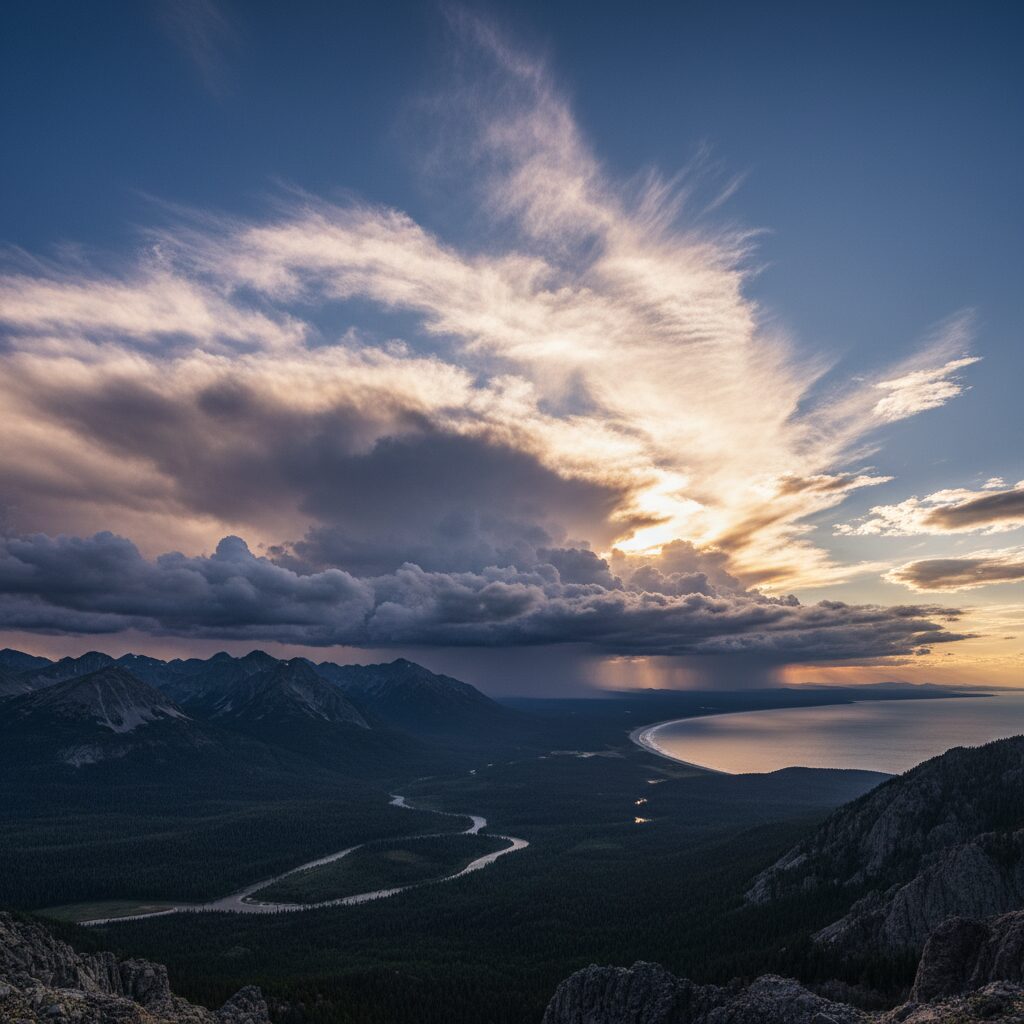
But where does atmospheric pressure come into play? Well, when there’s less pressure (and therefore less air and suspended particles), light travels differently, which can alter the perceived hue. Indeed, thinner air alters the combination of direct sunlight and diffused light from the sky. At sunrise or sunset, this combination creates red, orange, or gold clouds. Sunlight travels a longer distance through the atmosphere, gradually shedding shorter wavelengths (like blue or violet) and leaving more bright red or orange to color the clouds. Furthermore, dry haze, a tiny, invisible grain of sand in this aerial landscape, can also play a role by changing the perceived color of distant clouds, making them appear yellow, orange, or red. Atmospheric pressure influences the condensation of this haze, creating a visual spectacle that blends physics, chemistry, and meteorology.
Ces articles devraient vous plaire

Discover the Art Nouveau toilets hidden beneath a famous Parisian square
If you think public restrooms are synonymous with cheap tiles and questionable smells, it’s time to update your preconceptions. Beneath the elegant Place de la Madeleine in Paris, a discreet, almost secret gem has emerged…
What particular atmospheric phenomena amplify the colors of clouds?
If you thought that atmospheric pressure and sunlight alone played with cloud colors, think again. The interplay of particle physics, humidity, and sometimes even a few exotic elements transforms the sky into a bold palette of hues and special effects. Atmospheric pressure often alters the size of suspended particles. Following these variations, we then observe luminous phenomena such as diffraction and interference, which will throw you off your color perception.
For example, when the sun plays hide-and-seek just behind storm clouds, the cloud base—pressurized differently—can take on a reddish hue or even display alternating light and dark bands, accentuating its relief, a bit like a painting by a Baroque artist. High-altitude clouds, often composed of ice crystals, put on shows worthy of the most beautiful rainbows: thanks to diffraction (yes, that phenomenon where light bends as it passes through a barrier, like a star on the optical dance floor), they project shimmering colors that can be reminiscent of those of a rainbow. It’s less well-known, but when atmospheric pressure is low, the conditions are also perfect for amateur photographers to try their hand at capturing those colorful arcs around the Sun, called solar halos. The phenomenon is linked to the orientation and size of suspended ice crystals, a true molecular gastronomy where atmospheric pressure is the key ingredient.
To demonstrate how atmospheric pressure plays with light and color, remember that even thin clouds can appear gray or dark if they are in the Earth’s shadow, or that a moonless night offers only gray or black clouds, unless they are illuminated by moonlight or even by urban lights, which sometimes give clouds surprising hues.
Furthermore, if you want to learn more about amazing phenomena related to air and atmospheric particles, this article explains how clouds manage to float in the skyand will take you on a journey into the fascinating world of atmospheric mysteries. How do humidity and atmospheric pressure work together to create cloud colors?
Ces articles devraient vous plaire

Gourmet and Festive Challenge: Truffle Brie and Unusual Christmas Jumpers
Want to spice up your Christmas with a touch of originality and a hint of the unexpected? From truffle brie that would melt even Santa Claus in his red suit, to Christmas sweaters that boldly…
Cloud color isn’t just a matter of pressure and light; humidity also plays a significant but essential role. The amount of water vapor in the air at any given time, as well as the size of the water droplets, depends closely on atmospheric pressure and local conditions.
Remember: the higher the pressure, the more moisture the air can hold without condensation. Therefore, clouds formed under high pressure can be less dense, lighter, and often contain fewer or larger droplets. This produces a different light scattering effect compared to situations where the pressure is low and the air is prone to rapid condensation, creating denser, darker clouds.
In harmony, pressure and humidity fluctuations trigger variations in hue, ranging from almost white to dark gray, including various bluish grays, and more rarely, warm colors depending on the light. It’s important to remember that humidity also directly influences the presence of suspended particles which, like pollution (but without the negative effects), alter the perceived color of distant clouds.
This pressure-humidity dynamic is so effective that experienced meteorologists use cloud color in their forecasts. For example, dark, thick hues often indicate impending stormy or rainy weather. A thick column of pressurized vapor that can no longer support its own weight eventually bursts (or a storm erupts, depending on the context).
It’s fascinating to note that the same atmospheric pressure that changes the color of clouds can also indirectly influence other amazing mysteries of the natural world, as you’ll see in this surprising article about making diamonds from peanut butter
Ces articles devraient vous plaire
How does the rare phenomenon of natural black rain form?
Think you know what rain is? Think again! There’s a phenomenon so unusual, almost straight out of a post-apocalyptic movie, that even meteorologists frown upon it: natural black rain. Yes, you read that right, not…
—proof that pressure isn’t just about coloring our skies.
Atmospheric Phenomena Seen Through a Colorful Chart of Pressure and Light To bring some order to this jumble of pressure, light, and color, here’s a small chart summarizing how atmospheric pressure and the Sun’s position influence cloud color, helping you better visualize the celestial chaos:
🌤️ Sun’s Position
📉 Atmospheric Pressure
💧 Humidity and Particles
🌈 Dominant Cloud Color 🔍 Possible Observations High in the Sky (Midday)
Ces articles devraient vous plaire

Unusual: A couple launches a raffle to try and sell their unsold apartment
In short: A British couple is struggling to sell their second home in Wales.The initial price of £365,000 is reduced by £40,000, but to no avail.They launch a raffle with tickets at £5.50 to boost…
High Pressure
Moderate Humidity, Normal Particles White to Light Gray Clouds Clear Weather, Uniform Light Scattering
| Low on the Horizon (Sunrise/Sunset) | Low Pressure (High Altitude) | Low humidity, suspended crystals/ice | Red, orange, pink clouds | Long scattering, filtered light, possible diffraction |
|---|---|---|---|---|
| Twilight/night | Variable, often low | High or low humidity | Dark gray to black clouds, sometimes whitish under lights | Effect of Earth’s shadow and artificial lighting |
| Stormy weather | Local low pressure | High humidity, large water droplets | Dark, almost black gray clouds | Indication of an impending storm |
| So, the next time you look up to admire these | strange clouds, | remember that behind each shade lies a subtle cocktail of temperature, humidity, pressure, and light, orchestrated by that unsung star: atmospheric pressure. https://www.youtube.com/watch?v=Scn96oVfMQA | And yes, nature is a bit like smart shoes, always ready to surprise us with their hidden features… if you want to discover another unlikely secret, you can check out this article on | smart shoes that never lace up. |
| Not quite the same galaxy as the weather, but just as fascinating! | Cloud colors: a coded language of nature? | Finally (but not too quickly), we must consider that cloud colors are a real language that nature uses to communicate with us: each shade can conceal a weather message, an alert, and even an unforgettable spectacle. Atmospheric pressure modifies the conditions of this communication. |
Here’s a short list that will make you an expert at deciphering this language: 🌥️White and light gray clouds: a sign of stable pressure and a relatively calm atmosphere.
🌩️ Dark clouds: Low pressure and high humidity alert, prepare for a downpour.
🌅
Red or orange clouds at sunrise or sunset: Long-distance light travel and low atmospheric pressure.
- 🌨️ Bluish-gray clouds : often linked to light scattering by the air under specific conditions of humidity and moderate pressure.
- 🌈 Iridescent Clouds
- : light diffraction by ice crystals or very fine droplets, combined with suitable atmospheric pressure. https://www.youtube.com/watch?v=BvFhTEZxRK0
- Does atmospheric pressure change quickly? Yes, atmospheric pressure varies constantly depending on the weather and altitude, which instantly impacts the composition and color of clouds.
- Can we predict the weather using cloud color? Absolutely, meteorologists often analyze cloud color to anticipate the weather, especially by observing dark, heavy clouds that indicate impending rain or thunderstorms. Can clouds change color quickly?
Yes, variations in atmospheric pressure and the position of the sun can rapidly transform cloud color, particularly during the transitions between days.
Why do some clouds have iridescent colors? The iridescent colors of clouds are due to the diffraction of light by very fine drops or ice crystals, a phenomenon accentuated under specific conditions of pressure and humidity.