
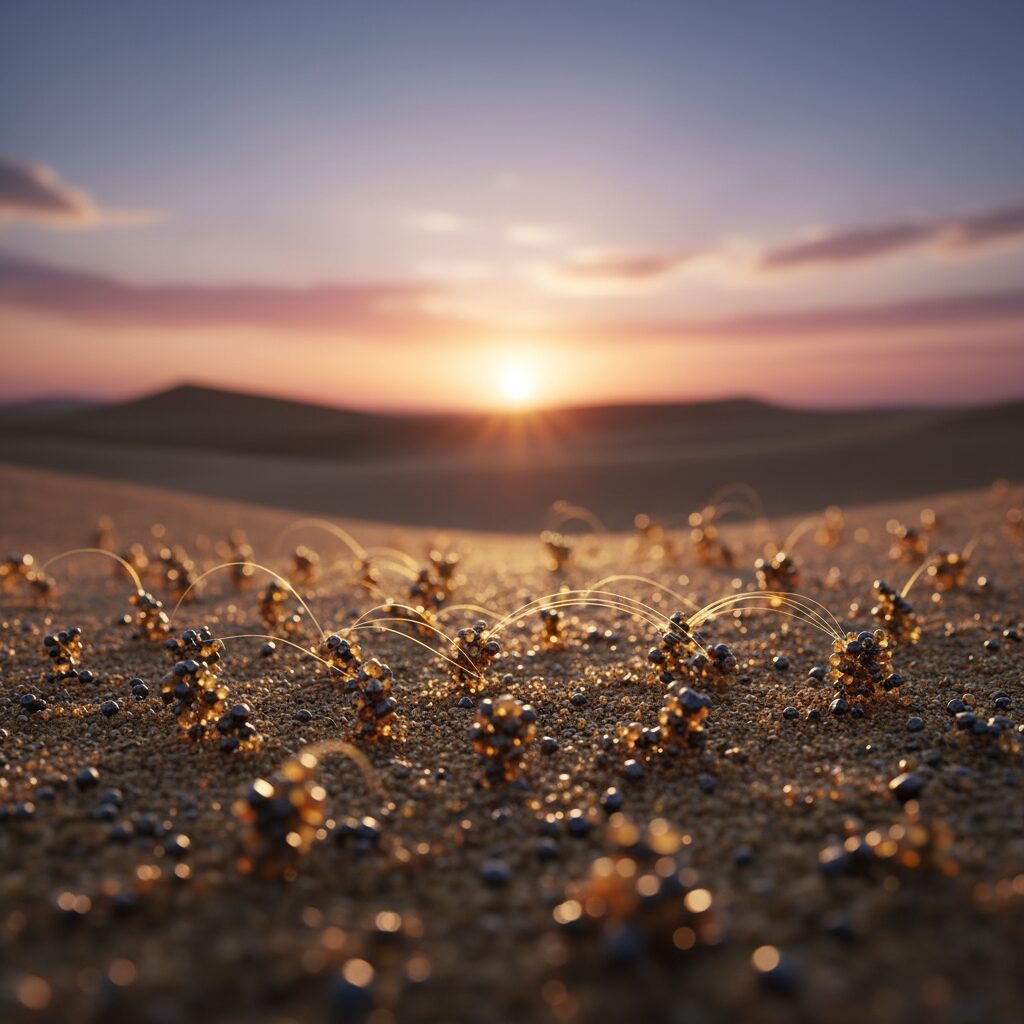
Sand, that indestructible companion of beaches and deserts, is often thought to be simply an inert substance, a bit like those socks lost in the washing machine. Yet, in certain deserts, this sand sometimes reveals itself to possess an unsuspected superpower: it becomes magnetic! Yes, you read that right. No, it’s not the effect of a science-fiction spell, but rather a fascinating geological reality, accessible thanks to a clever mix of ferromagnetic minerals and stories of wind, temperature, and iron oxide that rival the best epics. Far be it from us to turn Wonder-Junkies into a paranormal show channel; this phenomenon rests on solid scientific foundations that captivate both explorers and the curious. Ready to discover how this natural magnetization is triggered in certain deserts and, above all, why? Spoiler alert: there’s natural magnetism mixed with dust, and it’s mind-blowing.
What minerals make sand magnetic in magnetic deserts? Before waving a magnet over desert sand, it’s essential to know what in that sand might be reacting. The secret lies in the sand’s mineral composition. What science calls ferromagnetic minerals are the masters of magnetic phenomena. Among them, magnetite (Fe3O4) is the undisputed star. This iron oxide mineral possesses the natural ability to attract magnetic objects and is responsible for the “little compass” that a grain of sand sometimes becomes. There’s also a less prominent, but no less interesting, cousin: hematite. It can react to a magnetic field, but only if brought near a fairly strong magnet. These minerals are often found in metamorphic rocks, where they are formed and eventually end up in the sand after being eroded by wind or water. The
magnetic properties of sandthus become a natural concentrate of iron oxide, a chemical interaction as old as the first grains of the world. This magnetic sand is not found on every beach, far from it, but rather in areas where the local geological composition has given rise to thesemagnetic deserts
. A physical and chemical overview of the formation of natural magnetism To understand the birth of magnetism in sand, one must consider a microscopic ballet between magnetic particles. The grains of sand carrying these minerals exploit a phenomenon called natural magnetization. By cooling or being exposed to the Earth’s magnetic fields, these iron oxides generate their own fields, a bit like miniature magnets aligning themselves. Imagine a group of dancers who all become synchronized and line up in a row; it’s the same with these particles.
Depending on the chemical properties of the grains, some will be magnetized more or less intensely. This polarization gives the sand the ability to react to a magnet. This reaction is not visible to the naked eye, but with magnetized tweezers, it is possible to attract some of the sand, or at least see how much it “sticks.”
In short, for sand to become magnetic, it requires a significant iron oxide content combined with an environment conducive to the formation of natural magnetism, often a desert where winds carry dust and temperatures are high enough for these reactions to occur.Discover why sand sometimes becomes magnetic in certain deserts, the natural causes, and the geological phenomena behind this fascinating phenomenon.
How do wind and geological phenomena influence magnetic sand?
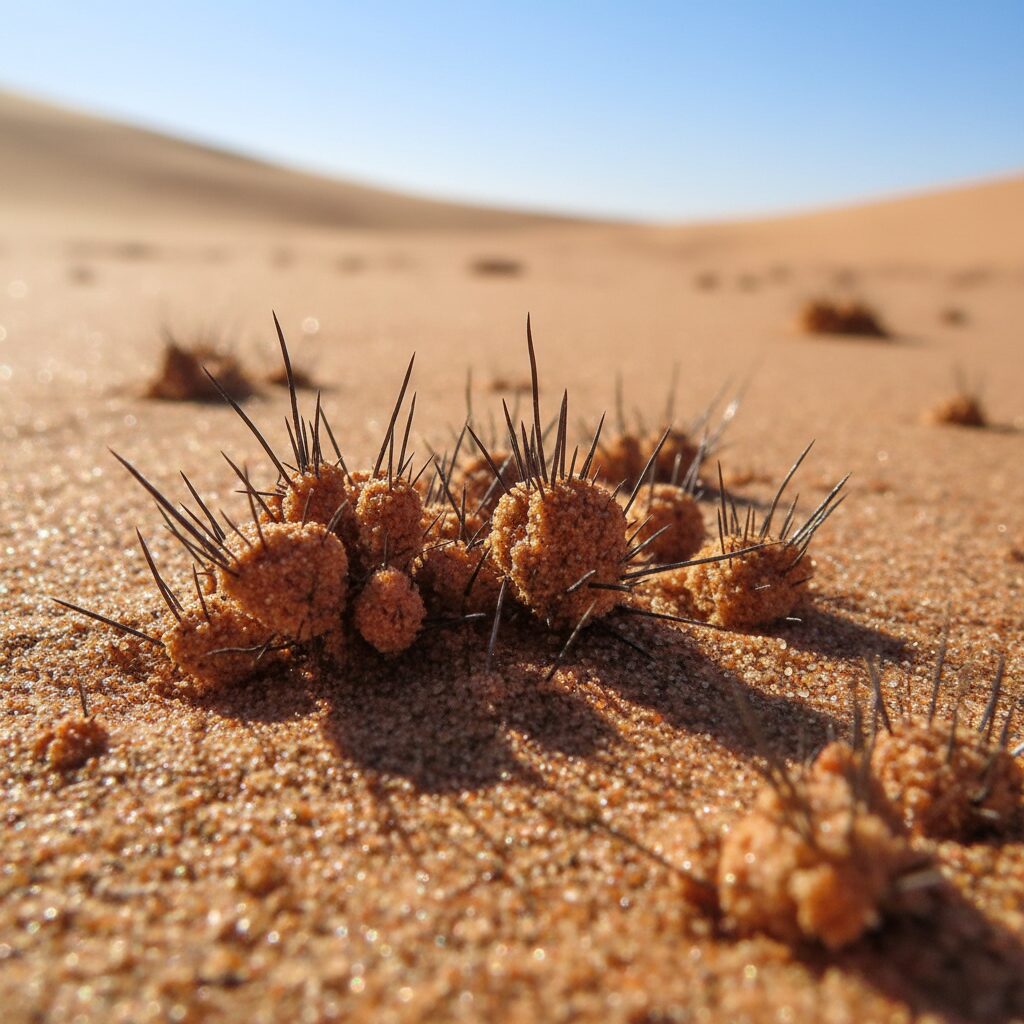
The desert is not just a pile of inert grains. It is a theater of action where the wind, often king, plays with the sand particles as if it were throwing a game of ancient skittles. In some deserts, notably the Sahara or the vast expanses of the Namib, the winds lift dust so fine that it can easily be carried thousands of kilometers through the atmosphere. This dust contains particles magnetized by the chemical processes described earlier. When it settles, an entire layer of sand can contain an unusually high concentration of so-called ferromagnetic particles. An excellent recipe for sand that attracts magnets.
Ces articles devraient vous plaire
How can we explain the regular, muffled noise emanating from extinct volcanoes?
Have you ever wondered what that muffled sound that seems to emanate from certain extinct volcanoes is all about? No, it’s not a herd of elephants marching under the mountain while you sleep, nor is…
Geological phenomena also play a major role. Erosion is one of the key players: it breaks down rocks into smaller particles, thus releasing iron oxides into the sand. Prolonged exposure to heat and certain elements can further alter the magnetic properties.
In addition, magnetized deserts can sometimes be linked to more spectacular geological events, such as iron meteorites exploding above ground. The fine dust mixed with metal-rich debris creates a kind of sand that is naturally “electrified.” It’s no wonder meteorite collectors often carry a giant magnet to locate interesting areas!
Top 5 Natural Phenomena That Promote Magnetic Sand 🌬️
Intense Wind Traffic: Transports magnetic particles over long distances
🌡️
- Extreme Temperatures: Promote the formation and preservation of natural magnetization 🪨 Erosion of Iron Oxide-Rich Rocks: The main source of ferromagnetic particles
- ☄️ Presence of Iron Meteorites : locally impacts the composition of the sand
- 🌍 Earth’s magnetic field : aligns magnetic particles into stable configurations
- https://www.youtube.com/watch?v=Wb8258NxlXk What scientific laws explain the distribution and magnetization of sand in magnetic deserts?
- You may have already heard of what physicists call mega-ripples : these gigantic waves of dunes spaced from a few tens to several meters apart, which conceal a fascinating mathematical secret. In 2022, an international team discovered that these formations follow a very precise mathematical law and that there is a constant in the size of the sand grains that make up these bimodal dunes (a mixture of fine and coarse grains). This discovery is not just a mathematical whim; it indirectly explains the concentration of ferromagnetic grains in the sand.
Ces articles devraient vous plaire

Unusual: A couple launches a raffle to try and sell their unsold apartment
In short: A British couple is struggling to sell their second home in Wales.The initial price of £365,000 is reduced by £40,000, but to no avail.They launch a raffle with tickets at £5.50 to boost…
The theory is based on two physical mechanisms called
saltation (small jumps of grains under the influence of wind) and reptation
(stepped movements of heavier grains). This results in stratification where the heaviest grains—often those rich in ferromagnetic minerals—accumulate on the crests of the dunes, while the finer grains settle in the hollows. This creates not only striking patterns for the eye, but also a variable concentration of magnetic sand localized at the top of the dunes. Similar phenomena have been observed on Mars, and data captured by the Opportunity rover, in particular, confirm the mobility of the megaripples and the variable richness of magnetic particles. This variability in the sand thus offers a fascinating playground for those who want to understand how natural magnetization builds up slowly, grain by grain. 🔍 Mechanism
⚙️ Description 🎯 Impact on magnetic sand
| Saltation | Fine grains jumping and colliding with larger grains | Redistribution of ferromagnetic grains towards the ridges |
|---|---|---|
| Reptation | Heavier grains advancing in small hops | Accumulation of magnetic particles in high areas |
| Magnetic alignment | Influence of the Earth’s magnetic field on the grains | Creation of stable magnetic particles |
| How to observe magnetic sand and what fun experiments to try? | If you ever find yourself in a magnetic desert (or near an unusual beach), you could test this amazing sand using a small magnet. Magnetic sand exhibits a visible attraction because the ferromagnetic particles react immediately. | Note that the goal isn’t to see the sand fly like a magnetic superhero, but to observe how it “sticks” to the magnet. This experiment, using a standard magnet, can even be done at home with a small magnetic tube or neodymium magnets. To delve deeper, it’s possible to observe the configuration of the Earth’s magnetic field through this natural magnetization. As explained in this article on |
Ces articles devraient vous plaire

Surprise! This former OL striker is now starring in a hit Netflix series
Did you think retired footballers were content to commentate on matches or invest in pizza chains? Well, prepare for a surprise that’s out of the ordinary: a former striker for Olympique Lyonnais, the iconic Lyon…
how the compass transformed the destiny of world explorers
, nature often provides us with simple tools to understand complex concepts. With magnetic sand, you have before your eyes a mineral prototype of a natural compass, a natural arrangement of giant magnets.
https://www.youtube.com/watch?v=m-WP3G3J3QQ List of fun experiments to try with magnetic sand🧲
🔬
- Observe the sand under a microscope: look for shiny particles containing iron oxide 🌡️ Gently heat magnetic sand: observe how the grains behave with heat (be careful not to burn yourself!)
- 🌀 Separating Magnetic Grains from Non-Magnetic Grains: Using a powerful magnet, you’ll see the sand separate into two groups. 🌍
- Using Magnetic Sand to Understand the Earth’s Magnetic Field: An original way to grasp science. What makes sand magnetic in certain deserts? The presence of ferromagnetic minerals, primarily magnetite, combined with geological and atmospheric processes, explains why the sand becomes magnetic.
- Is magnetic sand easily found in nature? Magnetic sand is found mainly in certain specific desert areas where the geological conditions are favorable, making it rare but not inaccessible. Can magnetic sand attract objects other than magnets?
- No, only objects containing magnetic or ferromagnetic materials can be attracted to this sand. Does the Earth’s magnetic field influence magnetic sand? Yes, the Earth’s magnetic field acts on magnetic particles, aligning their natural magnetization in specific and stable directions.
How does the natural magnetization of sand form?
Natural magnetization forms due to the iron oxide composition of sand particles and their exposure to the Earth’s magnetic fields and climatic conditions.
Ces articles devraient vous plaire

How can atmospheric pressure change the color of clouds?
Ah, clouds! Those fluffy cushions that reign in the sky, sometimes dazzling white, sometimes ominous gray, or even fiery red at sunset. But have you ever noticed that no two clouds are truly alike, especially…