
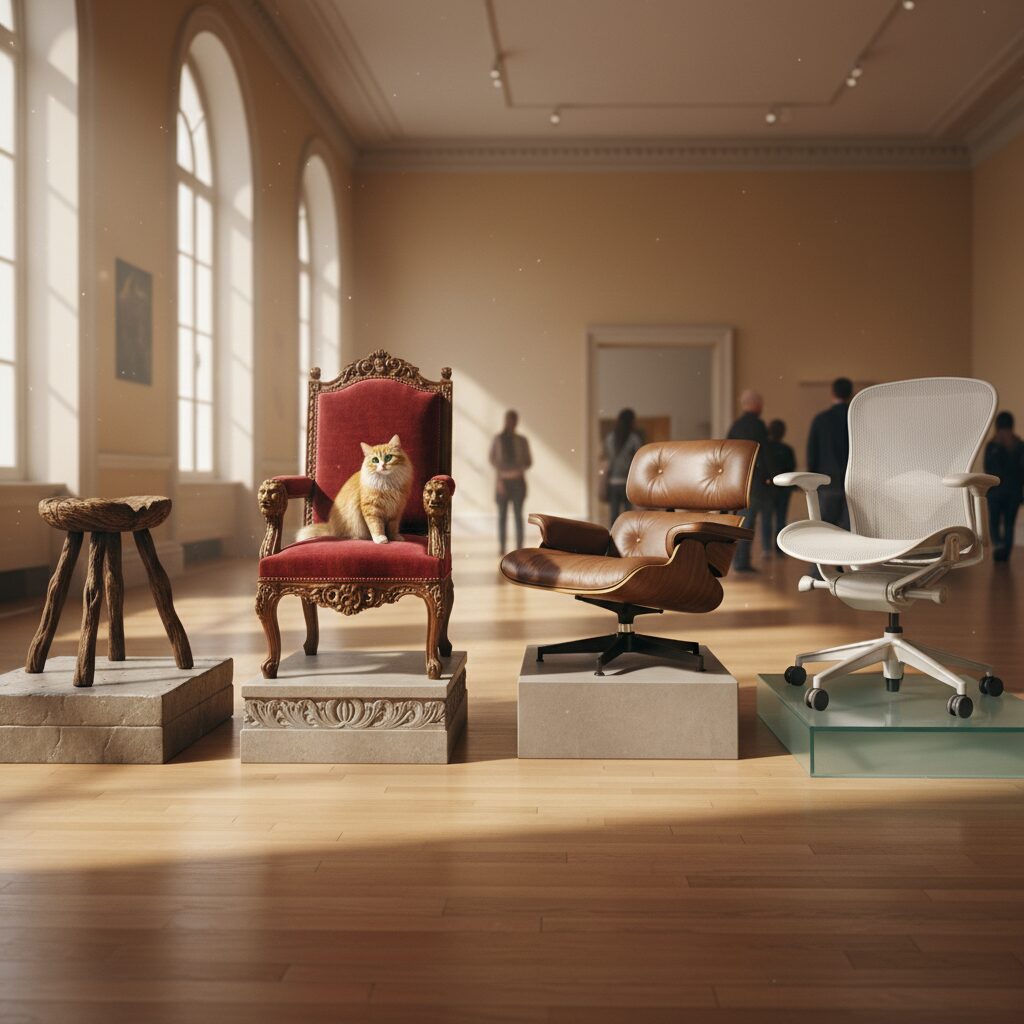
We sit on them every day without giving it a second thought, and yet, a chair isn’t just a piece of wood with a backrest. It’s an object steeped in history, culture, design… and even a bit of philosophy for those who venture into it. When we talk about chairs, we rarely consider their fascinating evolution, their social symbolism, or even the whimsical inventions that have attempted to revolutionize them. In this article, discover how a simple chair can tell a story that’s more than just a seat: it tells a story of our civilization. From prehistory to futuristic innovations, from art to theater, the chair is everywhere, and we’re going to prove it to you with a tone that’s both funny and educational—because learning while having fun is the secret to never staying on your feet for very long!
How did the chair become an iconic piece of furniture?
Before you settle in comfortably, know that early humans didn’t necessarily choose between a chair and a stool. In fact, for a good part of history, they were more like “roots, rocks, and bits of wood.” It took time for the chair to establish itself as a proper piece of furniture, because in ancient times, the floor served the purpose perfectly well. Why bother with a seat when you can just sprawl out on a simple cushion?
It was only in ancient Egypt that the first chairs took on the form we recognize today: a seat with a backrest. They were reserved for a very well-established elite, like the pharaohs and their advisors, because the floating throne hadn’t yet been invented. Yes, even back then, the chair symbolized social hierarchy. Let’s skip ahead a few centuries and fast-forward to ancient Greece and Rome, where the chair, designed for comfort, evolved with curves and even armrests, before giving way somewhat to the bench or the bed used as seating at banquets.
If you think wooden chairs are basic, wait until you see what the Middle Ages had in store for us: seats became heavy, sometimes sculpted like works of art, but rarely comfortable. Their purpose? To show that sir or madam had power and no time to waste relaxing. In fact, the expression “to have a hard seat” didn’t come about by chance. Gradually, the chair became more accessible during the Renaissance, a time when people began to focus on comfort and artisans finally turned their attention to design and aesthetics – a perfect blend of form and function.
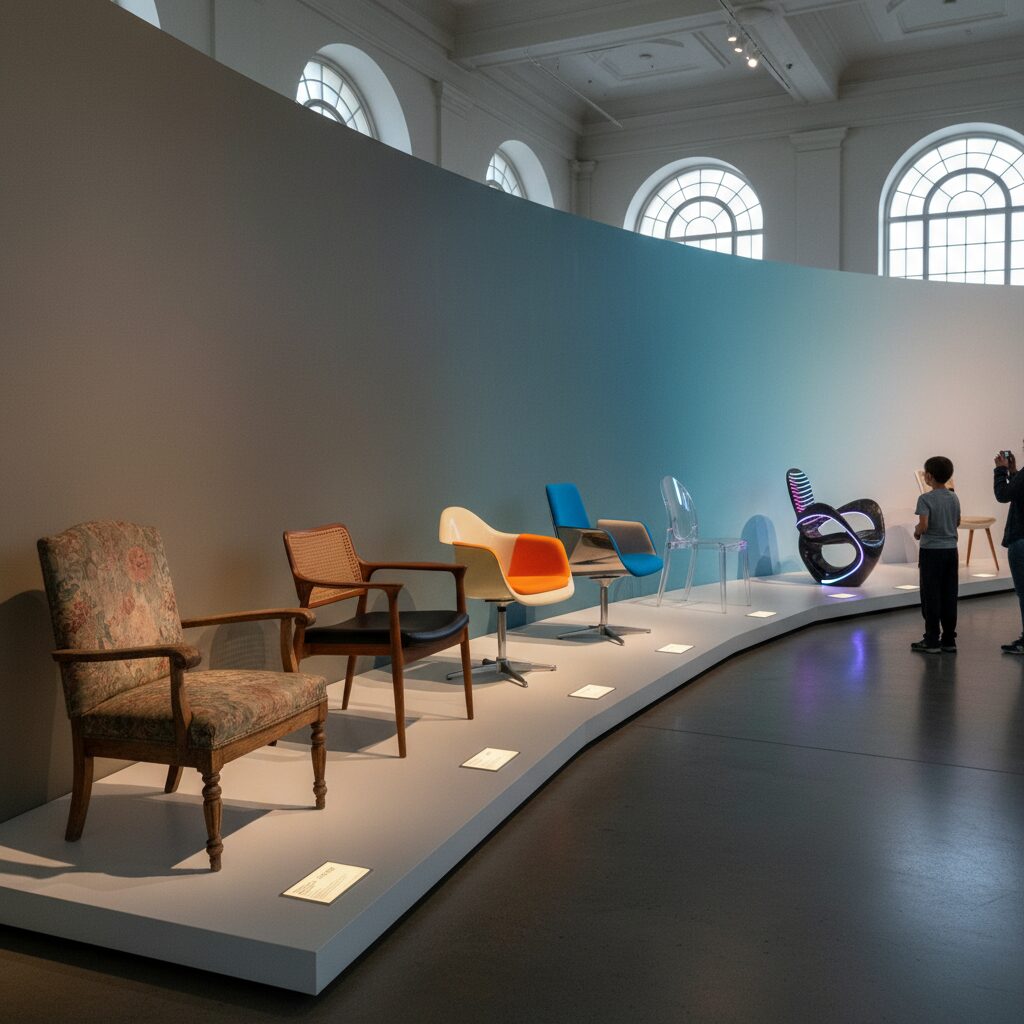
The Industrial Revolution boosted chair production, making them available to a wider audience. By 2026, one could almost say that the design of a chair is as crucial as that of a car. When you browse the aisles of a furniture store today, you find a concentrated dose of history: from the rustic solid wood chair to the designer plastic throne that transforms your living room into a fun and modern space. It must be said that our expectations have evolved, shifting from simply “a seat to sit on” to “a seat that suits your style and your back.”
And if you’re intrigued by why we change chairs several times before finally sitting down (yes, it’s something we all do), you can delve into this mystery in this article: Why do we change chairs several times before sitting down?
Ces articles devraient vous plaire

Amazing little habits around the wallet
Have you ever noticed how your wallet seems to have a life of its own, with its strange little habits that influence your finances without you even realizing it? From always keeping a light-colored coin…
Discover the amazing history of chairs in this funny and informative article that blends humor and culture to better understand this everyday object. What is the place of chairs in culture and art throughout the centuries?Did they say chairs were boring? Not at all. They have, in fact, invaded culture and art in sometimes very wacky ways. For example, in the Theatre of the Absurd, chairs were a must. Imagine that the Romanian author Eugène Ionesco wrote a play called, quite simply,
“The Chairs.”
Written in 1952, this work is a tragicomedy that delves into existential angst, but with a touch of humor (hail the absurd!). The elderly couple at the center of the stage are arranging chairs for an invisible audience, a bit like your living room suddenly filling up with chairs for your imaginary guests. This play explores emptiness, loneliness, and the futility of communication in our modern society, with a dark humor that brings a smile despite the unease. But that’s not all. In painting, chairs are a recurring subject, often used to evoke domestic life, rest, or even the absent presence of a person. Van Gogh, for example, painted armchairs and chairs full of character, not as inanimate as they appear. They then become silent witnesses to human stories. Just as in poetry or literature, where the chair can symbolize comfort, power, solitude, or waiting.
Ces articles devraient vous plaire
The hidden role of a pocket watch and its legendary secrets
Ah, the pocket watch! This little engineering marvel, tucked away in a waistcoat or jacket pocket, is much more than simply telling the time like a smartphone overflowing with useless apps. No, this mechanical gem…
On stage, the chair is the ultimate accomplice in stories, sketches, and performances. You can almost imagine each chair as a character in its own right, a physical support for emotions and interactions. So the next time you sit on a chair, ask yourself if it doesn’t hold an amazing story, a theatrical secret, or a nod to the absurd. It might make you see your furniture in a whole new light!
Theater, painting, literature—these are all areas where the chair comes to life, far beyond its primary function. To see for yourself, don’t hesitate to delve into anecdotes and cultural analyses that add fun to what we thought was mundane. After all, the chair is also a companion on our journey through life.
https://www.youtube.com/watch?v=YuF_QEvNR_U Why do innovations in chair design often flop?
It must be admitted that chairs, despite their rich history, remain a sometimes risky testing ground. Designers have been racking their brains for centuries to revolutionize this object, but all too often, their inventions end in monumental flops. Why? Because ultimately, a chair must fulfill one simple mission: to make you sit comfortably. Too many gadgets, bizarre shapes, or “overly futuristic” ideas, and the chair becomes unusable, unsightly, or worse, a joke.
Ces articles devraient vous plaire
surprising habits related to light switches in our homes
Who would have thought that this small button, often invisible but always present in our homes – the light switch – could be the site of some rather surprising oddities and habits? While technology and…
A recent example? In 2020, an ambitious robotic office chair project almost changed everything. Imagine a smart chair that adjusts your posture, moves with you, and even reminds you to take a break. Fantastic on paper, less so when the project resulted in a bug factory and seats that resembled modern-day Egyptian torture devices more than comfortable seating. Since then, some have preferred to return to the classics, proving that sometimes, less is more. You can delve into the story of this fabulous attempt in this article: How did an office chair almost become a useless, robotic object?
History also includes chairs that completely missed the mark, such as models so aesthetically pleasing that we preferred to look at them rather than sit on them, or designs so extravagant that they became dangerous. In short, the lesson is clear: the chair, however simple, obeys almost immutable rules. If you’re looking to innovate, you must take the plunge with caution, otherwise your creation will end up as a useless decorative object.
Yet, some innovations manage to combine aesthetics, comfort, and ergonomics with a true sense of functional design. This is the perpetual challenge for furniture designers today, who must juggle our physical needs, our cultural tastes, and sometimes our technological whims. Quite a feat. The chair, even in 2026, remains a captivating subject in design, proof that even the ordinary can reveal its extraordinary potential.
What are the links between posture, the brain, and the choice of chair in everyday life? If we delve a little into the science, the chair is not just a simple piece of furniture. Our relationship with it impacts our body, our brain, and our mood. The design of a chair influences posture, and since we now understand the communication between posture and cognition, we grasp the crucial importance of a good seat. Our body constantly sends signals to our brain. When you’re sitting in a chair that properly supports your back, you’re less tired, more focused, and above all, less tempted to fidget because you’re uncomfortable. It’s a fact!
- But the science doesn’t stop there. It also seems that before sitting down, we go through a rather amusing little ritual: changing chairs or locations several times before choosing THE perfect spot. This demonstrates a subtle interaction between our cognitive system and our instinct for comfort. It’s as if your brain is a strict judge ready to approve or reject your comfort application.
- Here are some key impacts of chair design on our brain and body: 🧠 Concentration: A comfortable chair improves your ability to stay focused, ideal for work or long Netflix sessions.
- 🦴 Back Health: Good support prevents lower back pain, which could otherwise ruin your day. 😌 Emotional Well-being
- Feeling physically good promotes a positive mood, so a devilishly uncomfortable sofa won’t be a laughing matter for long. Motivation to move: A chair that’s too comfortable might make you sleepy (beware of impromptu naps); a perfectly comfortable seat could encourage you to adopt a more dynamic posture. Choosing the right chair could very well be the key to daily physical and mental balance. That’s all there is to it! And if you want to understand why we always hesitate before sitting down, this bit of psychology will fascinate you: Why do we change chairs several times before sitting down?
Chart: Evolution of Design and its Impact on Comfort
🪑 Era
| 🎨 Main Style | ✨ Major Innovation | 💺 Comfort | 🧠 Brain Impact | Ancient Egypt |
|---|---|---|---|---|
| Symbolic and hierarchical | Backrest and armrests | Low (rigid) | Restful, but not ideal | Renaissance |
| Ornamental and artistic | Comfort and aesthetics | Average | Promotes concentration | Industrial Revolution |
| Mass production | Accessibility and robustness | Variable | Everyday use | 1960-2000 |
| Ergonomic design | Lumbar support | High | Improved concentration | 2020-2026 |
| Functional innovations | Integrated technology | Variable (risk of failure) | Stimulates or disrupts | https://www.youtube.com/watch?v=E-nKzAwVSeQ |
Ces articles devraient vous plaire

Why do some people always crumple their tickets?
You’ve probably already encountered this strange species at a party, in the supermarket, or even on the subway: the person who takes their receipt, their metro ticket, or any scrap of paper and crumples it…
Ultimately, the chair is a microcosm of our modern societies. It symbolizes power, comfort, but also inequality and absurd conventions. The choice of a chair in a public place, an office, or a home can reveal some surprising things about who dominates, who follows, and how we manage to stay seated (or not).
For example, in social history, the chair could determine your place in the hierarchy. Whoever sat at the top of a grand armchair received the majority. The chairs of kings, judges, and even company CEOs have always symbolized an authority that ordinary people didn’t possess. It’s a bit like thrones on TV, except here it’s not in a video game but around a boardroom table.
Today, even an office chair tells us how much we value—or don’t value—comfort and productivity. The famous ergonomic chair has become a symbol of well-being at work, even if sometimes it feels more like an A380 pilot’s cockpit than a cozy seat. Or, in café culture, the chair is an ally of conversation, encounters, and laughter (yes, even awkward moments). An empty chair is also an invitation to conversation or a waiting area, filled with millions of invisible human stories.
In short, a chair is much more than just an object: it reflects social codes, cultural practices, and a certain art of living. Will you go back to the next meeting or family dinner and look at your chair as just another seat? Surely not. You’ll know that behind that wood or plastic lies a piece of our shared history, both funny and educational.
Where does the word ‘chair’ come from?
The word ‘chair’ comes from the Latin ‘cathedra,’ which referred to a seat with a back, often a throne or a chair of authority, already highlighting the social function of furniture.
Why do so many manufacturers innovate in chair design?
Because chair design is a perfect field for combining aesthetics, ergonomics, and technology, even if not all innovations achieve the expected success.
How do chairs symbolize hierarchy in society?
Historically, certain chairs, like thrones, were reserved for chiefs, kings, or influential people, symbolizing their power and social status.
Is it really okay to change chairs several times before sitting down?
Yes, this behavior is linked to an unconscious quest for optimal comfort, combined with cognitive signals that assess the best posture and sensation.